What Should You Do After Finding Potential Buyers Through Customs Data?-TradeSaya

When using customs data to find overseas buyers, many export sales teams treat obtaining a list of importers as the final result.
In reality, finding a company name is only the beginning of the customer development process.
A list of importers does not automatically become a list of sales opportunities. It may include large end buyers, distributors, trading companies, and import agents. It may also contain companies that have stopped purchasing, do not match your products, or have limited potential for cooperation in the near future.
Even after identifying a suitable company, sales professionals still need to answer several important questions:
- Is this company worth prioritizing?
- Are the products it purchases truly relevant to what we offer?
- Which suppliers is it currently working with?
- Who is responsible for purchasing or supply chain decisions?
- What should we discuss in the first conversation?
- If the buyer does not respond immediately, how should we follow up?
The value of customs data should therefore extend beyond simply finding buyers. It should also support buyer qualification, opportunity assessment, decision-maker outreach, and ongoing sales follow-up.
This article introduces a complete workflow for turning trade data into actionable sales opportunities.
Step 1: Identify Potential Buyers Through Real Trade Activity
Traditional overseas customer development often begins with search engines, company directories, B2B platforms, or trade show lists. These channels can help sales teams find many companies, but they do not necessarily prove that those companies are importing relevant products.
Customs data provides a different starting point. It allows exporters to begin with actual trade activity and identify companies with verified purchasing records.
With TradeSaya, sales professionals can search by product keyword, HS code, or company name. They can then filter the results by origin country, destination country, trade volume, and transaction period.
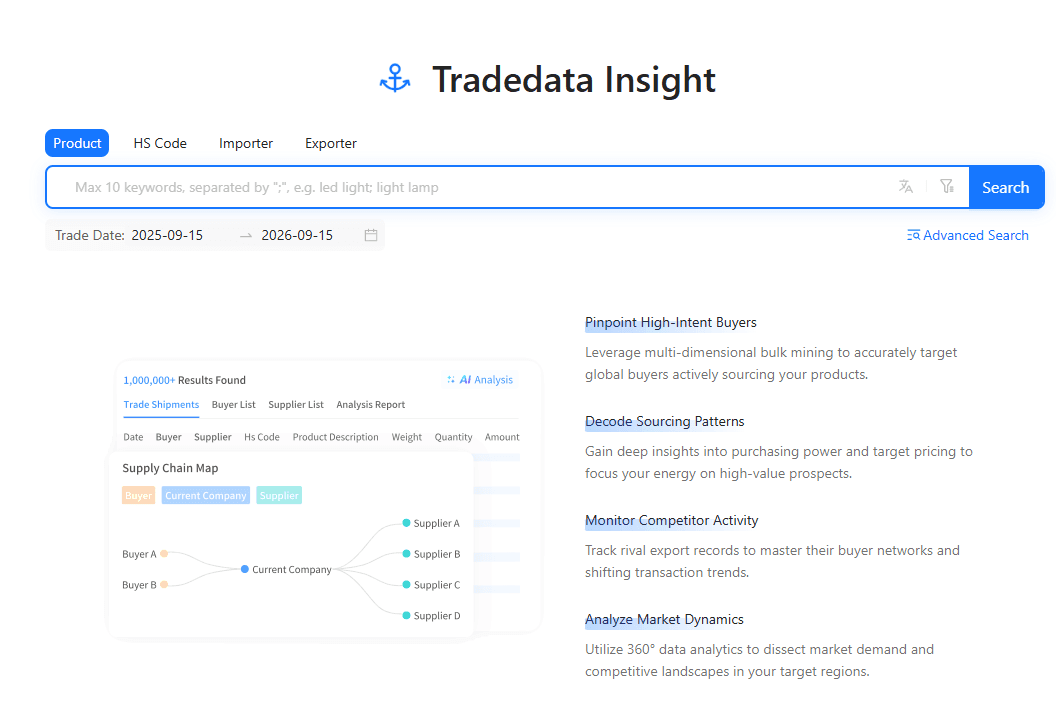
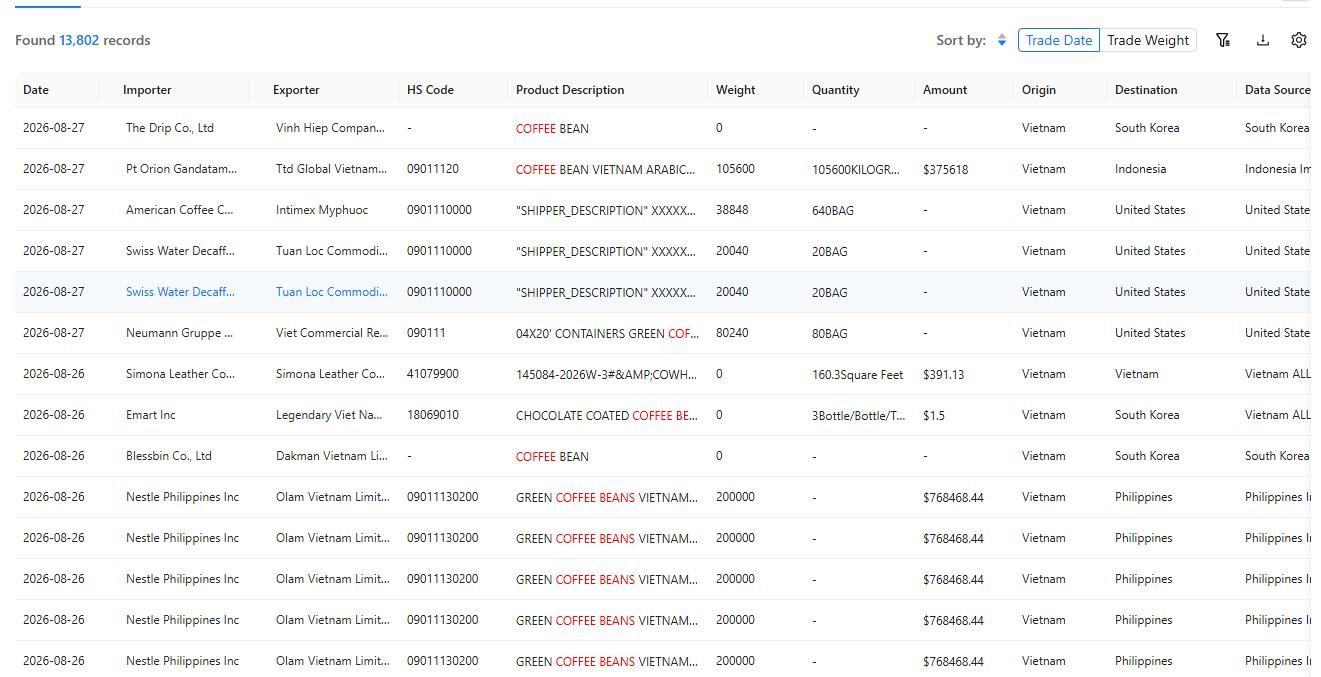
Instead of generating a broad list of companies in a particular industry, this process identifies potential buyers that have already demonstrated relevant import activity.
Step 2: Determine Whether a Buyer Is Truly Suitable
Two companies may import the same product but offer very different levels of sales potential.
One company may purchase every month, place orders that match your production capacity, and work with several suppliers. Another may have placed only one order two years ago or may mainly purchase product specifications that you cannot provide.
After finding an import record, the next step is therefore to analyze the buyer’s purchasing behavior.
In TradeSaya, sales teams can combine company information with historical purchasing data to understand:
- The company’s industry and main products
- The product categories it has purchased
- Changes in purchasing frequency and quantity
- Purchase values and price ranges
- Major countries of origin
- Current and historical suppliers
- Suppliers that have been added, removed, or replaced

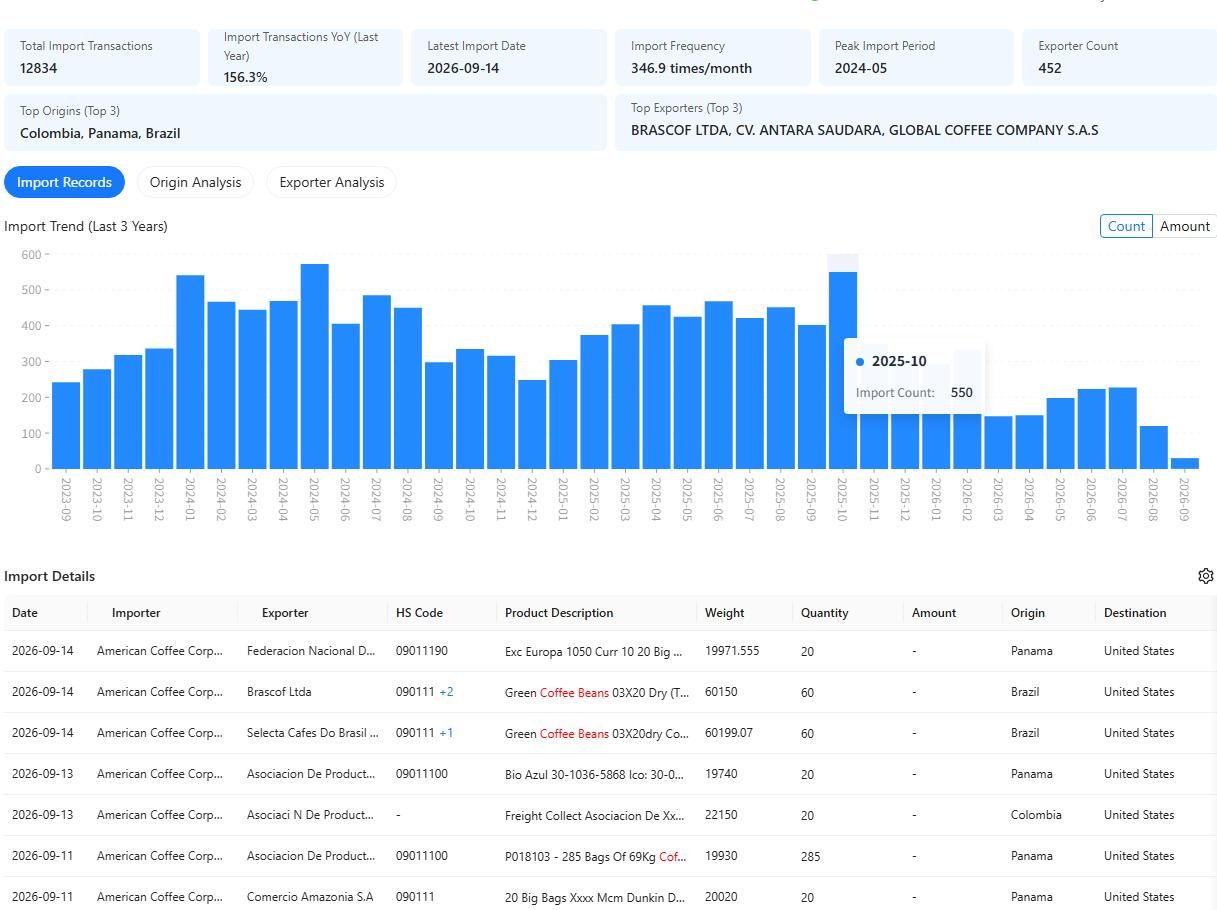
This information helps sales professionals distinguish which companies are genuinely worth their time and attention.
Step 3: Understand Your Main Competitors
Before approaching a buyer, understanding the buyer alone is not enough. You also need to know who currently supplies the company.
The buyer’s supplier structure can answer several practical questions:
- Does the buyer rely heavily on one supplier?
- Which countries are its current suppliers located in?
- Does the buyer prioritize lower prices or supply stability?
- Has it recently started testing new suppliers?
- What product specifications are competitors supplying?
- In which areas can your products offer a meaningful difference?
TradeSaya’s supply chain relationship data helps sales professionals review a buyer’s current and historical suppliers and observe how those relationships change over time.
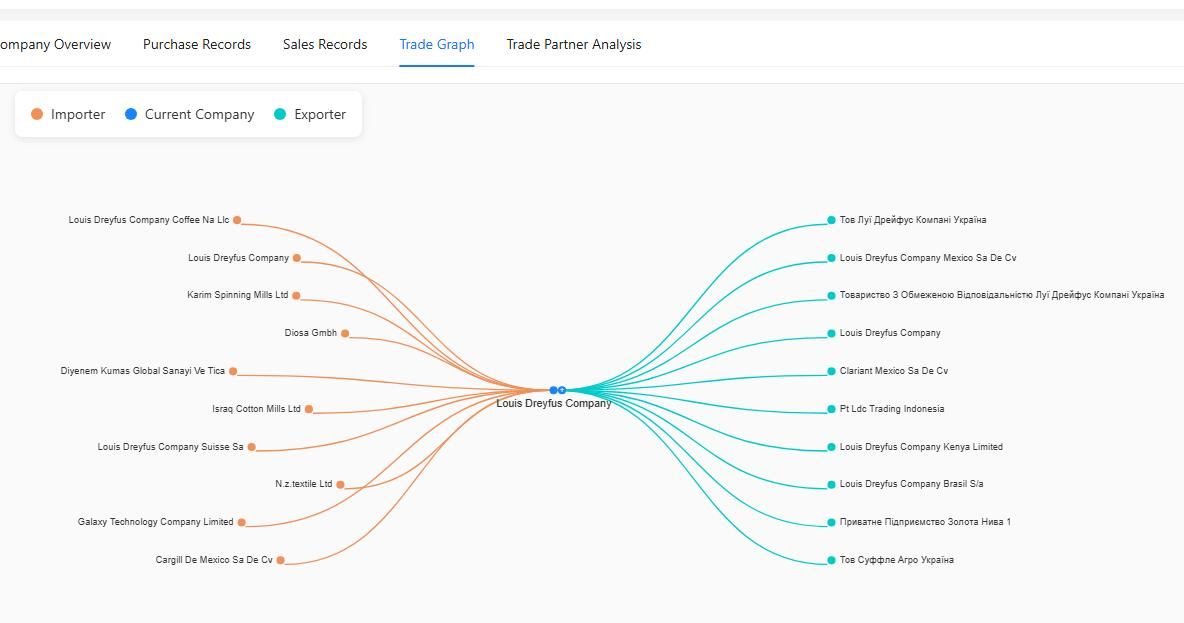
If a buyer has purchased exclusively from one supplier for many years, the barrier to entry may be relatively high. Instead of immediately attempting to replace the existing supplier, you could position your company as a backup supplier, offer a complementary product line, or provide an additional option for reducing supply chain risk.
If the buyer already works with several suppliers, your outreach can focus on product differentiation, customization capabilities, delivery times, or regional supply advantages.
Step 4: Find the People Who Can Make Decisions
After confirming the target company, the next question is: Who should you contact?
Messages sent only to a company’s general inbox often go unanswered and may never reach the people responsible for purchasing decisions.
TradeSaya connects buyer information with available key decision-maker data, helping sales professionals directly access the names, job titles, email addresses, phone numbers, and WhatsApp details of procurement professionals, company owners, and senior executives.
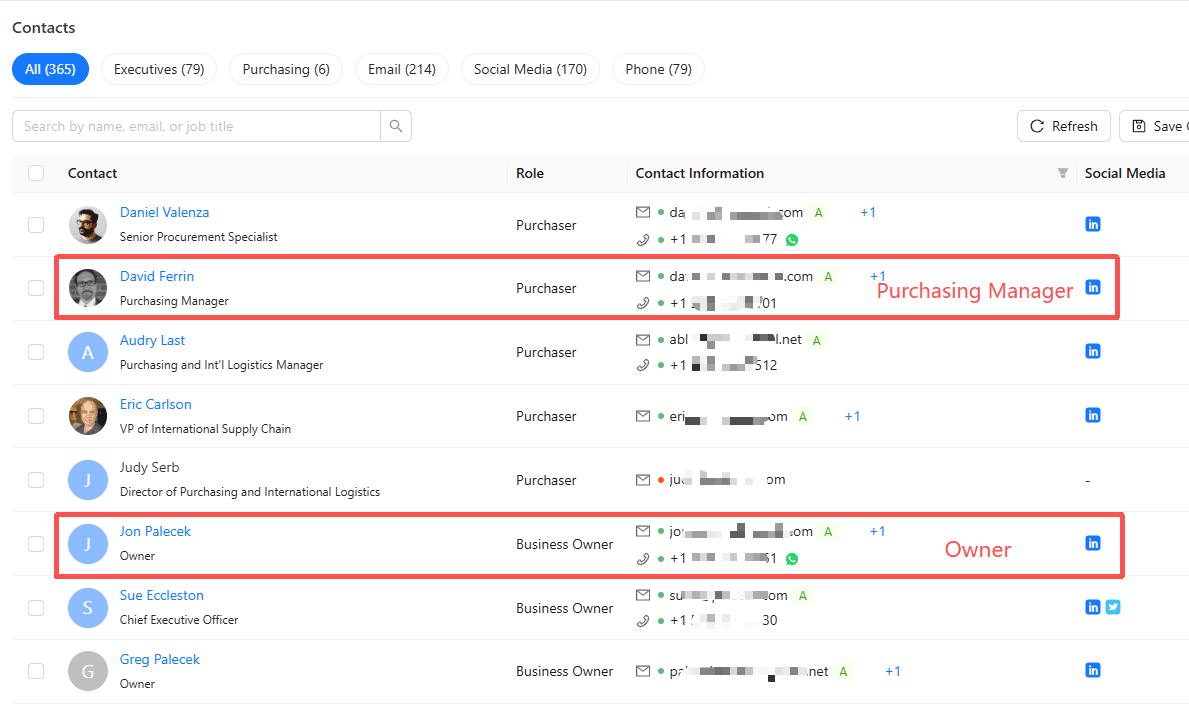
This shortens the communication path and makes the customer development process more efficient.
Step 5: Use Purchasing Information to Write a More Relevant First Message
Finding the right decision-maker does not mean that you should immediately send a generic sales email.
Buyers may receive a large number of supplier emails every day. Simply introducing your company’s history, factory size, production equipment, and product catalog gives the buyer little reason to respond now.
A more effective first message should reflect the buyer’s actual business situation.
You can choose a different approach based on what your analysis reveals.
- The Buyer’s Purchasing Volume Is Growing
Focus on your production capacity, reliable delivery, quality control, and ability to provide a stable long-term supply.
- The Buyer Is Adding New Suppliers
Explain your product differentiation, sample support, certifications, or trial-order options.
- The Buyer Relies Heavily on a Single Sourcing Country
Begin the conversation around supply chain diversification, delivery risk, and backup supply solutions.
- The Buyer Purchases Several Related Products
Introduce your combined supply capabilities, complementary products, or one-stop purchasing solutions.
- The Buyer Has a Clear Purchasing Cycle
Contact the company before its next likely purchasing window instead of sending repeated messages without a clear schedule.
Step 6: Do Not Let High-Value Leads Remain in a Spreadsheet
Overseas customer development usually requires multiple interactions.
A buyer who does not respond to the first email does not necessarily have no demand. The company may not have an immediate purchasing plan, may be handling existing orders, or may be waiting for its next supplier evaluation.
When customer information is scattered across personal spreadsheets, email inboxes, messaging apps, and sales representatives’ notes, teams frequently encounter the following problems:
- The same buyer is contacted by multiple sales representatives
- Important customers are left without follow-up for long periods
- Communication records are lost when an employee leaves
- The team cannot determine the customer’s current sales stage
- Managers lack visibility into actual customer development progress
TradeSaya can centralize customer profiles, emails, quotations, call notes, and social media conversations. Customers can also be organized by type, priority, deal stage, or custom tags.
Teams can identify duplicate leads through company names, websites, and contact information, reducing internal conflicts and improving lead management.
Conclusion
Finding an importer does not automatically mean that you have found a sales opportunity. Obtaining contact information does not mean that you have established a customer relationship.
Effective overseas customer development requires sales teams to begin with real purchasing activity, evaluate buyer value, understand supply chain relationships, identify the right decision-makers, and maintain consistent follow-up at the right time.
When trade data, buyer intelligence, and customer management are connected, sales professionals no longer need to repeatedly organize information across multiple tools and spreadsheets. They can spend more time on customers with genuine potential.
TradeSaya helps export sales teams manage the complete process, from market discovery to customer follow-up, bringing every customs record closer to an actionable sales opportunity.