What Is U.S. Customs Trade Data and How Can You Use It to Find Real Buyers?-TradeSaya

For exporters planning to enter the U.S. market, finding potential customers is not necessarily the hardest part. The real challenge is determining:
- Which U.S. companies are actually importing your products?
- Are they still actively buying?
- How frequently do they purchase, and in what quantities?
- Which countries and suppliers do they currently source from?
- When is the best time to contact them?
U.S. customs trade data can help answer these questions.
However, “U.S. customs trade data” is not one single type of database. Official trade statistics and company-level shipment records differ significantly in terms of detail, available fields, and business applications.
Understanding these differences is essential. Otherwise, companies may simply export a long list of names and send generic sales emails without identifying which buyers are genuinely relevant.
1. What Is U.S. Customs Trade Data?
In broad terms, U.S. customs trade data refers to information about goods imported into or exported from the United States.
Based on the level of detail provided, it can generally be divided into two categories.
- Official U.S. Trade Statistics
The U.S. Census Bureau publishes import and export statistics organized by product code, country, state, customs district, port, and reporting period.
Companies can use this data to analyze:
- The import value and volume of a specific product
- Major countries of origin and trading partners
- Import activity across U.S. ports and regions
- Monthly, annual, and year-over-year trends
- Whether demand is growing, stable, or declining
Official statistics are valuable for market research and strategic planning.
However, the U.S. Census Bureau does not publish data that identifies individual companies or people. This means official statistics can show how much of a product the United States imports, but they cannot directly reveal which companies made those purchases.
The U.S. Census Bureau’s USA Trade Online is one of the primary official sources for aggregated U.S. merchandise trade statistics.
- Company-Level Shipping and Bill of Lading Records
Another category consists of legally available or commercially processed shipping and bill of lading records, particularly U.S. ocean import records.
Depending on the shipment and data source, these records may include:
- Importer or consignee name
- Exporter or shipper name
- Notify party
- Product description
- Shipping and arrival dates
- Port of loading and port of discharge
- Country of origin
- Bill of lading number
- Container information
- Quantity, weight, and unit of measurement
These records help exporters identify companies that have demonstrated actual purchasing activity rather than companies that merely operate in a related industry.
However, not every record contains every field. Some importers, exporters, or consignees may request confidential treatment of their names and addresses. As a result, certain records may be incomplete, hidden, or listed under a freight forwarder instead of the final buyer.
The U.S. Customs and Border Protection guidance on vessel manifest confidentiality explains that eligible parties may request confidential treatment of specific manifest information.
2. What Information Does U.S. Customs Trade Data Include?
The fields available depend on the database and shipment record. The most common information can be grouped into five categories.
- Transaction Parties
Records may identify parties such as:
- Importer
- Consignee
- Exporter
- Shipper
- Notify party
These fields help identify the companies involved in a transaction. However, a company appearing in a shipment record is not automatically the final buyer or purchasing decision-maker.
Freight forwarders, trading companies, customs brokers, and affiliated companies may also appear in the records. Company background research is therefore necessary before adding a business to a sales pipeline.
- Product Information
Common product-related fields may include:
- Product description
- Commodity keywords
- HS or HTS code
- Brand or shipping marks
- Packaging and specification details
The Harmonized System, or HS, provides the international foundation for product classification.
The United States uses HTS codes for imports and Schedule B codes for exports. Although both systems are based on the international HS structure, the full 10-digit U.S. import and export codes may differ. Their first six digits generally share the same international HS classification.
- Dates and Ports
Shipment records may contain:
- Shipping date
- Estimated or actual arrival date
- Port of loading
- U.S. port of discharge
- Vessel and voyage information
- Mode of transportation
By reviewing a buyer’s records over time, exporters can identify purchasing intervals and estimate when the next sourcing cycle may begin.
- Quantity and Weight
Depending on the record, available fields may include:
- Product quantity
- Gross or net weight
- Unit of measurement
- Number of containers
- Twenty-foot equivalent units, or TEUs
This information can help compare buyer size and purchasing consistency.
However, declared quantities and measurement units are not always standardized. Data should be normalized before comparing shipments or calculating purchasing volumes.
- Transportation and Bill of Lading Information
Records may also contain:
- Bill of lading number
- Container number
- Vessel name and voyage
- Carrier
- Port of loading
- Port of discharge
In addition to confirming trading activity, this information can help logistics providers study shipping routes, port activity, and customer transportation patterns.
3. What Business Questions Can U.S. Customs Trade Data Answer?
- Is the U.S. Market Worth Entering?
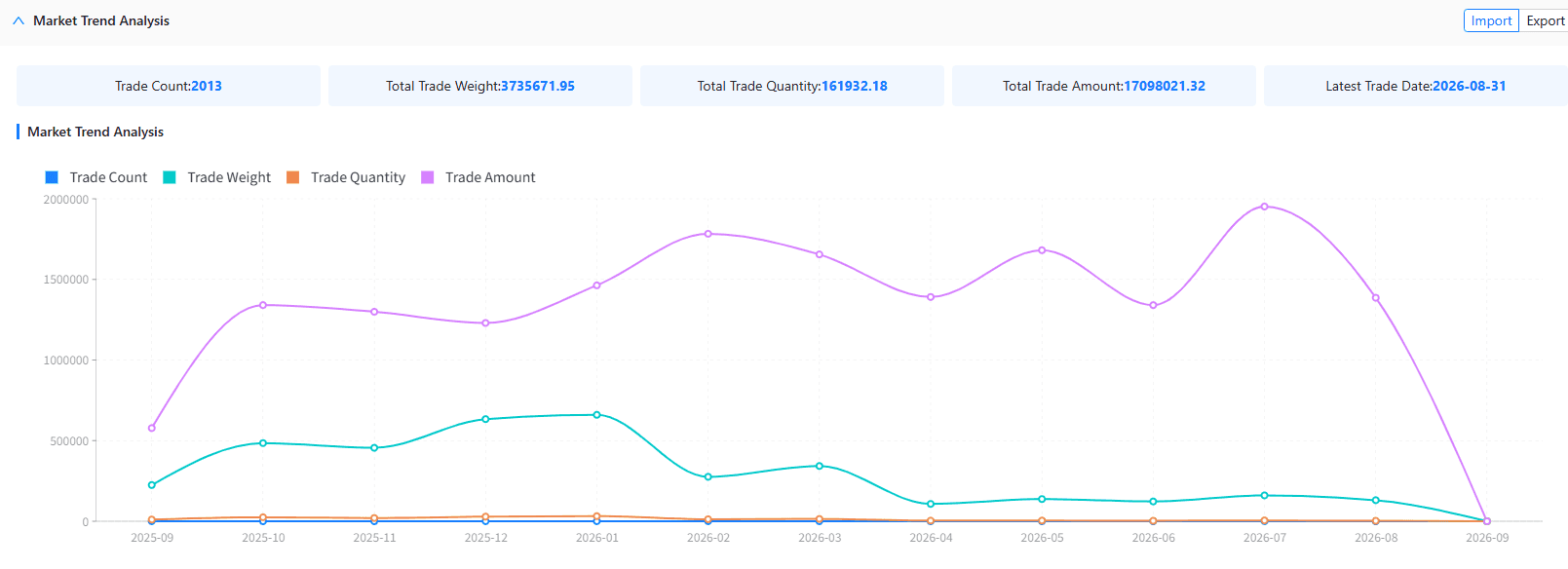
Before developing customers, exporters can study the import value, quantity, leading countries of origin, and historical trend for their target product.
Growing import demand may indicate room for new suppliers. Declining imports or a highly concentrated supplier market may suggest changing demand, regulatory challenges, or a more difficult competitive environment.
This market-level analysis helps companies decide where to invest their sales and marketing resources.
- Which U.S. Companies Have Actually Purchased the Product?
Traditional B2B directories can show that a company operates in a particular industry. They cannot necessarily prove that the company currently imports a specific product.
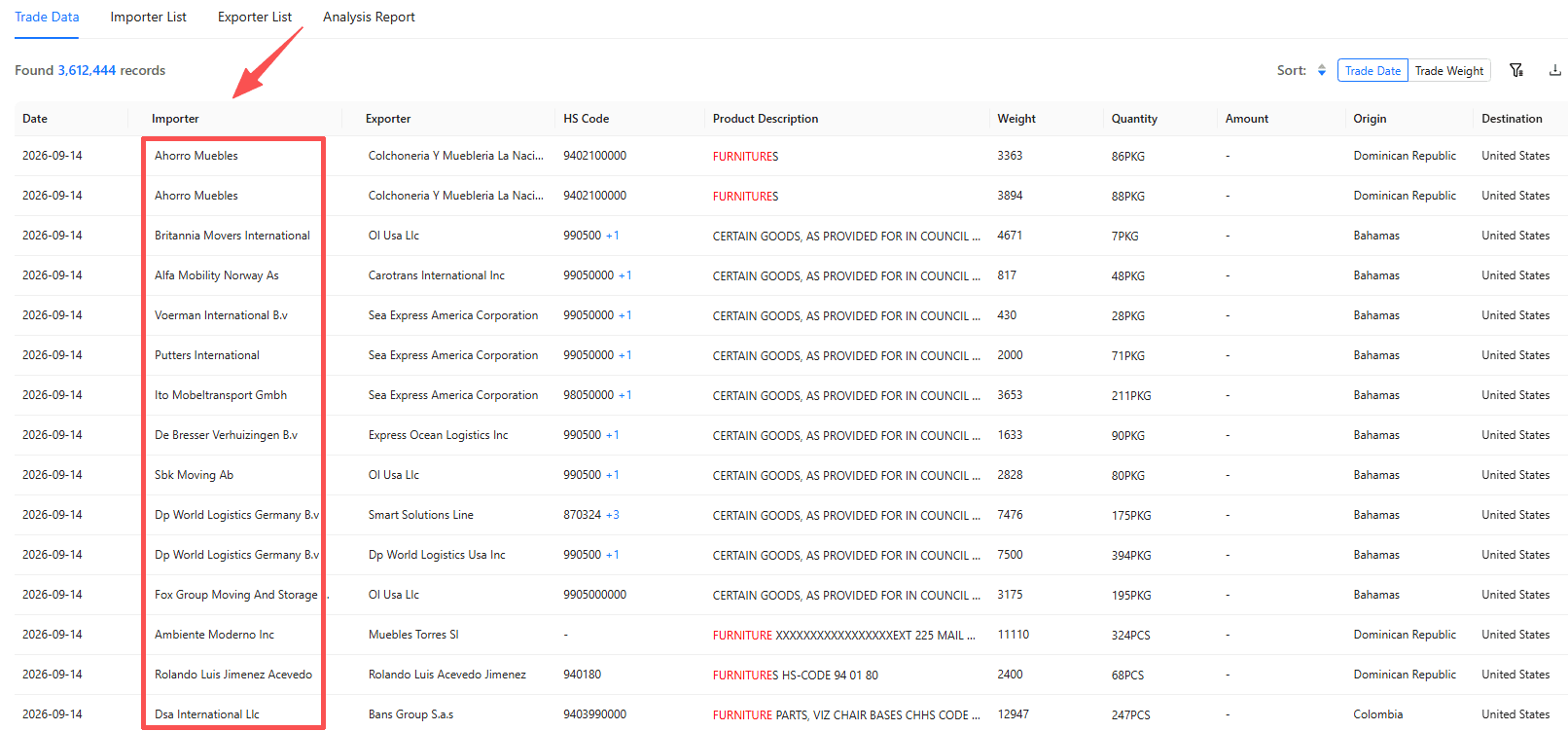
Customs and shipment records reflect transactions that have already occurred.
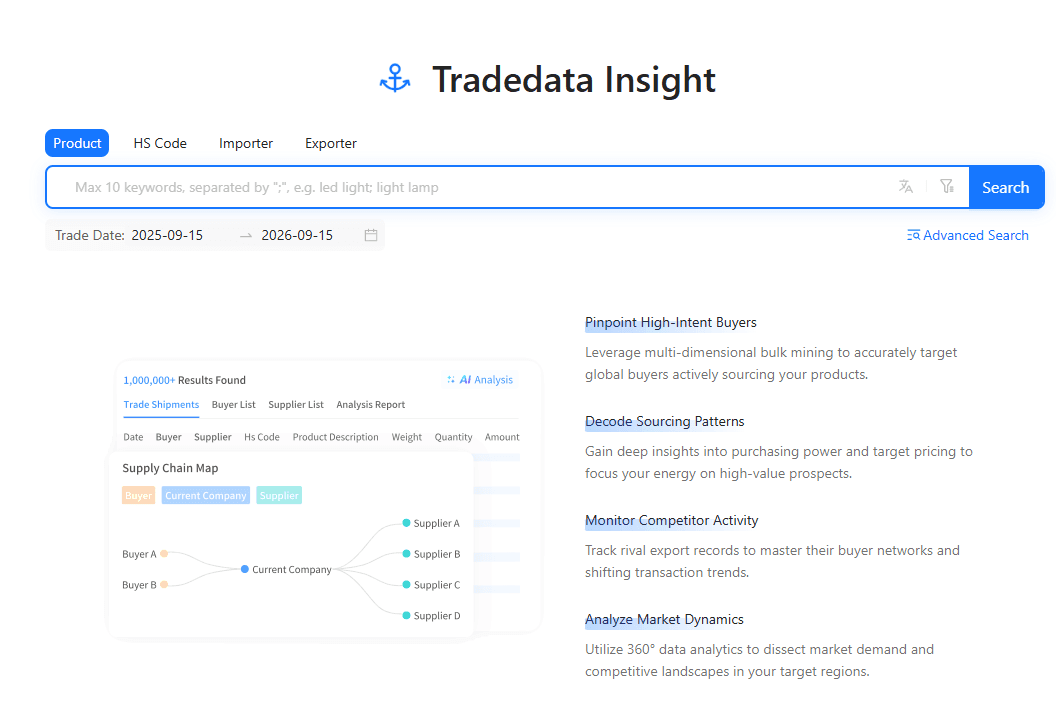
By searching with product keywords, HS codes, supplier names, or competitor names, exporters can build a prospect list based on demonstrated purchasing activity rather than assumed interest.
- Which Buyers Should Be Prioritized?
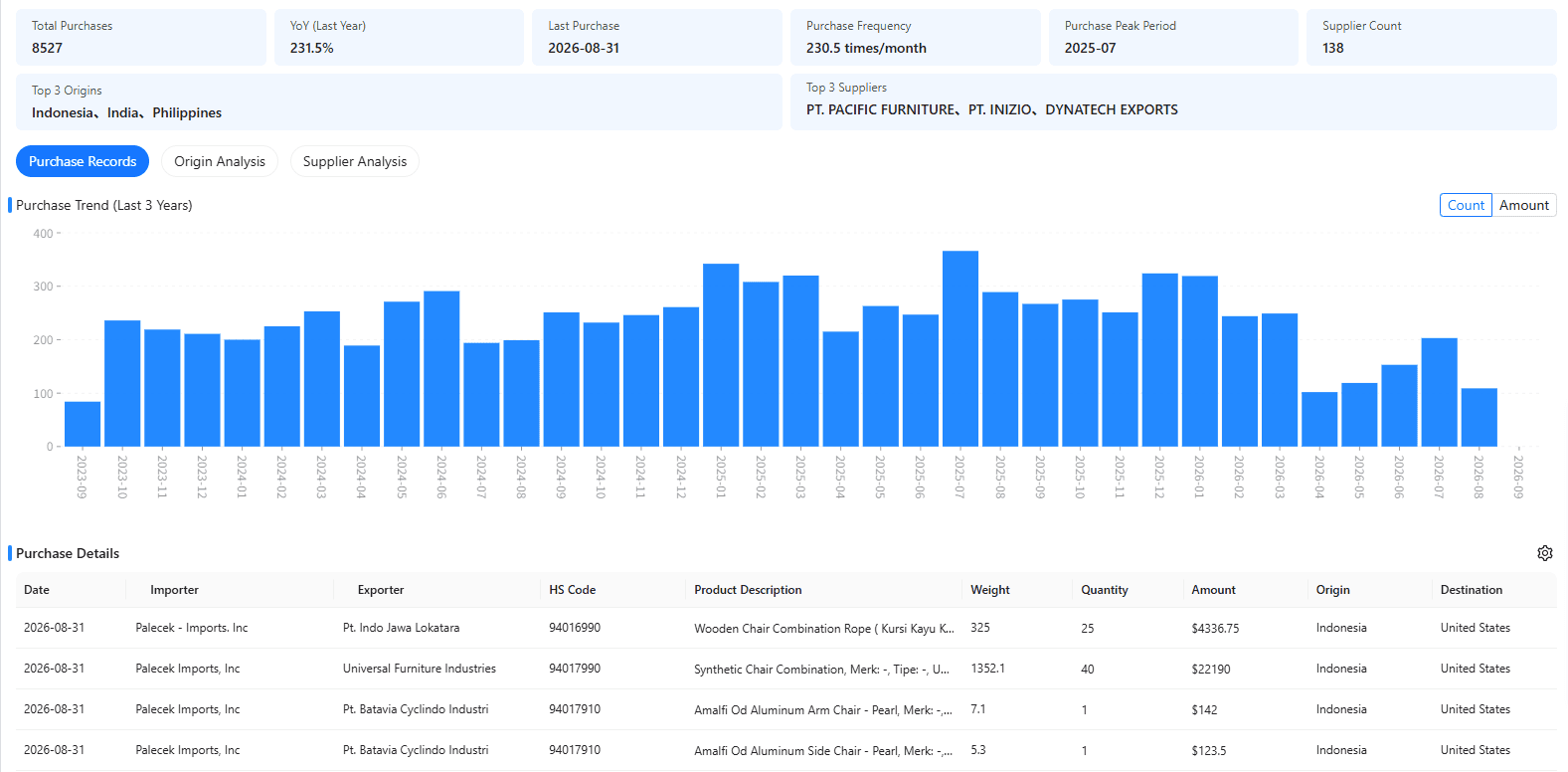
Finding a company name is only the first step. To evaluate whether a buyer deserves immediate attention, exporters should examine:
- The date of its most recent shipment
- The number of purchases made during the past year
- Whether shipment volumes are stable or changing
- The countries and suppliers it currently buys from
- Whether it is adding or replacing suppliers
- Whether its product specifications match your offering
- Whether its purchasing volume fits your production capacity
For export sales teams, recent activity, product fit, purchasing consistency, and supply chain changes are often more useful than company size alone.
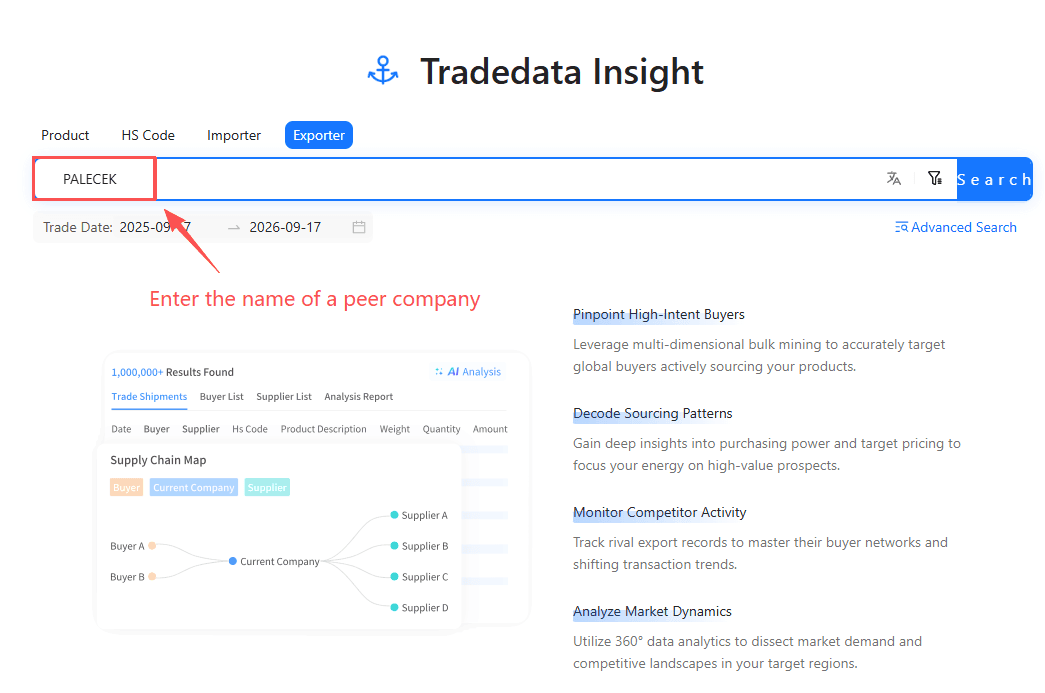
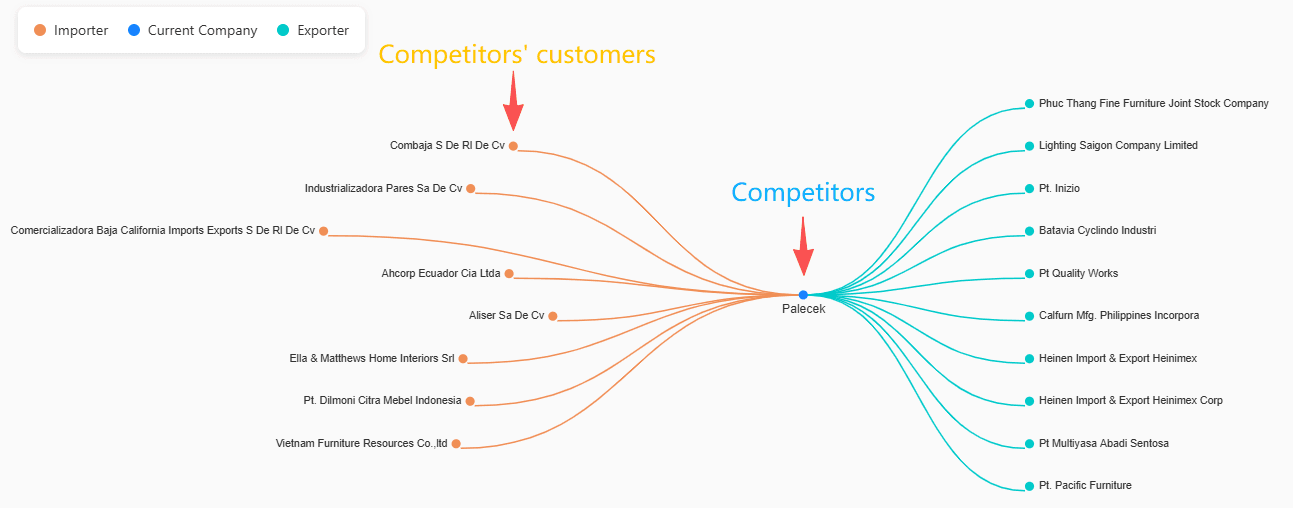
- Who Are Your Competitors Selling To?
If you know the names of competing manufacturers or suppliers, you can search their shipment histories to understand:
- Which U.S. buyers they serve
- Which products they sell into the U.S. market
- Which ports and routes they use
- Whether their customers are purchasing more or less
- Whether they have recently gained or lost buyers
- Which buyers source from multiple countries
This information can reveal markets already validated by competitors. It can also uncover buyers that may be diversifying their supplier base.
- When Is a Buyer Likely to Purchase Again?
Some importers purchase at relatively consistent intervals, such as every two months or once per quarter.
By reviewing historical shipment dates, exporters can estimate a potential purchasing window and begin outreach before the next order is placed.
This timing-based approach is generally more relevant than contacting prospects at random because it aligns sales activity with the buyer’s observable purchasing cycle.
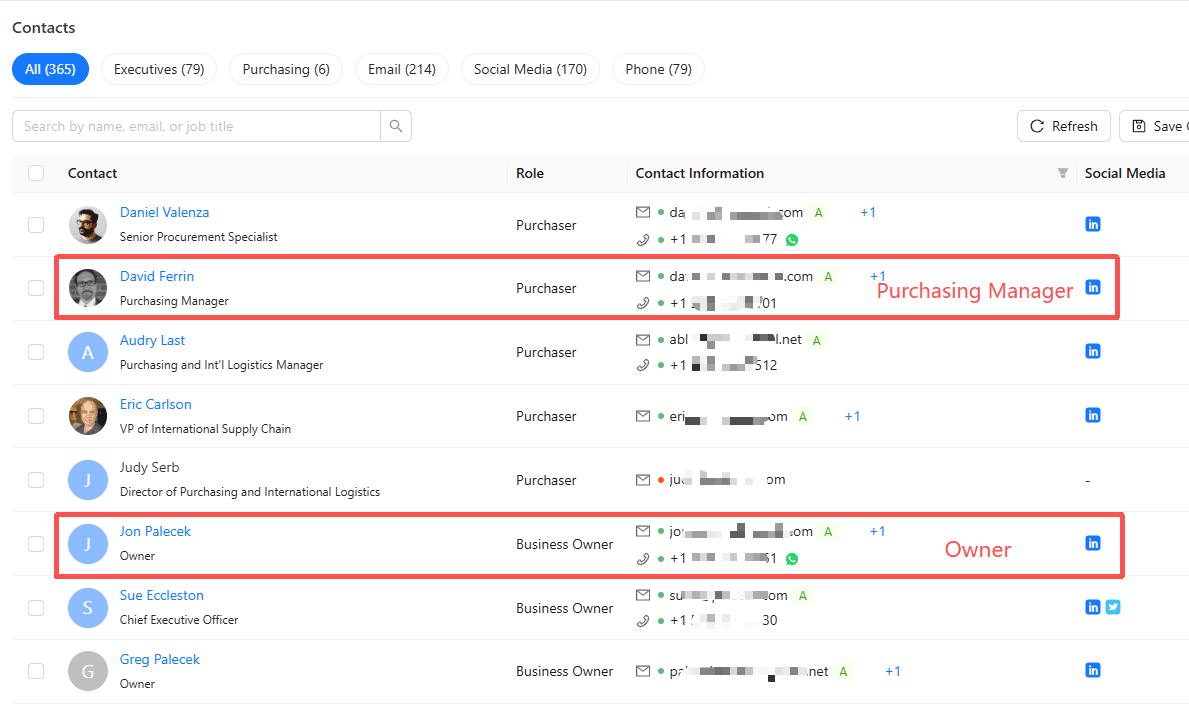
- How Can You Reach the Right Decision-Maker?
Customs and shipment records can help identify active companies, but they generally do not provide verified direct contact information for the people responsible for purchasing decisions.
This creates a common problem: the sales team can see the buyer but cannot reach the right person.
TradeSaya enriches purchasing records with company intelligence and decision-maker information. Depending on availability, users can identify purchasing managers, company owners, executives, and other relevant contacts, together with details such as:
- Full name
- Job title
- Business email
- Phone number
- WhatsApp information
This helps sales teams move from finding a company to reaching the people who can evaluate an offer and make a purchasing decision.
>>> Request a Free TradeSaya Demo <<<
4. Free Official Data or a Commercial Trade Intelligence Platform?
The right source depends on what you want to achieve.
If your goal is to study total U.S. import value, leading countries of origin, port activity, and long-term market trends, the U.S. Census Bureau’s USA Trade Online is a useful starting point.
It allows users to generate reports by commodity, country, state, customs district, port, and reporting period. It is suitable for answering market-level questions but does not identify individual importers or exporters.
If your goal is to find specific buyers, analyze company purchasing history, monitor competitors, or reach key decision-makers, you need a commercial trade intelligence platform such as TradeSaya.
TradeSaya combines global import-export records with buyer analysis, company profiles, supply chain relationships, decision-maker information, and sales management tools.
It helps businesses:
- Search trade records by product keyword, HS code, buyer, or supplier
- Identify U.S. importers with recent purchasing activity
- Analyze purchasing frequency, volume, and countries of origin
- Evaluate buyer strength and product fit
- Monitor competitors, customers, and supply chain changes
- Research company backgrounds and key decision-makers
- Add prospects to CRM for structured and continuous follow-up
>>> Request a Free TradeSaya Demo <<<
5.Conclusion
U.S. customs trade data is more than a list of importers. It is a source of trade intelligence that helps businesses understand market demand, verify purchasing activity, evaluate potential customers, and improve sales timing.
Official statistics are useful for understanding the overall U.S. market. Company-level shipment records are more valuable when the objective is to identify active importers and analyze their purchasing behavior.
When shipment intelligence is combined with buyer research, decision-maker data, and a structured sales process, exporters can move away from broad prospecting and focus on the companies most likely to become real customers.