How to Choose a Customs Data Platform: 6 Key Features for B2B Sales-TradeSaya

When developing overseas customers, many international sales teams use Google, LinkedIn, B2B platforms, and trade show lists to find potential buyers.
These channels can help companies discover businesses, but they do not always answer the following questions:
- Has the company actually imported your type of product?
- Is it still actively purchasing?
- How much and how often does it buy?
- Which suppliers does it currently work with?
- Who is the right person to contact?
- What should you mention in your first message?
Customs data provides real import and export records, helping sales teams better understand markets and buyers. However, customs data platforms vary in country coverage, update frequency, buyer analysis, and contact information.
So, how should an exporter choose the right customs data platform?
Here are six key features to consider.
1. Does It Cover Your Target Countries and Markets?
The first thing to check is whether the platform covers the countries and regions you want to develop.
Depending on what each country makes publicly available, a trade record may include:
- Importer name
- Exporter or supplier name
- Product description
- HS code
- Shipment date
- Quantity and weight
- Trade value
- Country of origin and destination
- Port of departure and arrival
Broader country coverage makes it easier to compare real demand across different markets.
However, coverage alone is not enough. You should also check how often the data is updated. Outdated records may not reflect a buyer’s current purchasing activity.
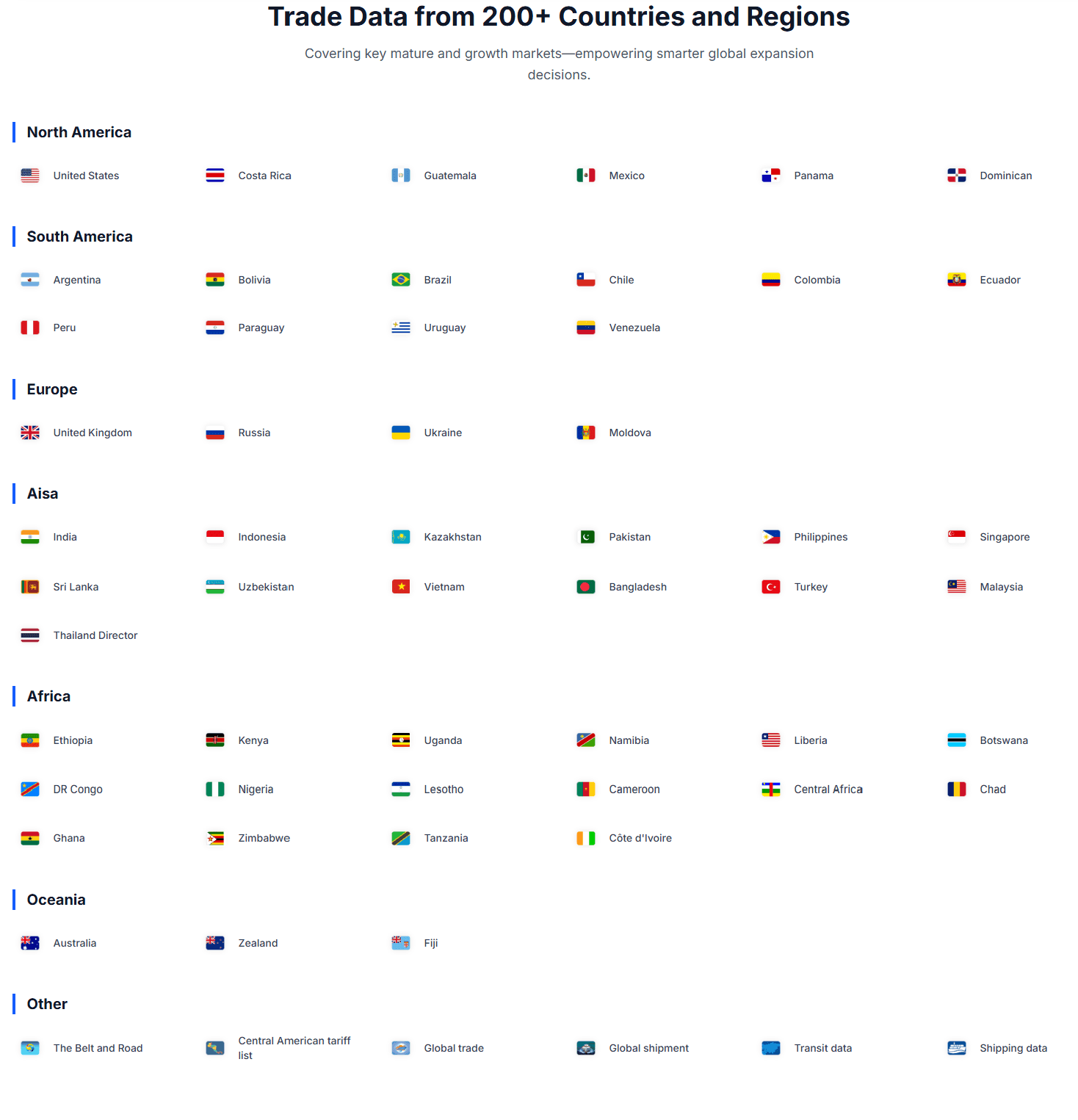
TradeSaya covers more than 200 countries and regions, with over 10 billion trade records updated weekly. Users can compare import trends, buyer numbers, and supplier structures across markets to decide where to focus their sales efforts.
>>>Request a Free TradeSaya Demo <<<
For example, instead of choosing a familiar European country without enough research, an outdoor furniture manufacturer can compare import volume, buyer activity, and purchasing trends across several countries before deciding where to invest its resources.
2. Can It Find Real Buyers for Your Products?
A useful customs data platform should allow users to search for products in different ways.
Product keywords are easy to use, but different companies may describe the same product differently. HS codes are more standardized, but one code may include several similar product categories.
For better results, sales teams should combine product keywords with HS codes and review the shipment records to confirm whether the products are relevant.
With TradeSaya, users can search by product, company, or HS code and then identify importers that have actually purchased related products.
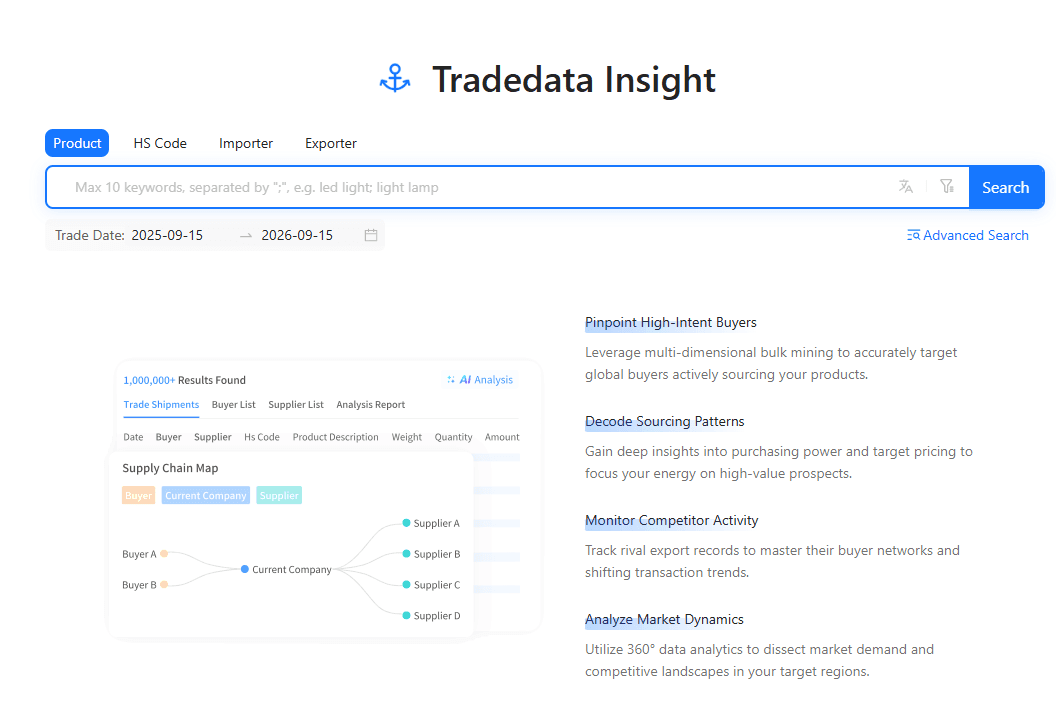
This is more accurate than relying only on Google or LinkedIn. A product listed on a company’s website does not necessarily mean the company is still buying it. Real import records provide stronger evidence of actual purchasing activity.
3. Can It Analyze Buyer Purchasing Behavior?
Finding a company is only the first step.
If a platform only provides a list of company names, sales teams may still struggle to decide which buyers should be contacted first.
A customs data platform should help users analyze:
- Whether the buyer has purchased recently
- How often the buyer places orders
- The approximate quantity of each purchase
- Which products the buyer purchases
- Which countries it sources from
- How many suppliers it works with
- Whether it has added or changed suppliers
- Whether its purchasing volume has changed
TradeSaya brings a buyer’s historical trade records together, helping sales teams understand its products, purchasing frequency, order volume, sourcing countries, and supplier relationships.

>>>Request a Free TradeSaya Demo <<<
For example, two companies may both import the same product. One placed only a single order last year, while the other purchases every month. For a supplier looking for long-term customers, the second company may be worth researching first.
Analyzing purchasing behavior helps sales teams reduce time spent on inactive or unsuitable leads and focus on buyers with more consistent demand.
4. Can It Show Whether a Buyer Is a Good Fit?
A large purchasing volume does not always mean that a buyer is the right customer for your business.
Large buyers may place bigger orders, but they often have stricter requirements for pricing, production capacity, certifications, delivery, and supply chain management. Smaller importers may buy less, but they may be more willing to test new products and suppliers.
To decide whether a buyer is a good fit, consider the following factors.
- Product Fit
Review the buyer’s previous product descriptions, categories, and HS codes to determine whether its purchases match the products your company supplies.
- Purchase Volume
Compare the buyer’s order quantities with your production capacity to see whether you can provide a stable supply.
- Purchase Consistency
Regular, long-term purchasing activity is often more useful than one large order.
- Supplier Opportunities
If a buyer has worked with only one supplier for a long time, it may be difficult to enter its supply chain.
If the buyer has recently added new suppliers, started sourcing from new countries, or reduced purchases from an existing supplier, it may be adjusting its supply chain.
TradeSaya combines trade records, buyer profiles, and supplier relationships. It helps sales teams understand not only who has purchased a product, but also which buyers may be more suitable to develop.
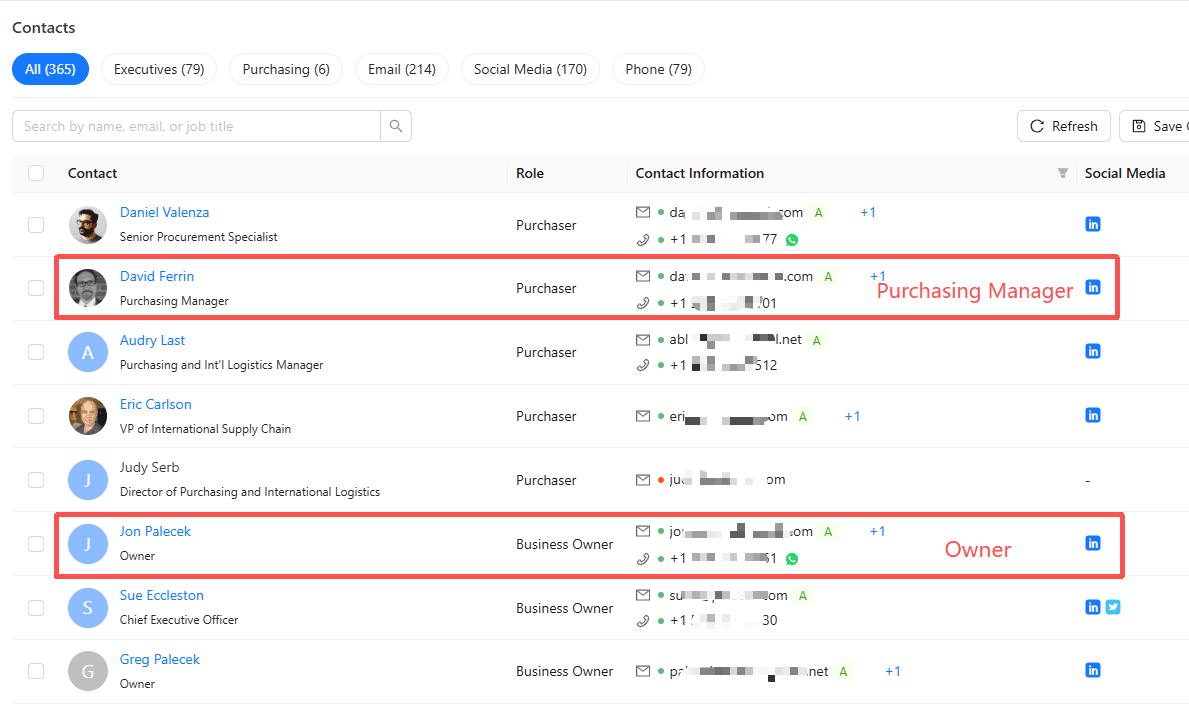
5. Can It Help You Find the Right Decision-Maker?
Once you have identified a target company, the next question is: Who should you contact?
Messages sent to general addresses such as info@company.com or sales@company.com often fail to reach the person responsible for purchasing.
When choosing a customs data platform, check whether it also provides company information and key decision-maker contacts.
TradeSaya provides both trade data and business contact information. Its decision-maker database helps sales teams identify suitable contacts based on the company’s size and business type.
>>>Request a Free TradeSaya Demo <<<
Combining purchasing records with decision-maker information also reduces the time spent searching across multiple websites.
6. Can It Support Sales Follow-Up and Customer Management?
The value of customs data goes beyond creating a buyer list.
The complete customer development process also includes:
- Saving customer information
- Prioritizing leads
- Recording communication
- Scheduling the next follow-up
- Monitoring changes in buyer demand
- Managing opportunities at different sales stages
If trade data and customer management are completely separate, salespeople may need to export spreadsheets repeatedly and organize customer information manually. As the number of leads grows, opportunities can easily be missed, and managers may struggle to understand the team’s progress.
TradeSaya includes CRM tools that help sales teams save customer information and manage follow-up activities.
Salespeople can first use trade data to identify promising buyers and then add qualified companies to their customer management process, moving from discovery to outreach and ongoing follow-up.
For teams developing several markets over a long period, this connected workflow can be more practical than using a platform that only provides raw trade records.
Who Is TradeSaya Suitable For?
TradeSaya is particularly suitable for:
- Manufacturers looking for overseas importers
- Exporters planning to enter new countries or markets
- International sales teams that want to improve prospecting efficiency
- Salespeople who need to understand buyer purchasing behavior
- Companies researching the customers of their competitors
- Business development teams looking for purchasing decision-makers
- Sales teams managing a large number of prospects
- Companies monitoring changes in existing customers’ purchasing activity
If your team currently relies mainly on Google, LinkedIn, B2B platforms, trade show contacts, or mass emails, TradeSaya provides a more focused approach: identify buyers through real trade activity first, and then contact them with more relevant messages.
Conclusion
When choosing a customs data platform, companies should look beyond the total amount of data.
For B2B sales teams, the more important question is whether the platform can help them:
- Identify markets worth developing
- Find real and active overseas buyers
- Analyze purchasing behavior
- Evaluate whether a buyer fits their business
- Find the right decision-makers
- Manage outreach and follow-up activities
TradeSaya combines global trade data, market analysis, buyer purchasing behavior, supplier relationships, decision-maker information, and CRM tools. It helps exporters manage the complete process, from identifying a market to developing potential customers.
Compared with searching through unverified company lists and sending the same message to every prospect, prospecting based on real trade activity helps sales teams focus their time on buyers with stronger potential.
If you would like to check whether TradeSaya covers your product and target market, prepare a product name, HS code, or target country and request a product demo.
>>>Request a Free TradeSaya Demo <<<
See how TradeSaya can help you discover real buyers, understand purchasing demand, and reach key decision-makers.