How to Find Importers for Your Product: A Practical Guide for Exporters-TradeSaya

For international sales teams, finding potential companies is usually not the hardest part.
Google searches, business directories, trade-show lists, and B2B platforms can quickly produce hundreds of company names.
The real challenge is determining:Which companies are actually importing your product?
A company may operate in your industry without purchasing internationally. It may have stopped importing several years ago, source a different product specification, rely entirely on domestic suppliers, or place orders that do not match your production capacity.
A long company list is therefore not the same as a qualified importer list.
To find importers more effectively, you need to confirm three things:
- The company is purchasing your product or a closely related product
- Its purchasing activity is recent and reasonably consistent
- Its requirements match the products and production capacity you can provide
Customs data provides evidence based on real international trade activity.
With TradeSaya, exporters do not have to collect thousands of company names and verify them one by one. They can begin with actual purchasing behavior and find suitable importers and decision-makers through three research paths: product, competitor, and market.
Route One: Start with the Product
Starting with the product is the most direct way to search for importers.
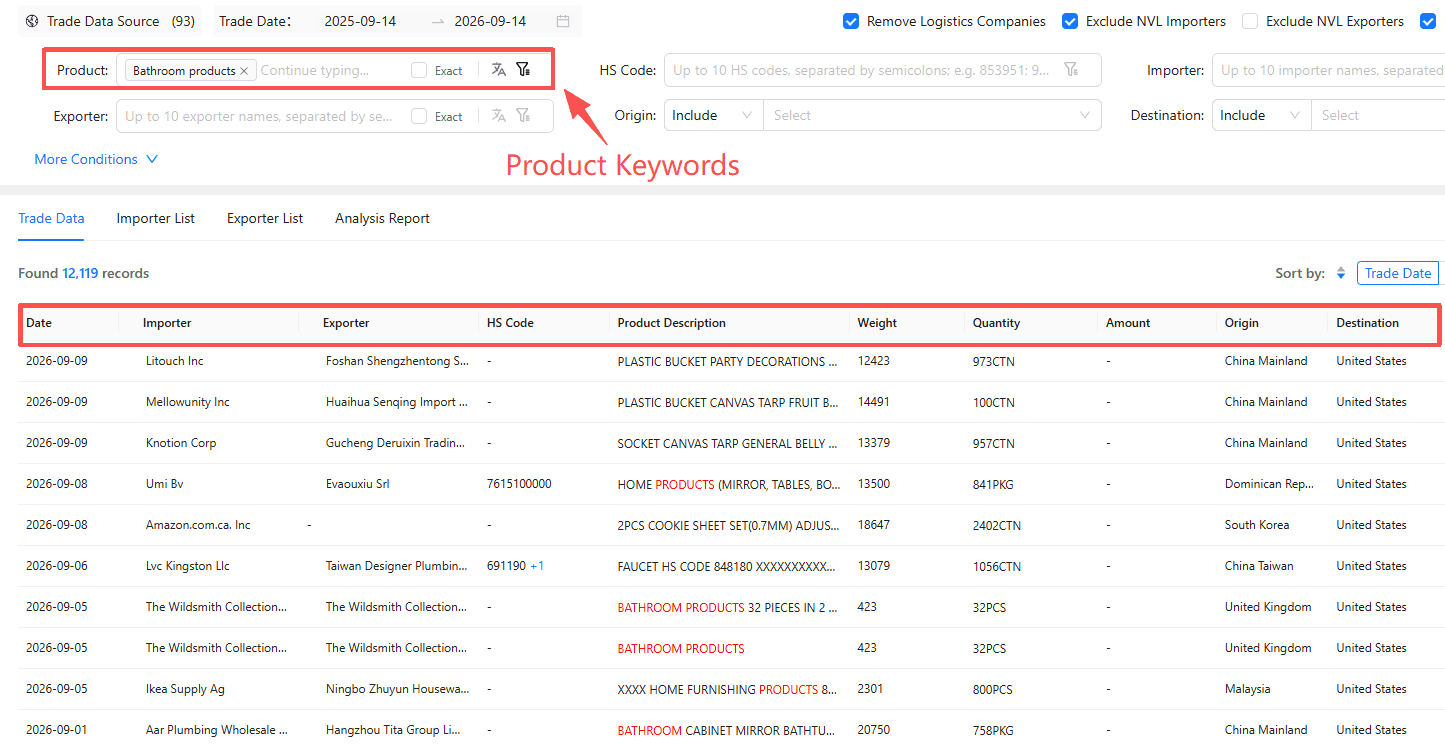
In TradeSaya, enter a product keyword or relevant HS code, then filter the results by target country, region, and time period. This allows you to identify companies that have recently imported the product.
Depending on the customs information available for each country, TradeSaya may also show shipment dates, quantities, weights, product descriptions, suppliers, and countries of origin.
However, do not immediately export every company name appearing in the results.
First, determine whether the transactions are relevant to your business:
- Does the shipment description match your product?
- Did the transactions occur recently?
- Has the buyer purchased more than once?
- Is the purchasing volume suitable for your business?
- Is the company buying finished goods, components, or raw materials?
- Do the specifications match your production capabilities?
For example, a company may import goods under the same HS code as your product while purchasing a different material, specification, or product for an entirely different application.
Based on the HS code alone, the company may appear to be a suitable prospect. After reviewing its shipment descriptions and transaction records in TradeSaya, however, you may discover that it is not a strong match.
The objective of product-based research is therefore not to build the largest possible prospect list. It is to use TradeSaya to find importers with verified purchasing activity that fits your products and supply capabilities.
Route Two: Start with a Competitor
Sometimes the best starting point is not the product itself, but a supplier or competitor you already know.
If a competitor exports products similar to yours, its customers represent a group of buyers that have already demonstrated genuine demand.
By searching for a competitor or supplier in TradeSaya, you can investigate:
- Which importers are purchasing from the company
- Which products the company mainly supplies
- Which countries and markets it serves
- How frequently its customers purchase
- Whether shipment volume is increasing or decreasing
- Whether buyers rely on one supplier or use multiple sources
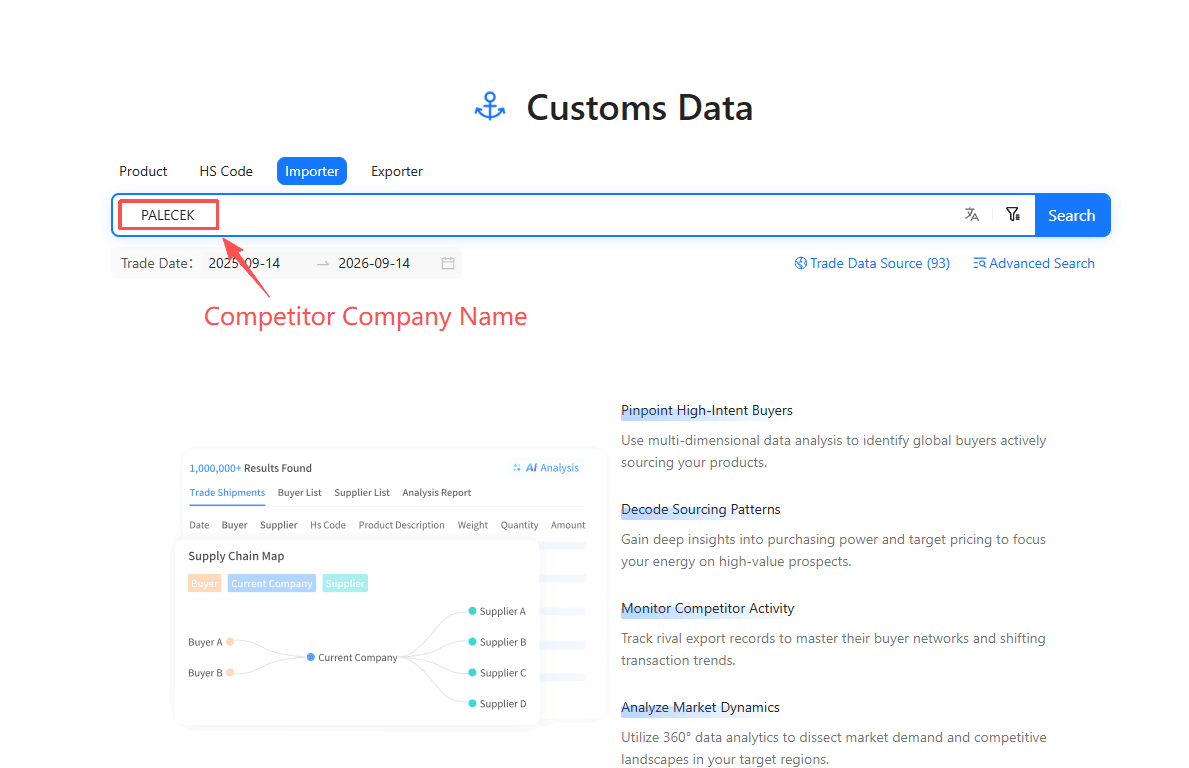
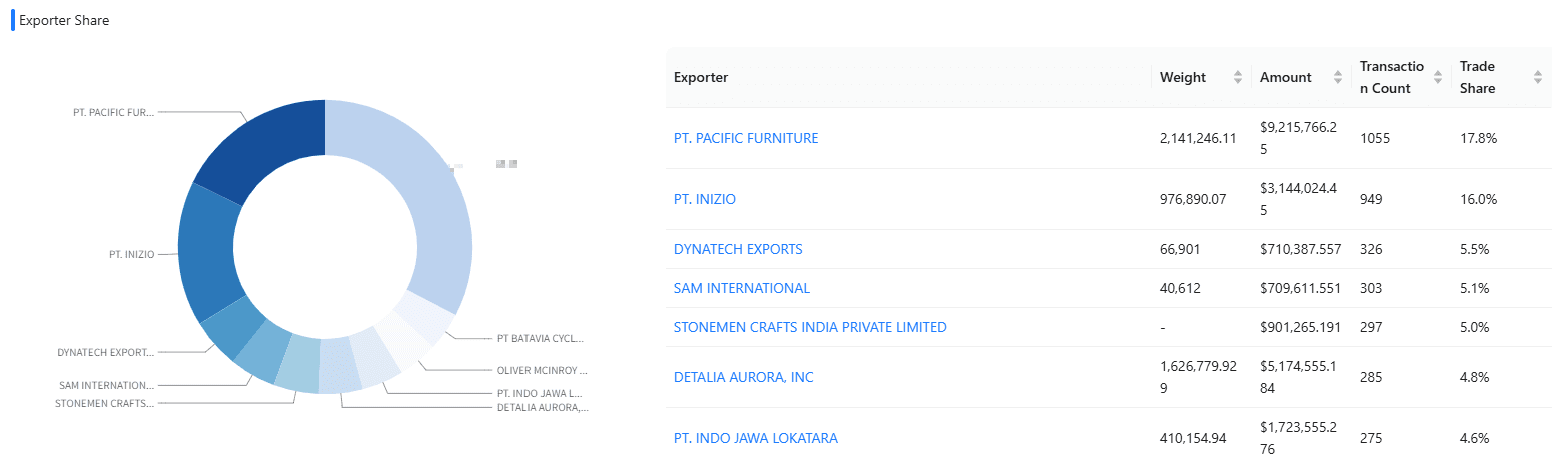

TradeSaya’s supplier search is particularly useful when product descriptions are inconsistent or an HS code covers a broad range of products.
Instead of relying only on product keywords, starting with a known competitor’s supply relationships can lead you more quickly to importers that are closely connected to your industry.
However, not every competitor customer should automatically become an immediate sales target.
Some buyers may have stable, long-term supplier relationships. Others may purchase specifications that your company cannot manufacture.
The more promising opportunities are often buyers that:
- Work with several suppliers
- Have recently added new suppliers
- Source the same product from multiple countries
- Show changes in purchasing frequency or volume
- May not be fully served by their existing suppliers

After identifying these importers in TradeSaya, consider how your company could enter their supply chain. A relevant advantage might include:
- A product their current supplier does not offer
- More flexible customization
- A lower minimum order quantity
- Additional production capacity
- Faster delivery
- Different product certifications
- A backup source that improves supply continuity
TradeSaya can reveal the supply relationships behind your competitors. Your genuine competitive strengths will determine whether those relationships can become new business opportunities.
Route Three: Start with the Market
If you know what type of buyer you want but have not identified the best country to target, begin with the market.
Instead of evaluating countries one at a time based on assumptions, use TradeSaya to compare actual trade activity across multiple markets, including:
- Current demand for the product
- Changes in trade value and shipment volume
- The number of active importers
- Buyer purchasing frequency
- Major countries of origin
- Leading suppliers in the market
- Whether demand is concentrated among a few buyers or distributed across many companies
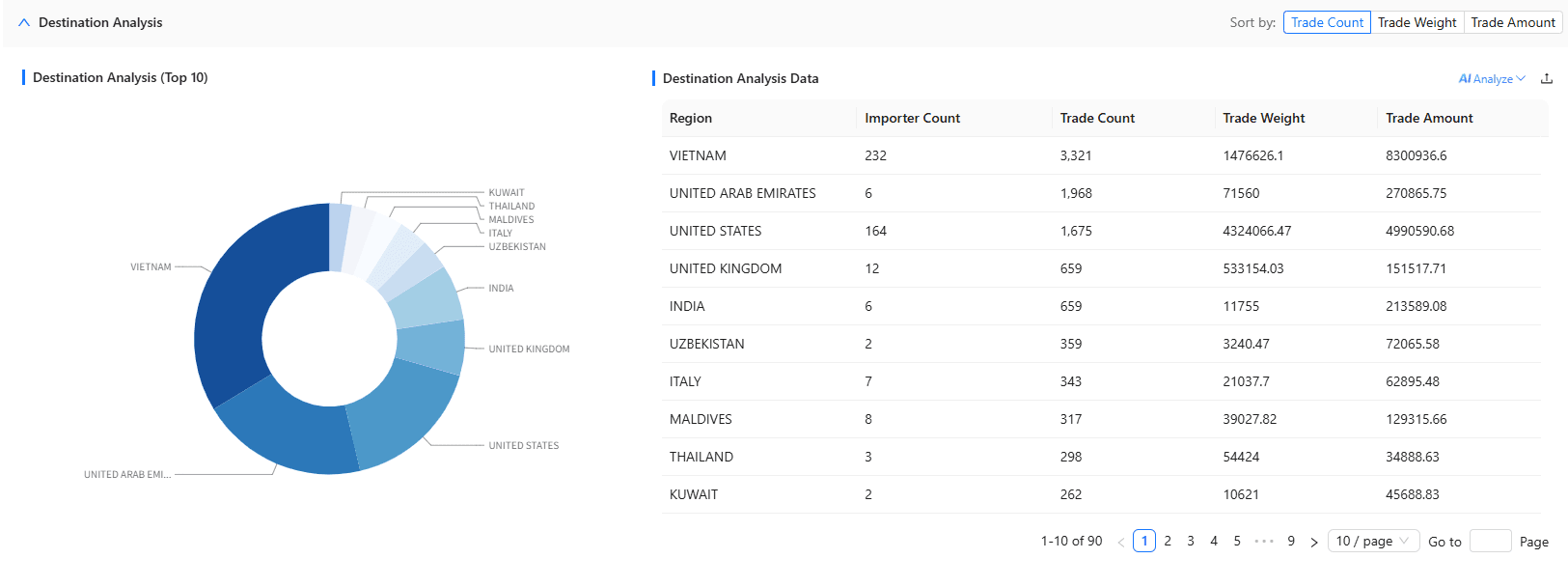
For example, one country may import a large volume of bathroom products, but most purchases may be controlled by only two major importers.
Another country may have a smaller total import volume but dozens of medium-sized buyers purchasing consistently throughout the year.
If your company specializes in flexible production and medium-sized orders, the second market may provide more realistic entry opportunities.
TradeSaya helps you compare demand across countries and then move from market-level analysis to individual importer records. You can examine which companies are purchasing, whether their activity is consistent, and whether their order sizes match your capabilities.

This means you do not have to select a country first and then search blindly for companies. You can use TradeSaya to identify markets that fit your products and production capacity before focusing on their most valuable importers.
TradeSaya brings product, HS code, competitor, market, supplier, and buyer searches together on one platform. Exporters can enter the research process from different directions and verify each opportunity using real trade records.
>>>Request a Free TradeSaya Demo <<<
From an Importer Name to the Right Person
Once you have identified a suitable company, the next question is: who should you contact?
Basic customs databases usually help you find company names only. Sales representatives may still spend hours searching company websites, LinkedIn, business directories, and social platforms for relevant contacts.
Even when contact information is available, it may lead only to a generic inbox or to someone who is not responsible for purchasing.
TradeSaya’s customs data service combines verified trade activity with available company and decision-maker contact information.
After identifying a qualified importer, users can look for the work email addresses, phone numbers, and other available contact channels of purchasing managers, supply chain managers, business owners, CEOs, or general managers.
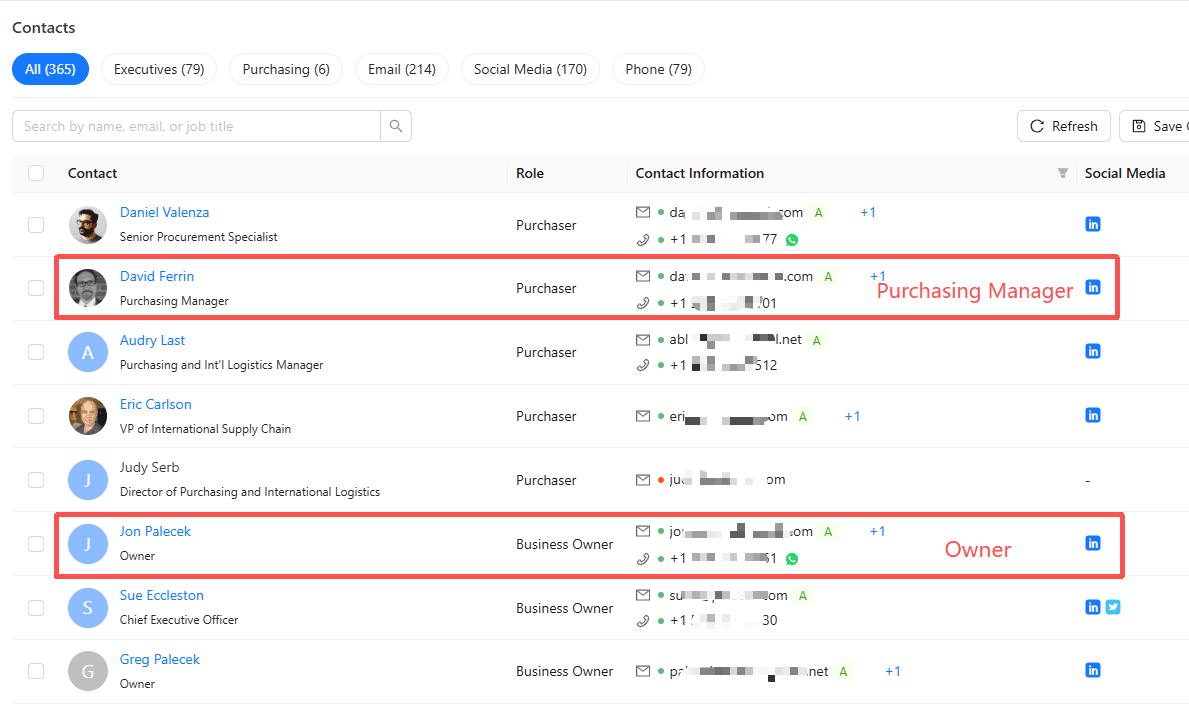
This helps exporters reach relevant decision-makers more quickly, reduce time spent searching for contacts, and improve prospecting efficiency.
>>>Find Active Importers and Purchasing Decision-Makers with TradeSaya <<<
Customs data can also help you decide how to write your first outreach message.
Through TradeSaya, you may already understand:
- Which products the company purchases
- How frequently it purchases
- Which countries it mainly sources from
- Whether purchasing volume is changing
- Whether it relies on one supplier or works with several
These insights can provide useful context for your outreach.
A generic message might begin:“We are a professional manufacturer offering high-quality products at competitive prices.”
A more relevant message would be:“We specialize in stainless-steel insulated drinkware for importers that require flexible customization and reliable production capacity. We would like to explore whether our products could support your current sourcing plans.”
The first message simply introduces the supplier.
The second connects the supplier’s capabilities with a potential purchasing requirement.
Final Thoughts: Turn Company Lists into Real Sales Opportunities
Finding importers is not about collecting as many company names as possible. It is about identifying buyers with genuine demand, suitable purchasing capacity, and a realistic potential for cooperation.
Product-based research reveals companies that are importing relevant goods. Competitor-based research uncovers existing supply relationships. Market-based research helps determine which countries and regions offer a demand structure that fits your business.
TradeSaya brings these three research paths together with real customs data. Exporters can examine importers’ products, purchasing frequency, supplier relationships, and changes in trade activity, then access available company and purchasing decision-maker contact information.
The objective is not to build a longer prospect list. It is to use reliable data to find better-matched importers, reach the right people, and focus limited sales time on opportunities that are more likely to convert.