How to Use Customs Data to Find Global Buyers -TradeSaya
As competition in international markets continues to increase, the real challenge for exporters is no longer simply finding more company names. Sales teams need to answer more practical questions:
- Which countries are actively importing their products?
- Which companies are still purchasing these products?
- Which buyers have purchasing volumes that match their supply capabilities?
- Who are the buyer’s existing suppliers?
- What are the buyer’s purchasing frequency, price range, and ordering cycle?
- How can exporters find purchasing managers, supply chain executives, and other key decision-makers?
- Once a potential buyer has been identified, how can the sales team follow up consistently and move the opportunity toward a deal?
Google, LinkedIn, B2B platforms, and trade shows can all help companies discover potential customers. However, these channels do not necessarily prove that a company is currently purchasing a particular product.
This is where customs data becomes valuable.
Customs data reflects actual cross-border trade activity. By analyzing importers, exporters, product descriptions, HS codes, transaction dates, quantities, values, countries of origin, and supplier relationships, exporters can move from broadly searching for companies to prioritizing buyers with demonstrated purchasing demand.
However, raw customs records do not automatically generate orders. Companies must still select the right markets, qualify buyers, analyze purchasing behavior, identify decision-makers, and manage sales follow-up.
TradeSaya connects these activities. It helps international sales teams use global trade data to analyze markets, discover buyers, understand customer needs, obtain contact information, and manage the sales process.
How TradeSaya Turns Customs Data into Global Sales Opportunities
TradeSaya is more than a database for searching bills of lading or downloading trade records.
Through three core modules—TradeSaya Insight, TradeSaya Buyer360, and TradeSaya CRM+—the platform connects global trade data, buyer analysis, decision-maker contact information, and sales follow-up in one workflow.
The customer development process can be divided into three stages:
1. Use TradeSaya Insight to select target markets and find active buyers.
2. Use TradeSaya Buyer360 to analyze buyers and reach key decision-makers.
3. Use TradeSaya CRM+ to manage leads, follow-up activities, and sales opportunities.
Stage One:Analyze Markets and Find Buyers
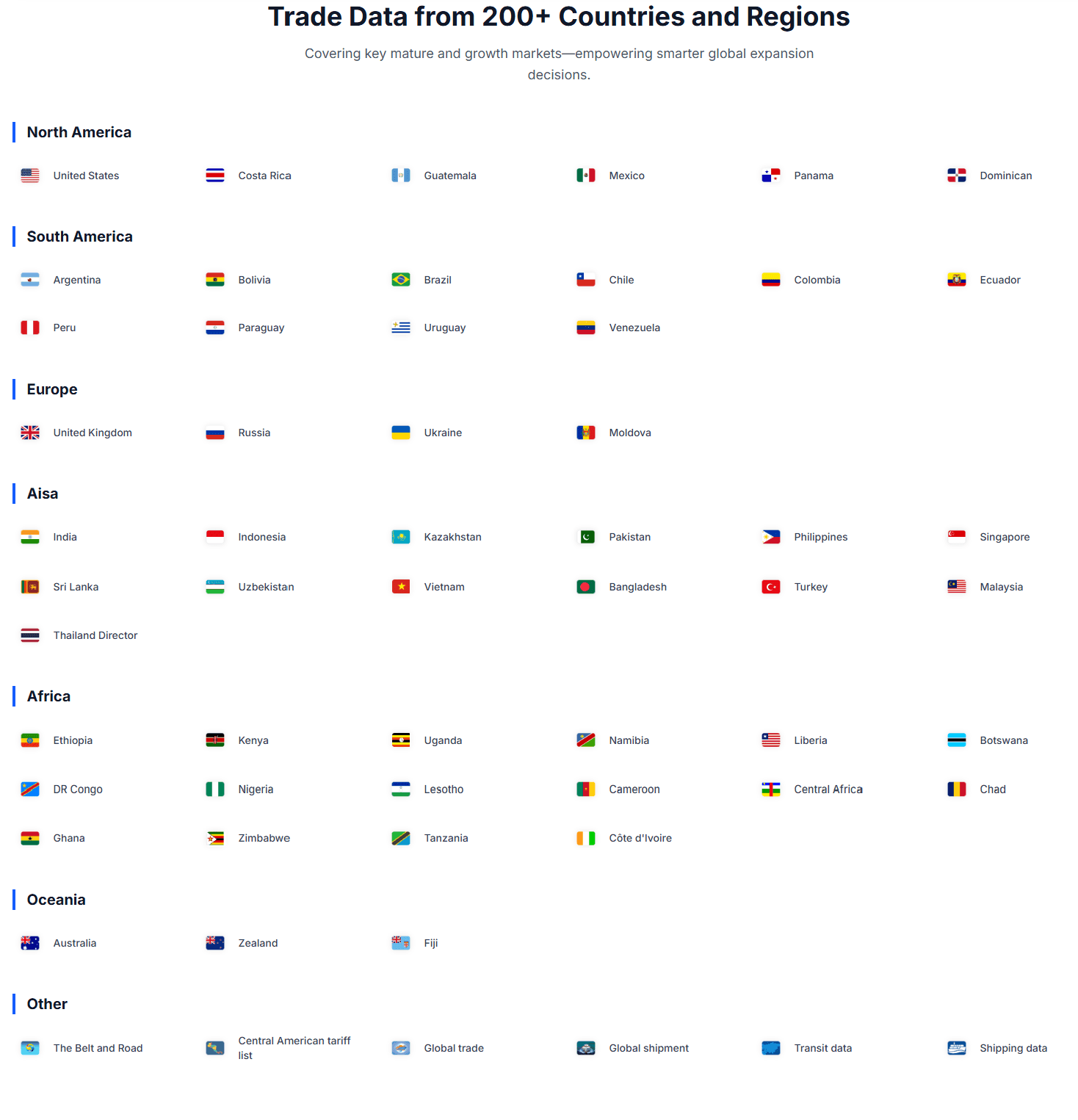
TradeSaya covers trade data from more than 200 countries and regions, with information updated on a regular schedule.
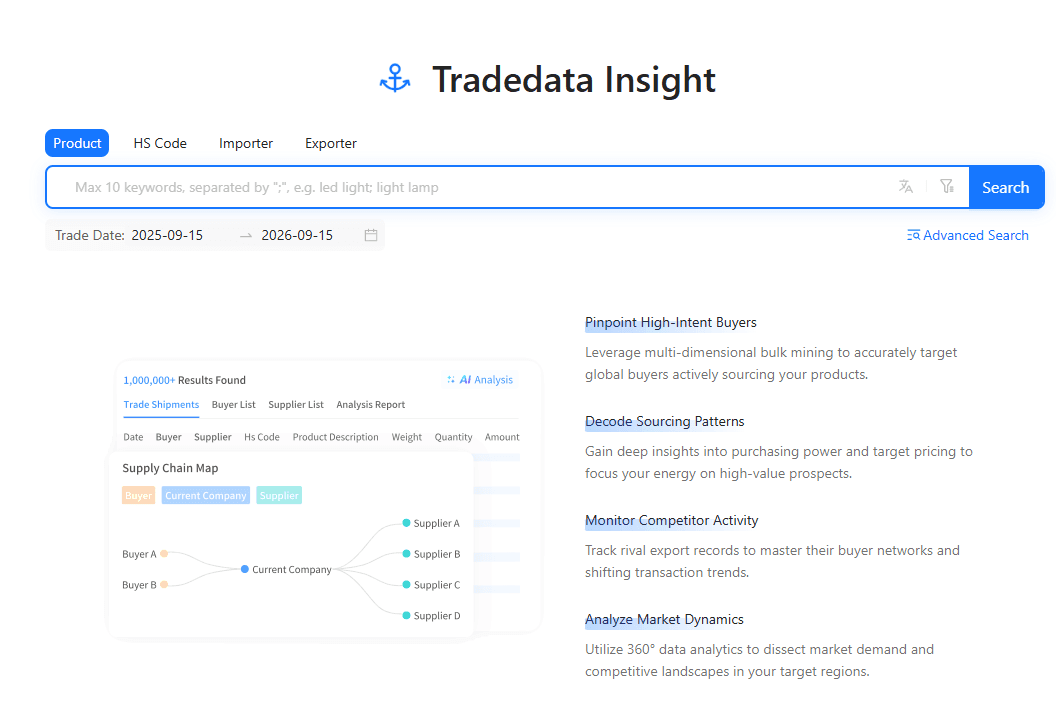
Users can conduct multidimensional searches using product names, HS codes, importers, exporters, origin countries, destination markets, and time periods.
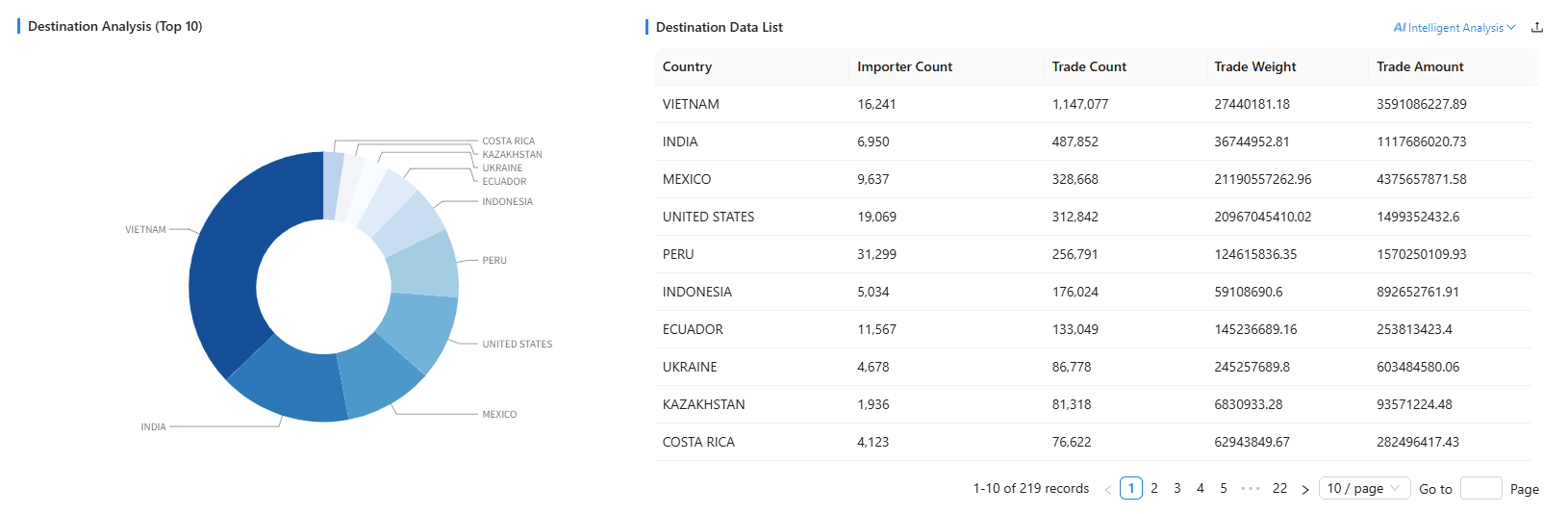
1.Identify High-Potential Markets
Companies can compare markets based on:
- Import value and quantity
- Number of buyers and suppliers
- Increasing or declining demand
- Monthly and quarterly purchasing changes
- Major countries of origin
- Leading importers
- Market concentration
- Product seasonality
For example, an industrial components manufacturer planning to enter South America does not need to select a country based only on assumptions.
It can use TradeSaya to compare import volumes, market growth, the number of active buyers, and existing supplier structures across different countries. The company can then decide where its sales resources are most likely to produce results.
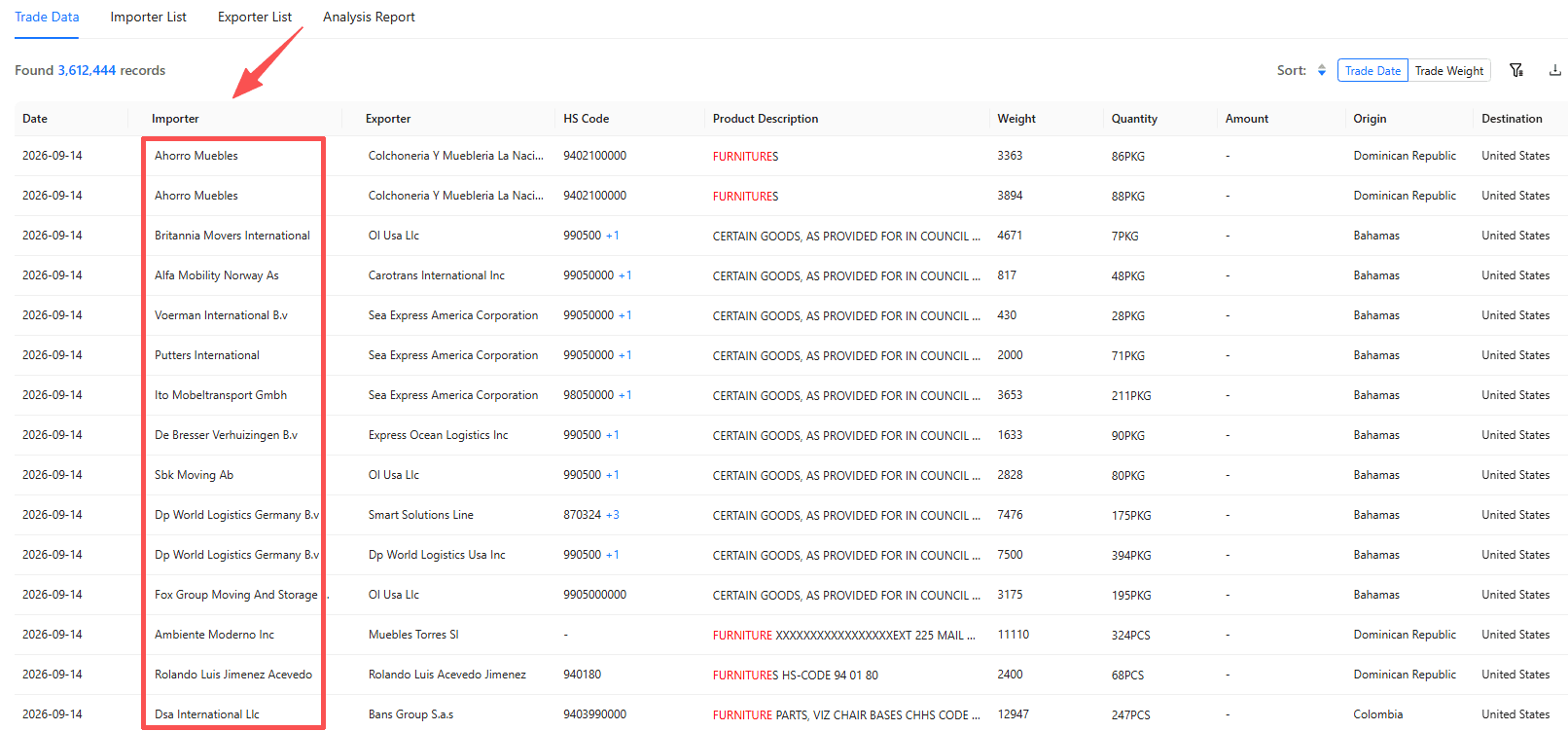
2.Find Active Buyers Using Products and HS Codes
Users can enter a product keyword or HS code to find companies that have imported related products.
The results can then be filtered by:
- Target country or region
- Most recent transaction date
- Purchasing frequency
- Purchase quantity
- Transaction value
- Country of origin
- Existing supplier
This approach removes many companies without relevant purchasing records and allows salespeople to focus on importers with demonstrated buying activity.
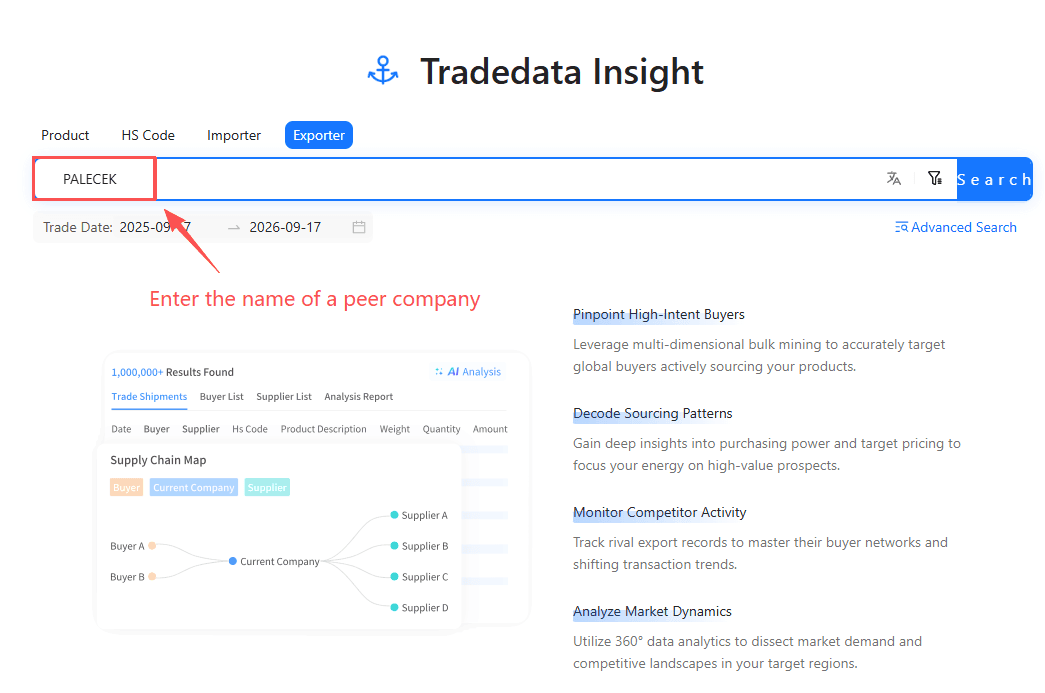
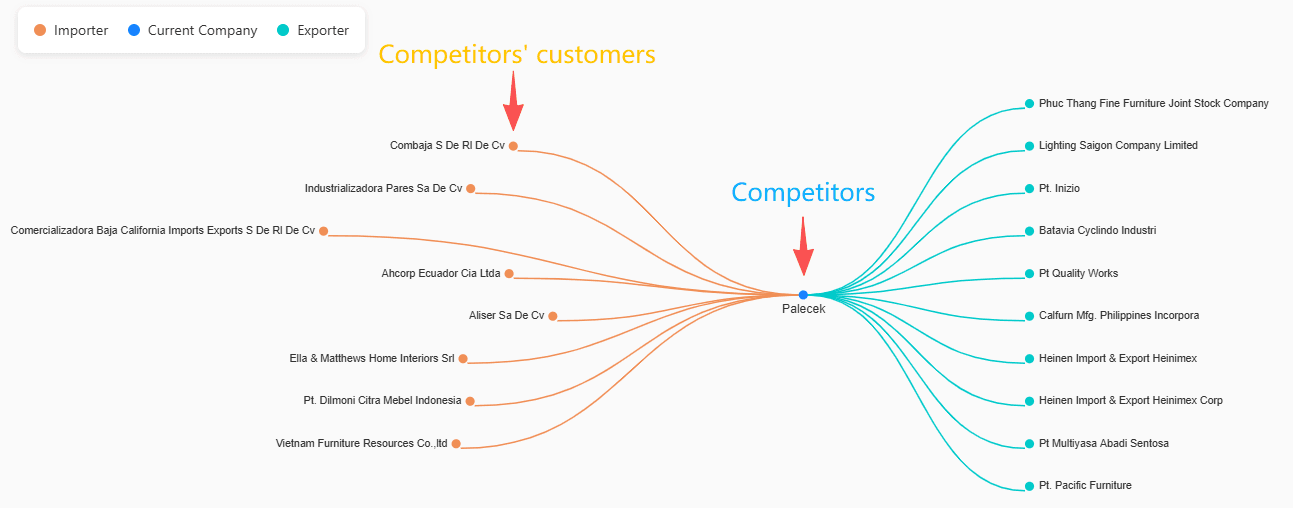
3.Discover Opportunities Through Competitors’ Customers
If a company already knows its main competitors, it can search for their trading partners.
Sales teams can analyze:
- Which buyers are purchasing from a competitor
- How much those buyers purchase
- Whether the trading relationship is stable
- Whether recent trading volumes have changed
- Whether buyers are adding other suppliers
- Which customers may be reassessing their supply chains
Buyers already purchasing from a competitor have been validated by the market as genuine customers for the relevant product category. They are often more valuable research targets than companies with no known purchasing activity.
4.Analyze Purchasing Capacity and Supply Chains
TradeSaya does more than show whether a buyer has purchased a particular product.
It can also help users understand purchasing frequency, transaction volume, product structure, origin countries, and supplier relationships.
Salespeople can use this information to distinguish between:
- Small buyers that purchase occasionally
- Long-term importers with stable purchasing activity
- Buyers whose order volumes are growing rapidly
- Customers that depend heavily on one supplier
- Companies diversifying their supply risk
- Buyers that have recently started testing new suppliers
This means buyer qualification no longer depends only on company size or total purchasing volume. It can also consider product fit, recent activity, purchasing stability, and the possibility of entering the account.
>>> Request a Free TradeSaya Demo <<<
Stage Two:Develop a Deeper Understanding of Each Customer
After identifying a target company, the sales team still needs to answer two questions:
1. Is this company genuinely worth developing?
2. Who within the company should be contacted?
TradeSaya can turn company-level trade activity into a more complete buyer profile.
1.Review Basic Company Information
TradeSaya can help users understand a target company’s:
- Official website
- Industry
- Main products
- Business type
- Company size
- Geographic location
This information helps salespeople verify the company and determine whether it is an end buyer, distributor, wholesaler, or another type of participant in the supply chain.

2.Analyze Historical Purchasing Records
TradeSaya can consolidate a buyer’s historical import and export activity, including:
- Product categories
- Purchasing frequency
- Purchase quantity
- Purchase value
- Major countries of origin
- Existing suppliers
- Purchasing cycles
- Changes in purchasing activity

Sales teams can use this information to assess the buyer’s purchasing capacity and likely market positioning before preparing a more relevant sales proposal.
For example, if a buyer consistently purchases mid-range or premium products, competing only on a low price may not be the most effective approach.
The salesperson may achieve better results by focusing on product quality, certifications, customization capabilities, and delivery reliability.
3.Review Supply Chain Relationships
TradeSaya can help users understand a buyer’s existing suppliers, main sourcing countries, and changes in supplier relationships.

If a buyer starts adding suppliers, reduces purchases from an established supplier, or begins sourcing from a new country, the company may be looking for improvements in pricing, quality, production capacity, or supply chain security.
These signals can help exporters choose a more appropriate time to approach the buyer.
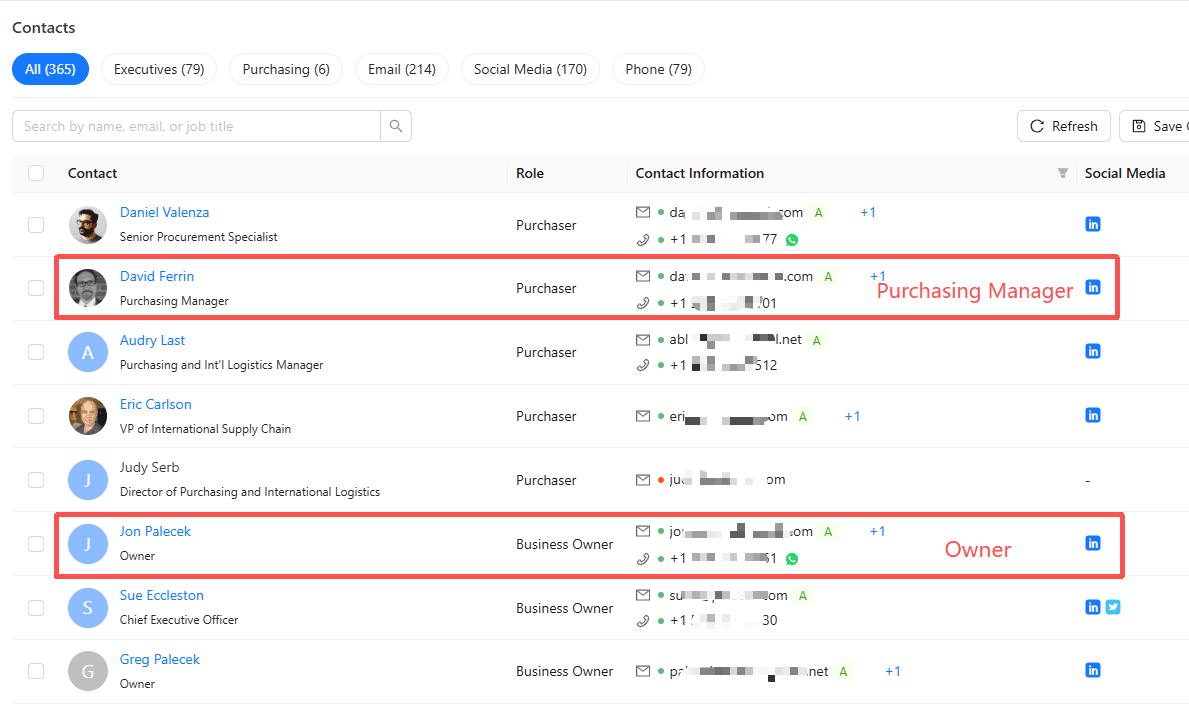
4.Find Key Decision-Makers
For many international sales teams, the main difficulty is not finding a company. It is finding the right person inside that company.
Messages sent to general addresses such as `info@` or `sales@` often fail to reach the people responsible for purchasing decisions.
TradeSaya can help users directly find the names, email addresses, telephone numbers, WhatsApp details, and other available contact information of company owners, purchasing professionals, senior executives, and other key decision-makers.
This enables salespeople to move from simply finding a company to contacting the individuals responsible for purchasing decisions.
>>> Request a Free TradeSaya Demo <<<
Stage Three:Manage the Sales Process Clearly
After obtaining buyer and decision-maker information, leads can still be lost without a consistent follow-up process.
TradeSaya can centralize customer information and sales activities.
1.Build a Centralized Customer Database
Teams can store customer information in one place and categorize accounts by country, product, customer type, sales stage, and priority.
This reduces the risk of customer information being scattered across personal inboxes, Excel files, messaging applications, and individual salespeople’s computers.
2.Preserve Complete Communication Records
The CRM can record emails, quotations, call notes, and other follow-up information.
When an account is transferred to another salesperson, the new owner can quickly understand the previous communication history and continue the conversation without unnecessary repetition or disruption.
3.Reduce Duplicate Prospecting and Internal Conflict
The system can check leads using company names, websites, and contact information.
This helps clarify account ownership and reduces situations in which several salespeople contact the same customer independently.
4.Reuse Leads That Have Not Been Followed Up
Customers that have remained inactive for a defined period can be moved into a shared lead pool and reassigned to other salespeople.
This improves lead utilization and prevents potential customers—already acquired through an investment of time and resources—from being left unused.
5.Give Managers Visibility into Sales Progress
Sales managers can review customer volumes, follow-up frequency, and deal stages across the team.
This makes it easier to identify insufficient follow-up, lead backlogs, and stalled opportunities before they become larger problems.
How Is TradeSaya Different from an Ordinary Customs Data Tool?
Ordinary customs data tools generally focus on solving one problem: searching trade records.
TradeSaya is designed to support the complete process from data discovery to sales conversion:
- Evaluate markets using global trade data
- Discover active buyers through actual transactions
- Assess customer value through purchasing behavior
- Identify entry opportunities through supply chain relationships
- Locate key decision-makers with Buyer360
- Manage leads and sales processes with CRM+
This integrated model reduces the time salespeople spend switching between multiple databases, search engines, Excel spreadsheets, and CRM systems.
TradeSaya also provides product training and user support to help teams learn how to search, filter, and analyze buyer information.
This is particularly valuable for small and medium-sized exporters that may not have dedicated trade data analysts.
Which Companies Can Benefit from TradeSaya?
TradeSaya is suitable for:
- Manufacturers planning to enter new international markets
- Exporters that need a continuous pipeline of importer leads
- International sales teams seeking more efficient customer acquisition
- Companies researching their competitors’ customers
- B2B sales teams looking for purchasing decision-makers
- Suppliers that need to monitor important existing customers
- Sales managers building a standardized sales process
- Companies seeking to integrate trade data, buyer intelligence, and CRM
For users that only need to review country-level trade volumes, free trade databases may already provide sufficient information.
However, companies that need to identify real buyers, analyze purchasing behavior, contact decision-makers, and continuously manage sales opportunities require a more complete trade intelligence and customer development solution.
Would you like to discover which countries are importing your products or examine a target buyer’s purchasing records, supplier structure, and key decision-makers?
Apply for a free TradeSaya trial or request a product demonstration to start finding your next high-value global buyers through real trade data.