What Is Customs Data and How Can It Help You Find Real Global Buyers? - TradeSaya
What Is Customs Data and How Can It Help You Find Real Global Buyers?
If you work in international trade, you know the challenge: you spend hours on Google, LinkedIn, and B2B platforms searching for buyers, but most leads never convert. The problem is not a lack of effort. It is a lack of precision. You are targeting companies based on what they claim to be, not on what they actually buy.
Customs data is the solution. It is the official record of cross-border trade shipments filed with government customs authorities. Every time goods cross an international border—by ocean, air, or land—the exporter or importer must submit a Bill of Lading or Air Waybill. These documents contain the importer's name, the exporter's name, the HS code, product description, shipment date, weight, volume, and country of origin and destination. Because these records are legally required for taxation and security, they are highly accurate and cannot be easily falsified.
For exporters, this trade data is the most reliable way to find real global buyers. Instead of relying on self-reported B2B profiles, you can search actual import-export data to see which companies are actively importing your product right now. This article shows you exactly how to use customs data to find verified buyers, analyze their activity, and connect with them directly.
How to Use Customs Data to Find Real Buyers
The process is straightforward. Follow these four steps.
Step 1: Search by HS Code or Product Description
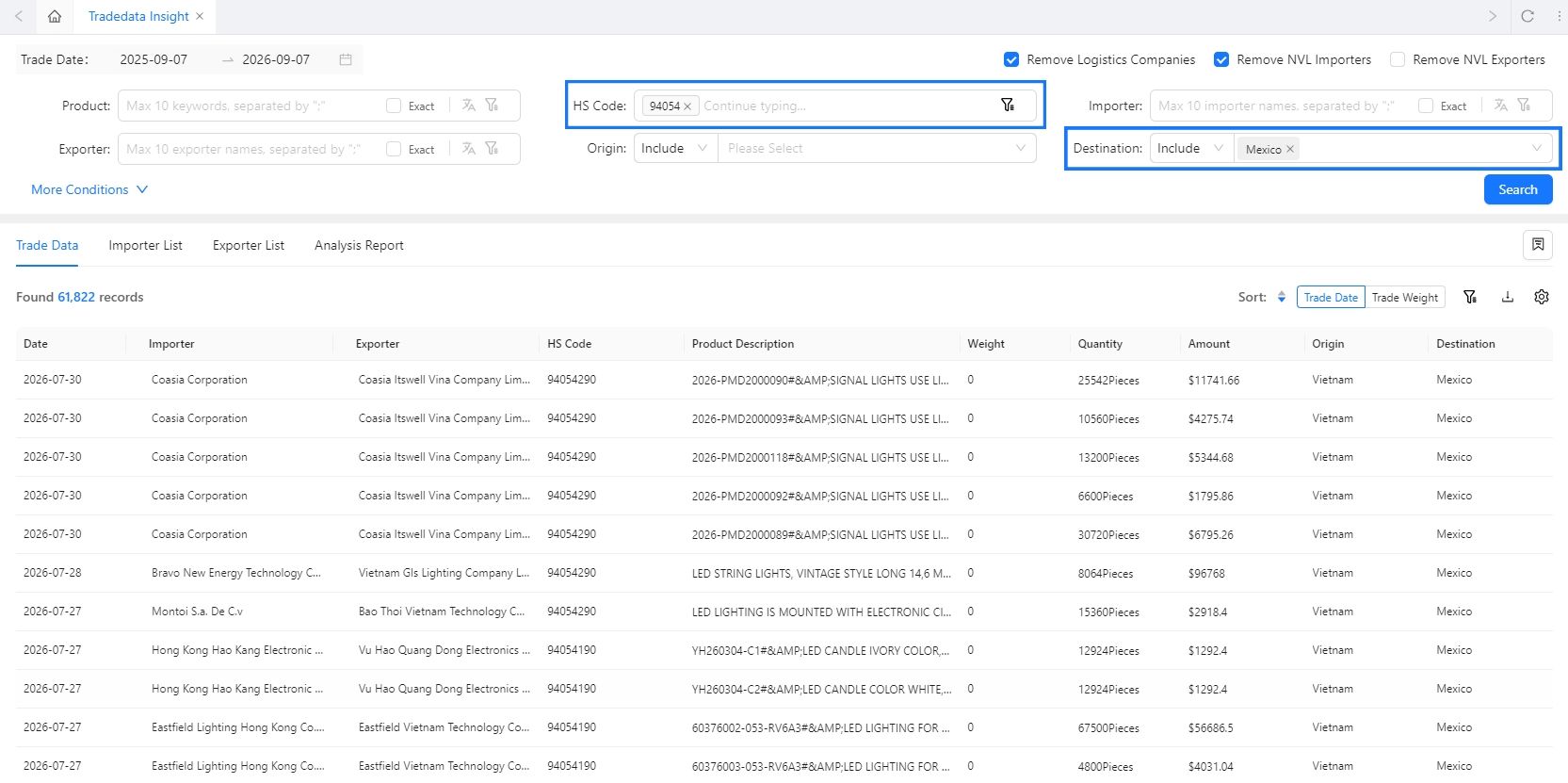
Start with your product's HS code—the international Harmonized System code used to classify goods. If you don't know the exact code, search by product keyword on a trade data platform. Then filter by destination country to see importers in your target market. For example, if you export LED lighting, search HS code 94054 and select "Mexico" as the destination. In seconds, you see a list of Mexican companies that imported LED lighting in the past 12 months, along with shipment dates, volumes, and their existing suppliers. This import-export data immediately replaces your cold prospect list with verified active buyers.
>>> Get a Free Demo of TradeSaya <<<
Step 2: Analyze Buyer Activity
Once you have a list of importers, look at their shipment history. How often do they import? What volumes do they purchase? Which suppliers do they currently use? Have they recently changed suppliers? A buyer who imports every month and has growing volume is a high-potential prospect. A buyer who imported once and then disappeared is less promising. This kind of importer analysis helps you prioritize leads based on real purchasing behavior rather than guesswork.
Step 3: Identify Supplier Relationships
Customs records include exporter information, so you can see who currently supplies the buyer. This is critical for finding openings. If a buyer uses multiple suppliers, they may be open to new options. If they recently switched suppliers, they may be unhappy with their previous partner. These supplier analysis signals help you time your outreach perfectly. For example, if a buyer's shipments from one supplier dropped sharply while a new supplier appeared, that is a strong signal they are testing alternatives—and you can enter the conversation.
Step 4: Access Verified Contact Details
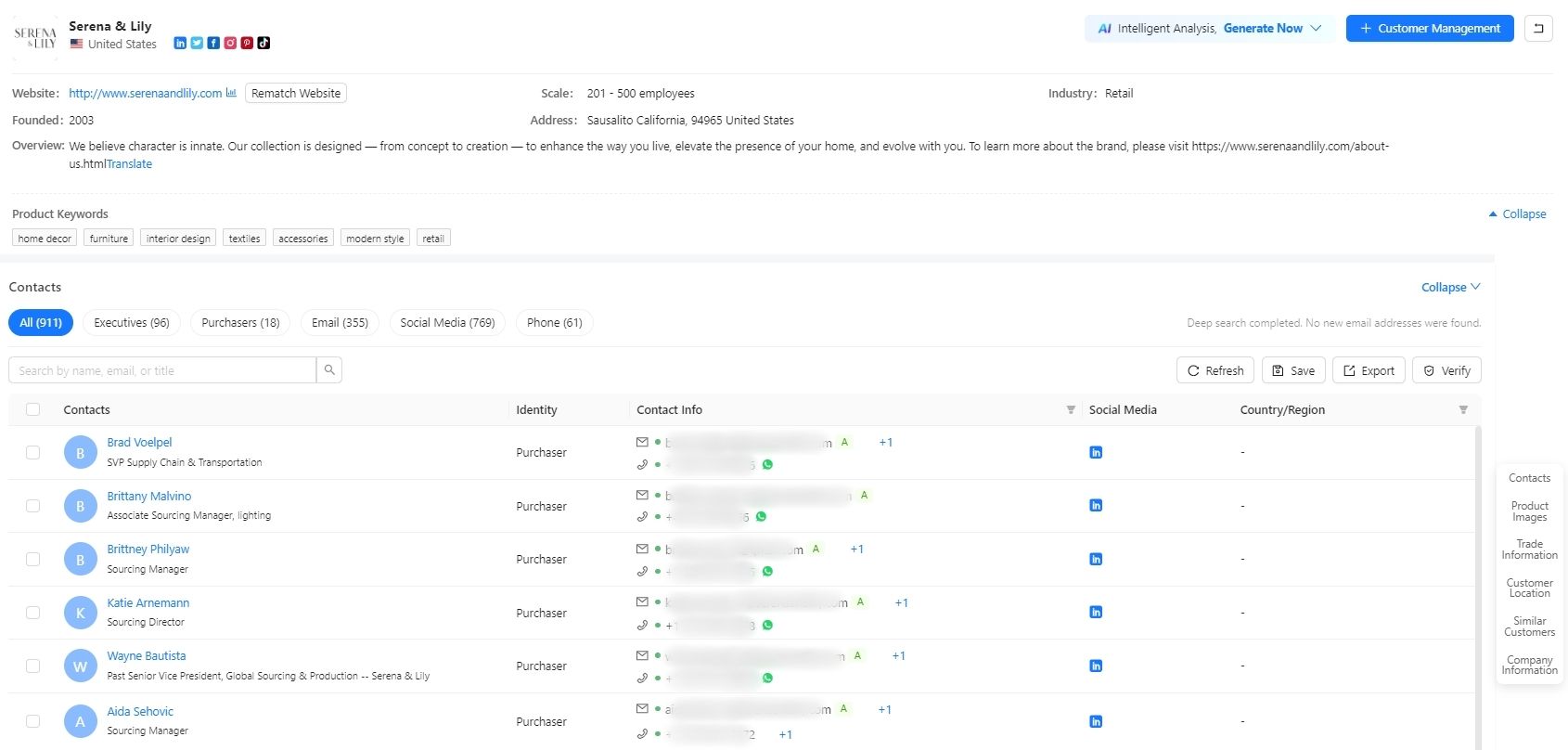
Raw customs data typically lacks direct contact information. That is where TradeSaya adds value: it combines shipment records with verified company profiles and direct contacts for key decision-makers. You can move from finding a buyer to emailing their purchasing manager in minutes, without manually cross-referencing LinkedIn or company websites.
>>> Get a Free Demo of TradeSaya <<<
Why TradeSaya Makes This Process Faster and More Accurate
TradeSaya is a trade intelligence platform built for exporters and B2B sales teams. It aggregates global customs data, buyer profiles, supplier analysis, and contact information into one interface. With TradeSaya, you can:
- Search by product, HS code, supplier, buyer, or competitor name
- View buyer purchase history, volume trends, and supplier relationships
- Monitor competitors and identify their buyers
- Analyze market trends by origin country, destination country, and demand shifts
- Get direct contact details for key decision-makers
This turns raw import-export data into a complete sales workflow. Instead of spending hours cross-referencing customs records with LinkedIn and company websites, you can do everything in one platform. TradeSaya is not just a database; it is a customer acquisition engine that turns global trade statistics into actionable B2B sales opportunities.
Conclusion: Stop Guessing, Start Seeing
The global buyers you need are already importing products like yours. The question is whether you can see them. Customs data gives you that visibility. It replaces guesswork with verified facts, so you can focus your sales efforts on companies that are actively purchasing. Stop chasing profiles and start connecting with real buyers. Use trade data to find them, analyze them, and contact them—all in one place.