Are You Using Customs Data Effectively? | TradeSaya

Search for a product, find importers, export a list, and start sending emails. This is how many exporters use customs data.
Yet after all that work, buyers may still not respond.
Sometimes the product or timing is wrong. In other cases, sales teams use customs data mainly to collect company names, without using the information to evaluate prospects, identify potential opportunities, or prepare relevant outreach.
If you already use customs data, consider whether any of these five mistakes are holding back your customer development efforts.
1. Treating Every Importer as a Target Customer
A company that has imported your product category is not automatically a good fit for your business.
The same HS code can cover products with different materials, specifications, and applications. A buyer’s purchasing volume, market positioning, and supply requirements may also differ from what you can support.
For example, your factory may specialize in small-batch customization, while the buyer consistently purchases large quantities of standardized products. Even within the same product category, cooperation may be difficult.
After finding a buyer in TradeSaya, review the available product descriptions, shipment quantities, purchasing frequency, and supplier information. Focus on three questions:
- Do the products the buyer actually imports match what you manufacture?
- Is the purchasing activity recurring and recent?
- Does the buyer’s purchasing scale fit your production and delivery capabilities?
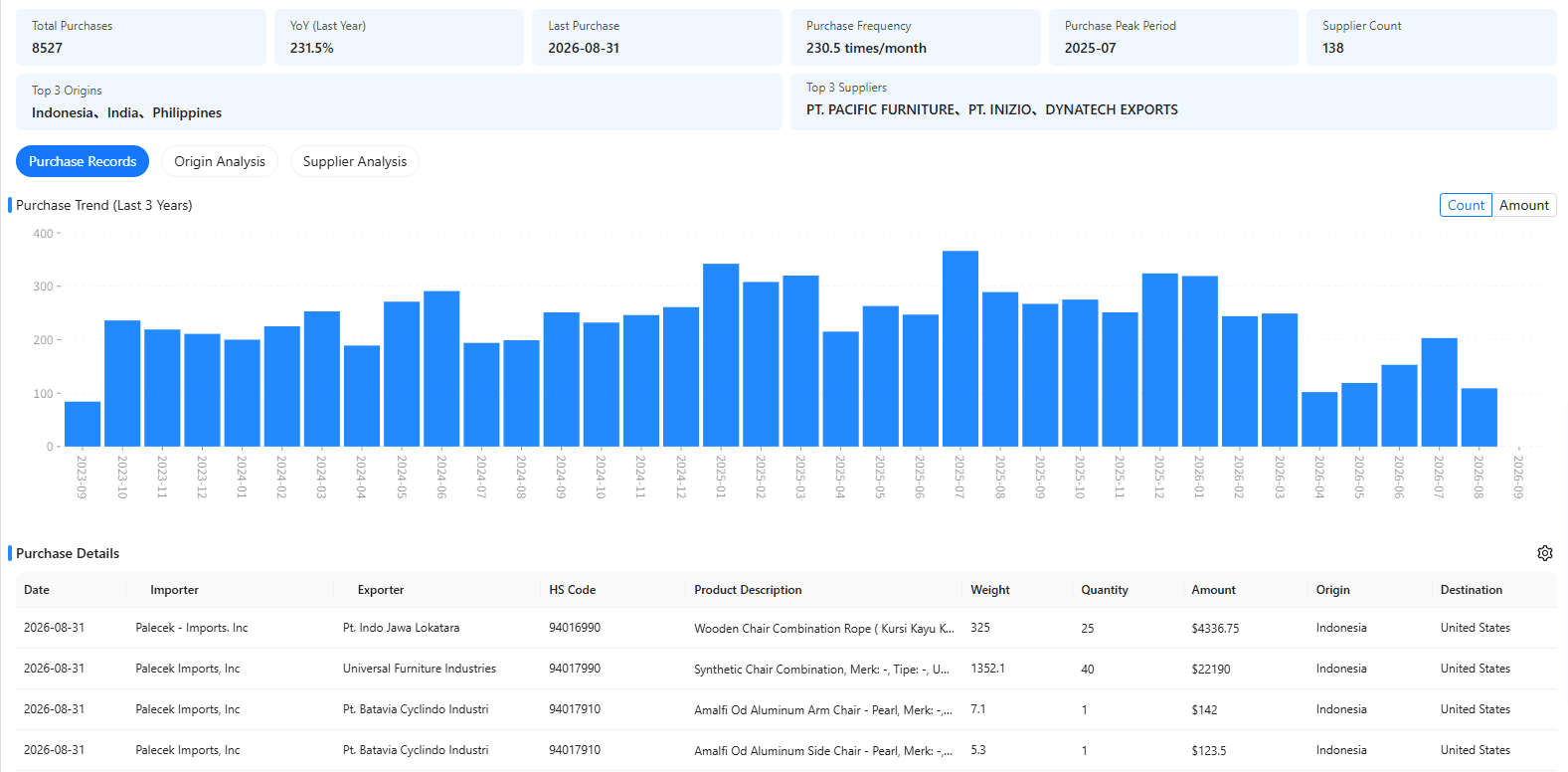
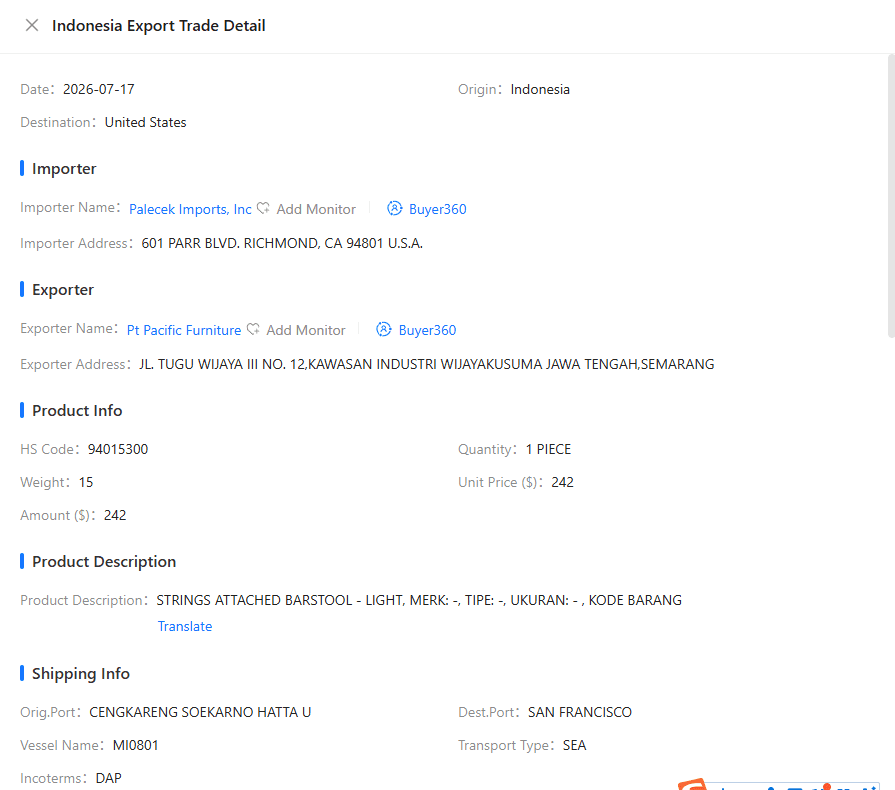
Answering these questions helps you decide whether the prospect deserves further sales effort.
2. Looking at Purchase Volume Without Researching Supplier Relationships
High-volume buyers can be attractive, but they may also be harder to approach.
If a company has worked with the same suppliers for years, and your products, pricing, and service offer no meaningful difference, why should it consider you?
Reviewing a buyer’s suppliers and purchasing changes in TradeSaya can help you investigate:
- Does the buyer rely on a small number of suppliers or work with several?
- Have new suppliers appeared recently?
- Do different suppliers provide different products?
- Has purchasing growth been accompanied by changes in supply sources?
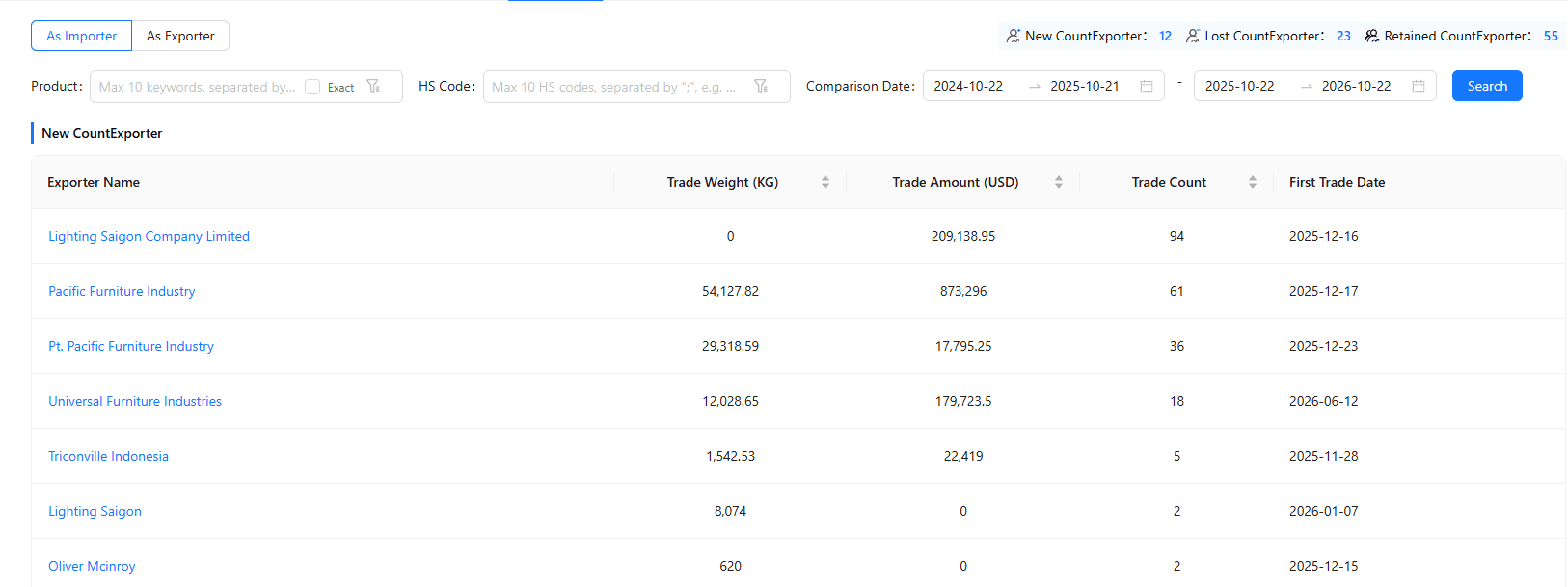
These records can help you prepare a more specific approach.
For a buyer with stable supplier relationships, you might explore backup supply, complementary products, or specialized specifications. For a buyer expanding its product range, you might focus on relevant products and supporting manufacturing capabilities.
Your research should help you explain where your company could contribute to the buyer’s business.
3. Finding the Company Without Confirming Whom to Contact
Even a well-qualified prospect can lead nowhere if your message does not reach a relevant person.
A general company inbox, a sales department address, or an employee with no purchasing responsibility may not provide a useful route into the account.
After identifying a target company, confirm what the intended contact actually manages. Purchasing managers, supply chain leaders, and business owners may participate in different decisions. Larger companies may also divide responsibilities by product category or region.
TradeSaya provides available key contact information to help you research relevant people. Before reaching out, verify their position, company affiliation, and connection to the product you want to discuss.
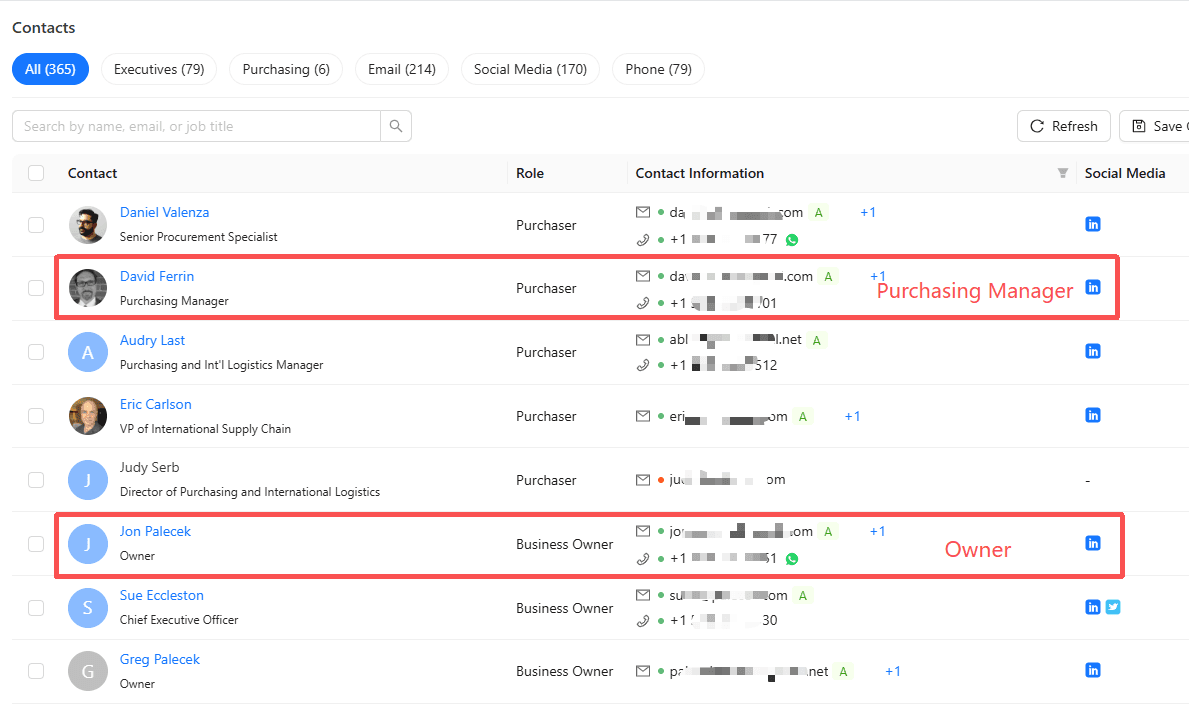
Finding a suitable company is one step. Reaching someone responsible for the relevant business is another.
4. Researching the Buyer but Sending the Same Email to Everyone
You may know what a buyer purchases, how much it imports, and how its supplier relationships have changed. But if your email still says:
“We are a professional manufacturer offering high-quality products at competitive prices. Please contact us if you have any requirements.”
Your research has not yet shaped your message.
Relevant outreach should consider both what the company may need and what the recipient is responsible for.
Start with the buyer’s purchasing activity and connect it to capabilities you can genuinely provide:
- If purchasing volume is growing, explain your production capacity, delivery capabilities, and quality management.
- If the buyer imports several related products, introduce your complementary product range.
- If the buyer has started purchasing a category you specialize in, discuss relevant products, certifications, and sample options.
Then adapt the message to the recipient’s role.
- Purchasing managers may need product specifications, pricing, minimum order quantities, sample options, and purchasing terms to compare suppliers.
- Supply chain managers may focus more on lead times, production capacity, supply continuity, and backup sourcing arrangements.
- Product or technical managers may be more interested in materials, performance, certifications, and customization capabilities.
- Business owners or general managers may respond to a clear explanation of how cooperation could support product expansion, cost improvement, or supply reliability.
A job title is a starting point. Your message should still reflect the person’s actual responsibilities.
For example, an insulated drinkware manufacturer approaching two people at the same company could use different messages.
To a purchasing manager:
“We manufacture customized insulated drinkware with a range of finishes and packaging options, including support for small trial orders. If you handle this category, we can share specifications, MOQs, and sample options for comparison.”
To a supply chain manager:
“We manufacture insulated drinkware and can support regular replenishment and seasonal production planning. If you are evaluating backup suppliers, we can share our capacity, lead times, and quality management information for your review.”
After using TradeSaya to research purchasing activity and find available contact details, use those insights to decide what to say to each person.
You do not need to list the buyer’s shipment history in your email. Use the information to prepare a relevant business conversation, and avoid presenting assumptions as confirmed needs.
5. Treating Historical Records as Proof of Current Demand
Customs data reflects recorded trade activity. It cannot directly tell you whether a buyer is ready to place an order today.
A company that previously imported every quarter may not follow the same schedule next time. A new supplier does not necessarily mean the existing supplier has a problem. Inventory levels, seasonality, project schedules, and shipping arrangements can all affect the patterns you see.
Analysis should therefore lead to verification.
Use historical purchasing patterns to plan your outreach, then ask relevant questions about upcoming products, replenishment, supplier evaluations, or sample testing.
Pay attention to what the dates in the records represent. Shipment, arrival, or declaration dates generally occur after the purchasing decision and should not be treated as order dates.
Coverage and update schedules also vary by country and data source. The absence of a recent record does not automatically mean the buyer has stopped purchasing.
Combine trade records with the company’s website, product catalog, and direct feedback to build a more complete assessment.
Turn Each Search into a Practical Sales Decision
Before contacting your next prospect, ask yourself:
1. Have I checked whether the products and purchasing scale match our capabilities?
2. Do I understand the supplier structure and have a credible reason to approach this buyer?
3. Have I identified someone responsible for the relevant purchasing activity?
4. Does my message explain specific value that matters to this recipient?
5. Which conclusions are still assumptions that I need to verify?
TradeSaya helps you research purchasing activity, supplier relationships, and available decision-maker information. Each part of that research should support a practical decision about whom to approach and how to begin the conversation.
>>> Requst a free demo <<<
If you have already found many buyers but made little progress, revisit a few prospects. Check the evidence behind your selection, confirm the contact’s responsibilities, and review whether your proposed value is specific enough to start a useful discussion.