Where Can You Find Customs Data and International Trade Information? A Practical Guide for Businesses-TradeSaya
Finding reliable customs data sources is an important first step for companies researching international markets, importers, suppliers, tariffs, and global trade opportunities.
When doing international business, companies often need answers to questions such as:
- Which countries have stronger demand for our products?
- Which companies are importing related products?
- Which countries and suppliers do buyers currently purchase from?
- What tariffs apply in the target market?
- After finding a potential customer, how can we contact the person who actually makes purchasing decisions?
All these questions involve international trade information, but no single database can answer all of them.
Data published by the United Nations, the World Trade Organization, and national statistical agencies is useful for studying market size, trade flows, and tariffs. Company-level customs data platforms are better for finding importers and analyzing shipment records and supplier relationships. Logistics platforms mainly focus on vessels, ports, and shipment status.
Before choosing a data source, a company should first understand what it wants to achieve.
1. What Type of Trade Information Do You Need?
International trade businesses commonly use four types of data:
- Macro trade statistics: Used to compare import volumes, growth trends, major trading partners, and supplier countries across different markets.
- Tariff and market access information: Used to check applied tariffs, preferential tariffs, and non-tariff measures.
- Company-level trade data: Used to find importers and exporters and analyze products, transaction dates, quantities, values, and buyer-supplier relationships.
- Logistics and shipping information: Used to check vessel locations, port conditions, shipping routes, and estimated arrival times.
2. What Are the Best Sources for Customs Data?
(1)UN Comtrade
UN Comtrade is the United Nations Commodity Trade Statistics Database and one of the most widely used sources for researching global merchandise trade.
The database organizes import and export statistics by reporting country, trading partner, product category, and period. Its data covers around 200 countries and regions and represents most of the world’s merchandise trade.
Its main advantages are broad coverage, a relatively consistent data structure, and free access.
However, UN Comtrade mainly provides aggregated statistics. It usually cannot be used to find specific importers or purchasing contacts. Data release schedules, reporting methods, and completeness can also vary by country.
(2)WITS
WITS is a trade analysis tool provided by the World Bank. It brings together data on international merchandise trade, tariffs, and non-tariff measures.
Companies can use WITS to research:
- Product-level imports and exports
- Most-favored-nation and preferential tariffs
- Country and product competitiveness indicators
- Trading partner shares
- Market concentration
- The possible effects of tariff changes
WITS is useful for analysts who need to study both trade flows and market access conditions.
It offers many functions, but its search options and terminology can be complex. New users need to understand concepts such as reporting countries, trading partners, HS versions, and tariff types.
(3)WTO Tariff & Trade Data
The WTO Tariff & Trade Data platform mainly provides official tariff and merchandise trade information.
It can be used to compare:
- Tariff rates committed by WTO members
- Tariff rates actually applied
- Most-favored-nation and certain preferential tariffs
- Imports by product and trading partner
- Recent tariff changes
According to the WTO, the platform provides official tariff and trade information for more than 150 economies.
If a company is evaluating the tariff cost of entering a new market, WTO data is a useful starting point. However, the final tariff may also depend on the exact product classification, rules of origin, trade agreements, and local policies. Companies should confirm the applicable rate with a qualified professional before preparing a final quotation or customs declaration.
(4)Eurostat Comext
Eurostat Comext is an important official source for researching merchandise trade in the European Union.
It provides recent and historical trade statistics for the EU, the euro area, and individual member states, including:
- Trade between EU countries
- Trade between the EU and non-EU countries
- Products and trading partners
- Import and export values
- Weight and supplementary units
- Monthly and annual data
For companies focused on the European market, Eurostat can provide more detailed EU trade information than many global aggregated databases.
Its main limitation is that it is designed for statistical analysis. Companies can use it to evaluate overall demand in Europe, but they still need company-level trade data to identify specific importers.
(5)National Trade Databases
Many national customs authorities, statistical agencies, and trade departments publish their own import and export data.
For example, official U.S. trade statistics can be used to analyze products, trading partners, ports, and customs districts. China Customs publishes national trade statistics and data for major product categories. Other countries may also provide monthly trade data or online search tools.
These sources are usually authoritative and may offer more recent information or data that better reflects local reporting methods.
However, national platforms vary widely in language, search functions, data detail, and download limits. Many official databases only provide aggregated statistics and do not disclose identifiable company names.
3. When Do You Need a Commercial Company-Level Customs Data Platform?
Free official data is useful for answering questions such as:
- Which countries import a certain product?
- How large is the market?
- Is import demand growing?
- Which countries are the main suppliers?
- What tariffs apply in the target market?
However, aggregated data is often not enough when a company needs answers to more specific business questions.
At this point, the company needs a commercial platform that connects company-level trade records, buyer intelligence, contact information, and sales management.
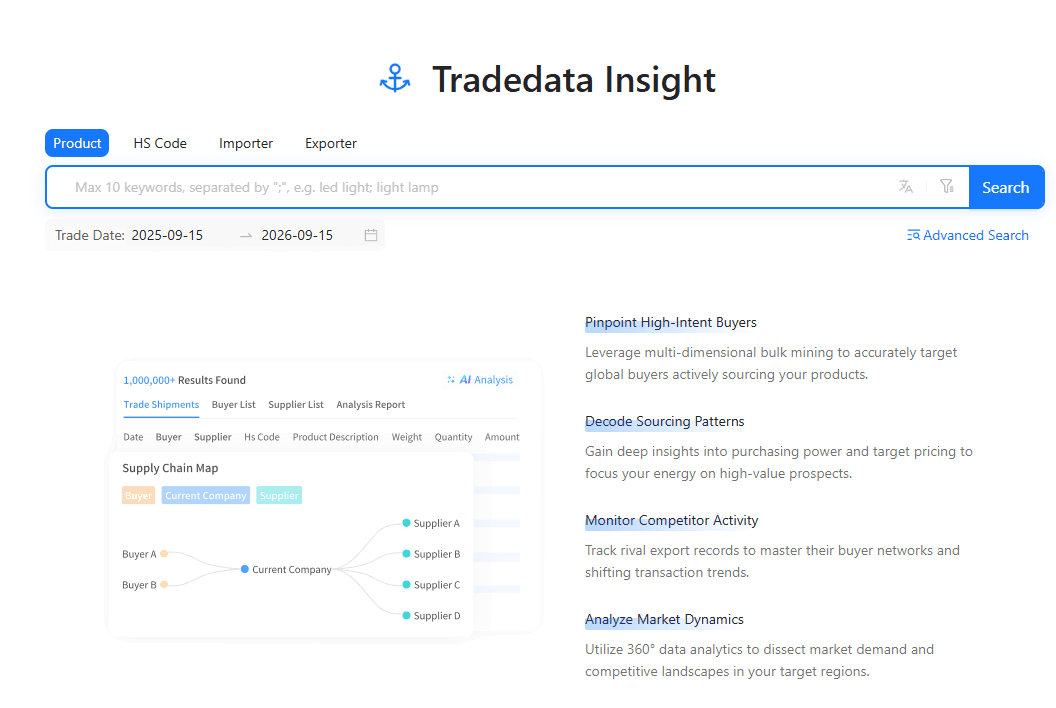
TradeSaya is a professional platform built for this purpose. It serves exporters, B2B sales teams, purchasing teams, and trade researchers by bringing global trade data, buyer analysis, decision-maker information, and customer management into one workflow.
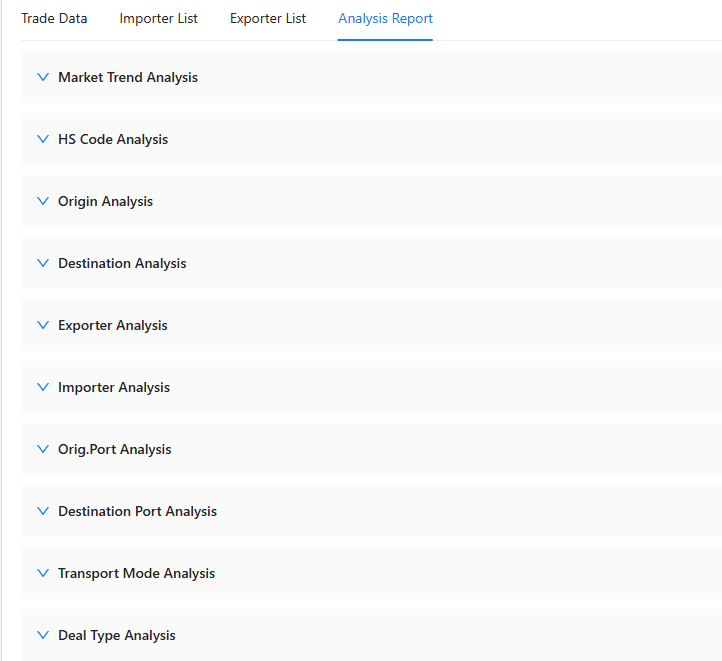
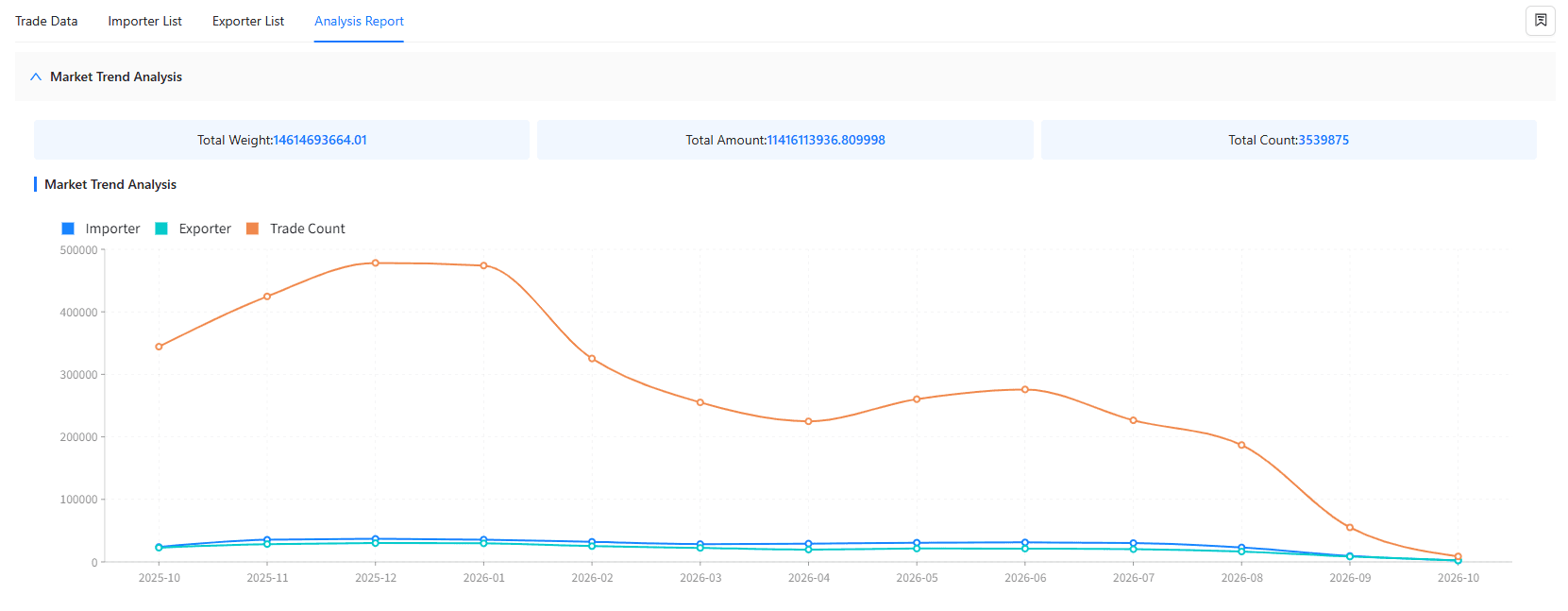
(1)Analyze Markets and Find Trading Companies
TradeSaya provides trade information covering more than 200 countries and regions. Users can search by product name, HS code, importer, exporter, country of origin, destination country, and period.
Companies can analyze:
- Import trends and seasonal changes
- Major importing and exporting countries
- Active importers and suppliers
- Transaction quantities, weights, and values
- Buyer purchasing frequency
- Supplier countries and port distribution
- Competitor export activity
- Changes in buyer-supplier relationships
Official statistics can help a company decide whether a market is worth entering. TradeSaya then helps it find the specific companies operating in that market.
(2)Analyze Buyers
Finding an importing company is only the beginning of customer development.
The sales team still needs to decide whether the company is a good prospect, what products it may need, and how to approach it.
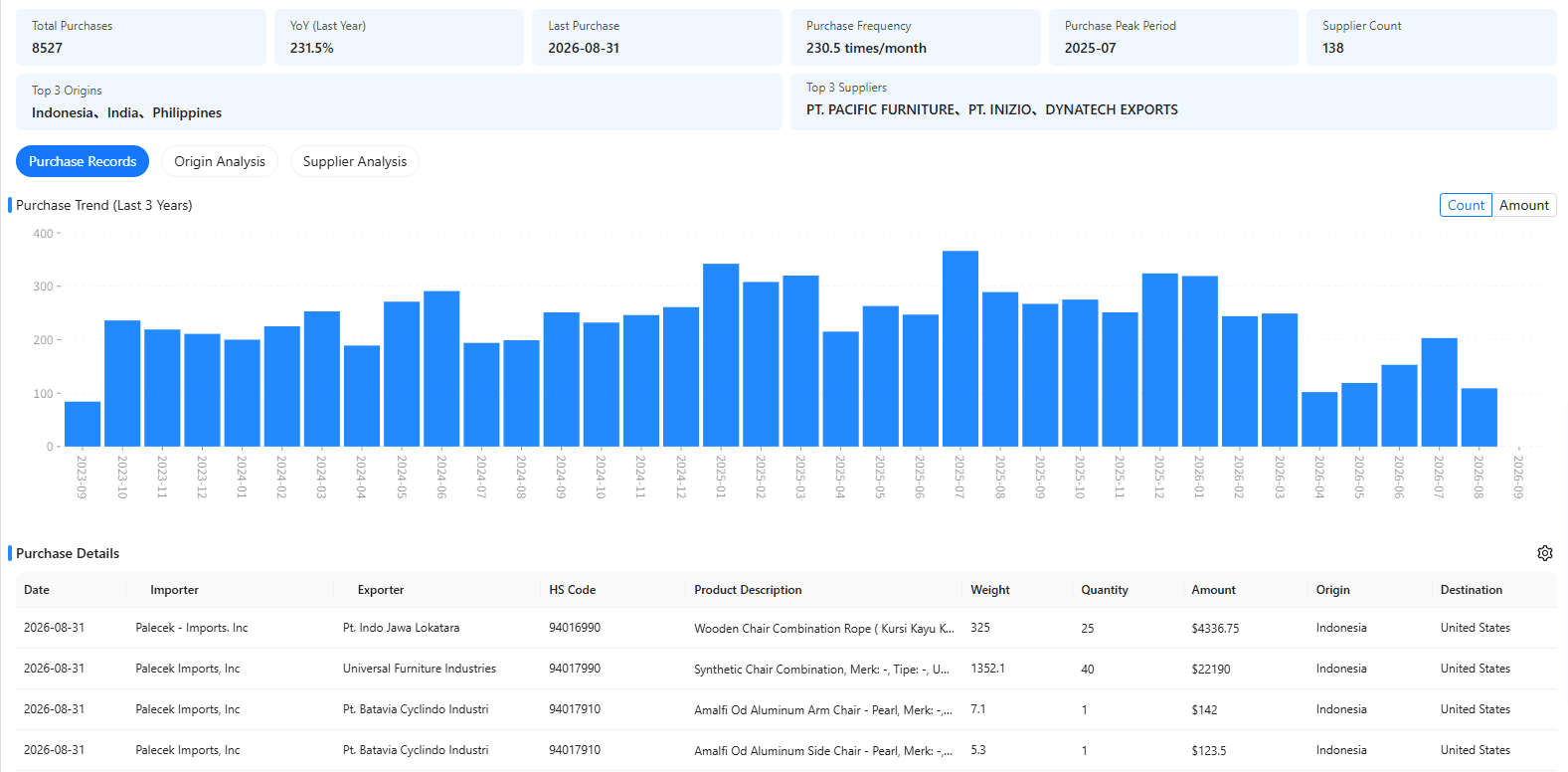
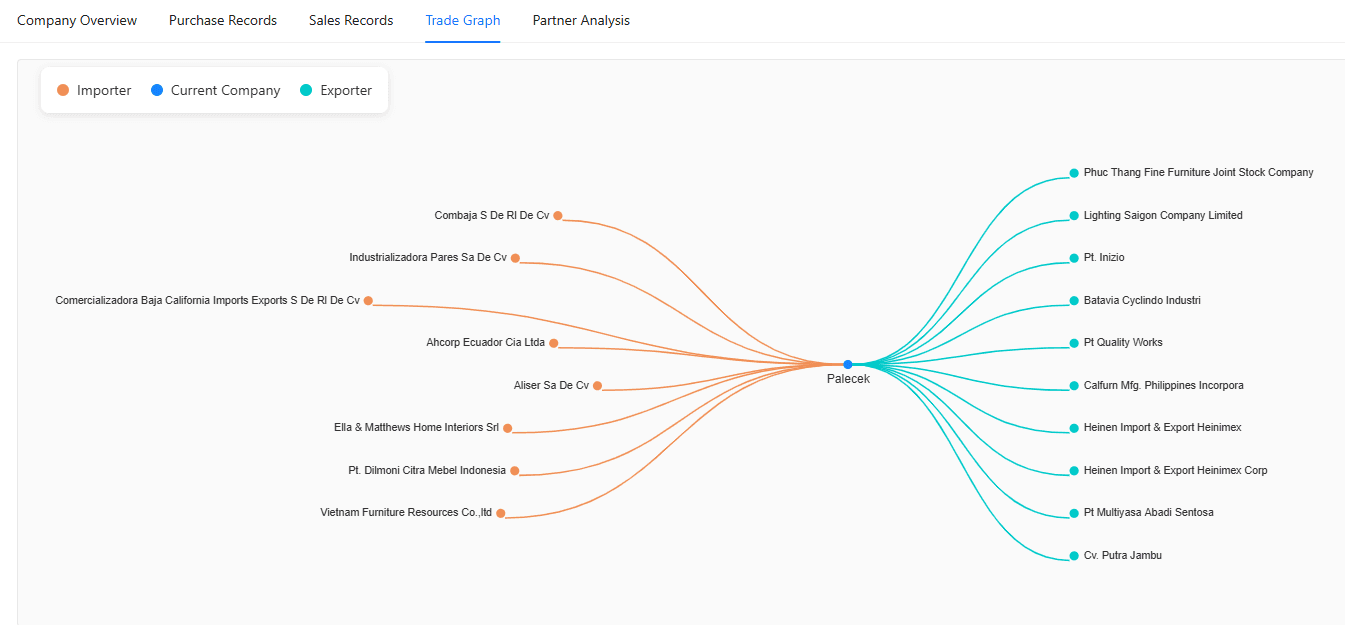
With TradeSaya, users can further review:
- The company’s business and main products
- Historical purchasing records
- Purchase frequency, quantity, and value
- Main sourcing countries
- Current and previous suppliers
- New, lost, and long-term supplier relationships
- Product preferences and purchasing trends
(3)Find Purchasing Decision-Makers
After identifying a target customer, the next step is to reach the people who influence or make purchasing decisions.
TradeSaya can help sales teams find key contacts such as:
- Purchasing Managers
- Procurement Directors
- Supply Chain Managers
- Sourcing Managers
- Import Managers
- Business Owners
- CEOs or General Managers
Depending on the available company and contact information, users can access work email addresses, phone numbers, WhatsApp details, and other business contact channels.
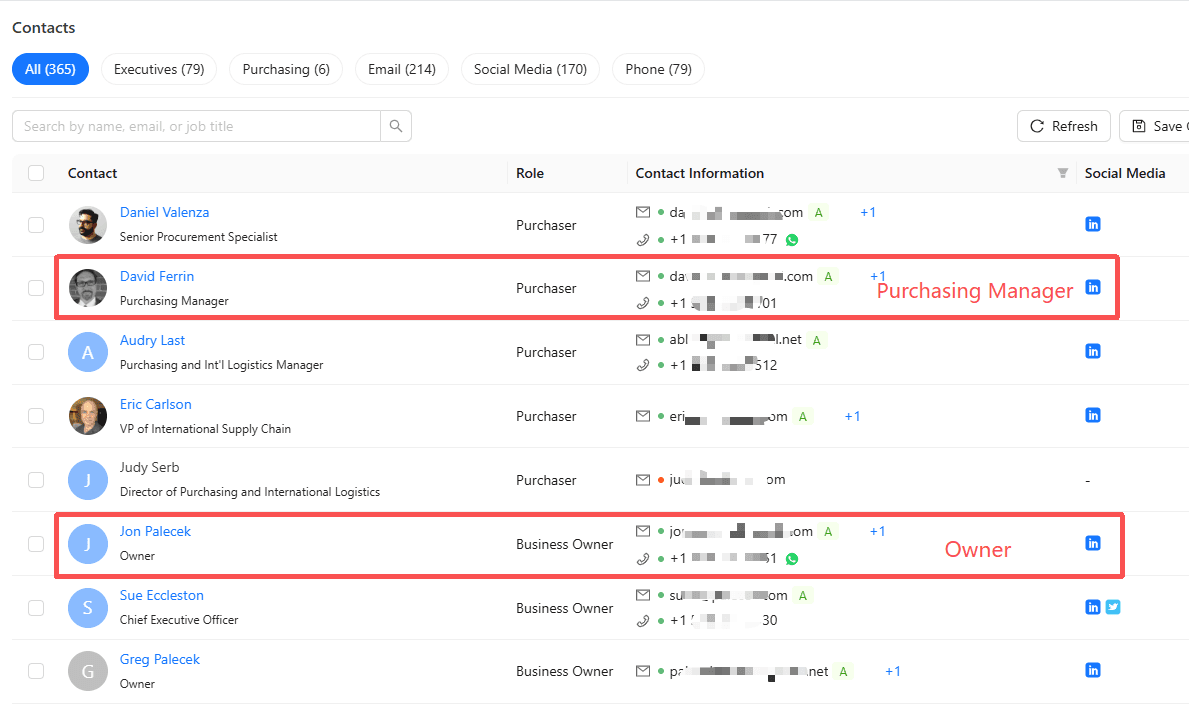
Different decision-makers have different responsibilities, performance goals, and levels of influence over purchasing. More relevant communication usually has a better chance of receiving a response.
For example, instead of sending every contact the same message:
“We are a manufacturer with many years of experience and would like to work with your company.”
Salespeople can adjust the message based on the contact’s position and the information they have found:
- Purchasing contacts: Focus on competitive pricing, supply stability, lead times, minimum order quantities, and quality control.
- Product or R&D contacts: Focus on product specifications, materials, performance, certifications, and compatibility with the company’s existing product range.
- Operations or supply chain contacts: Focus on production capacity, delivery options, inventory support, order flexibility, and how problems are handled.
- Company owners or senior business decision-makers: Focus on the value of the partnership, market opportunities, long-term supply capabilities, and how the cooperation could support business growth.
4. Manage Customers and Follow-Up Activities
After finding the right contact and completing the first outreach, the sales team still needs to follow up consistently to turn a potential customer into an order.
TradeSaya can help teams:
- Store customer and contact information in one place
- Record emails, quotations, and communication history
- Manage sales stages and follow-up tasks
- Detect duplicate leads
- Assign customer ownership
- Create a shared lead pool
- Track team follow-up and sales opportunities
This connects market analysis, buyer discovery, decision-maker research, and customer follow-up in one process. Companies do not need to keep moving information between a trade database, contact spreadsheets, and a separate CRM.
Learn more about the [TradeSaya Global Trade Data and Buyer Intelligence Platform](https://www.tradesaya.com/).
Conclusion
No single data source can answer every international trade question.
UN Comtrade, WITS, WTO, and Eurostat are useful for researching countries, products, trade trends, and tariffs. Commercial company-level platforms help businesses identify buyers, analyze purchasing behavior, and find relevant decision-makers.
A more effective approach is to use different data sources at different stages.
Start with official statistics to identify markets with real demand. Then use company-level trade data to find and evaluate specific buyers, identify purchasing decision-makers, and manage follow-up activities.
TradeSaya connects global trade data, buyer intelligence, decision-maker contact information, and customer management. It helps companies move from understanding a market to finding buyers, reaching the right people, and managing sales opportunities.
Want to know whether TradeSaya covers your product and target market?
Prepare your product name, HS code, or target country, and request a free trial or product demo.