A Buyer Is Not Responding. Should You Keep Following Up? Use Customs Data to Decide-TradeSaya

You have sent your product catalog and quotation. You have also followed up several times over the past few months, but the buyer still has not replied.
This is a common problem for export sales professionals. The buyer seems like a good match, so you do not want to give up too early. But if you keep contacting them, you may not know what else to say besides “Did you receive my quotation?” or “Do you have any purchasing plans?”
In this situation, customs data can give you another way to review the opportunity. By checking the buyer’s purchase records in TradeSaya, you can see whether the company is still buying related products, whether its actual purchases match the products you recommended, and whether its supplier relationships have changed.
Customs data cannot tell you exactly why a buyer has not replied. However, it can help you decide whether the buyer is still worth your time and what you should change in your next follow-up.
1. Use Customs Data to Check Whether the Buyer Is Still Purchasing Similar Products
Start by comparing your follow-up period with the buyer’s recent import records.
For example, suppose you started contacting a kitchenware importer in March and still had not received a reply by July. You can use TradeSaya to check the buyer’s purchase records during those months and see whether the company continued importing the products you supply.
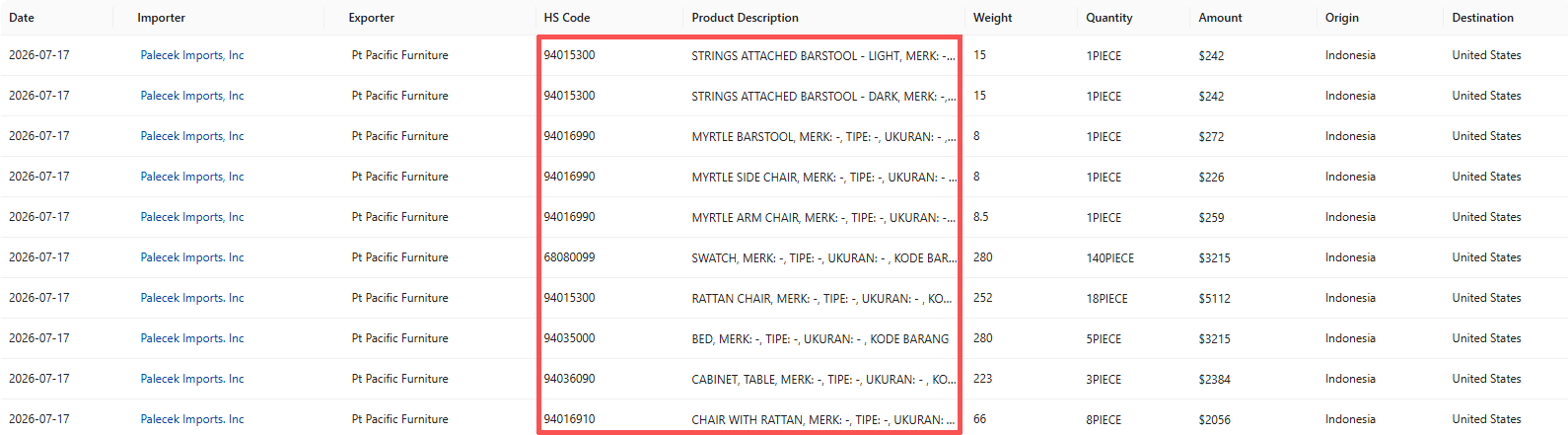
Keep your research focused on the relevant product category. A company may have active import business overall, but that does not always mean it is still buying your type of product.
The Buyer Is Still Purchasing: Review Your Approach
If customs data shows that the buyer continued importing similar products while you were following up, related demand may still exist.
You do not need to give up on the buyer immediately, but you should review your approach:
- Do the products you recommended match what the buyer actually purchases?
- Are your price, minimum order quantity, and delivery terms suitable for the buyer?
- Are you contacting the person responsible for this product category?
- Does each follow-up provide useful new information?
The Buyer’s Purchases Are Decreasing: Follow Up Less Often
If the buyer’s purchase records show that the frequency or volume of related imports is falling, its purchasing plan may have changed.
The change could be related to inventory levels, seasonal demand, local sales, or an adjustment in the buyer’s business.
In this case, you can reduce your follow-up frequency and use your next message to confirm whether the buyer’s needs have changed:
“I wanted to check whether your company is still purchasing this type of product this year. If your product focus or order plans have changed, I would be happy to prepare a more suitable offer.”
This gives the buyer a more useful reason to reply than another message asking whether they received your email.
2. Use Buyer Purchase Records to Check the Product Match
A buyer may import your general product category, but this does not mean the products in your catalog meet its actual needs.
For example, a company that imports stainless steel bottles may mainly purchase sports bottles with straws. Another importer may focus on business gift bottles. These products can have different uses, designs, packaging needs, and price levels.
If you only use customs data to confirm that “this company imports stainless steel bottles” and then repeatedly send the same full catalog, you may miss what the buyer is really purchasing.
When reviewing the buyer’s historical transactions in TradeSaya, check the available product descriptions and other useful fields:
- What specific products does the buyer purchase?
- Do the records include materials, models, sizes, or product uses?
- Have the products purchased by the buyer changed recently?
- Can the available shipment quantities and units help you understand its usual order size?
- Does the buyer’s purchasing volume match your supply capacity?
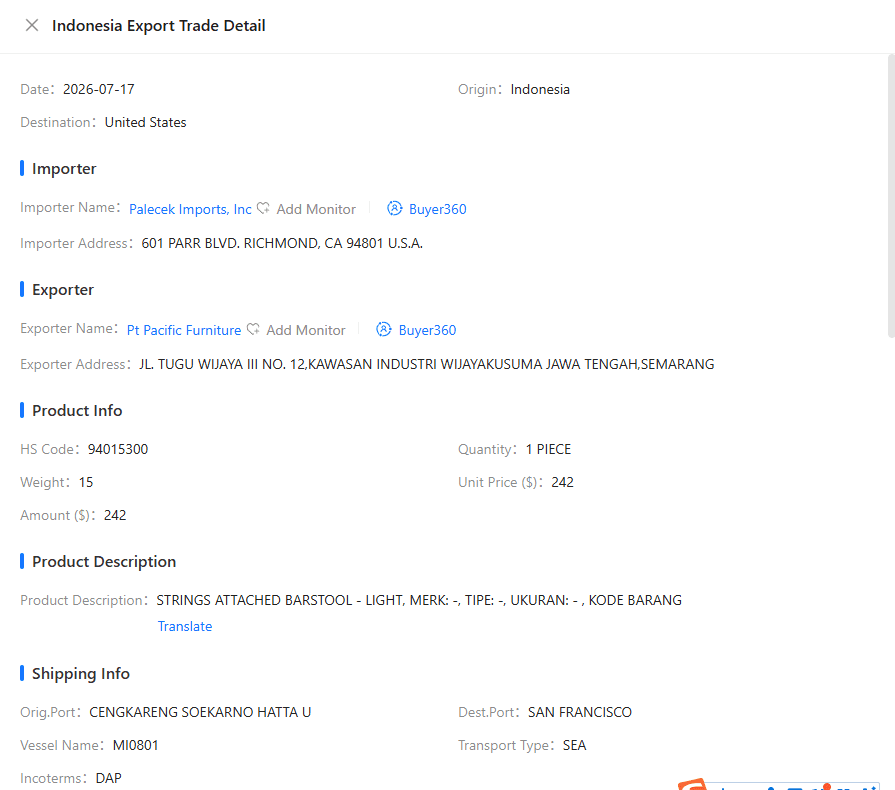
These buyer purchase records can help you see whether your earlier recommendations were too broad or focused on products that are not important to the buyer.
For example, you may have been recommending standard screw-top stainless steel bottles, while recent customs data often shows bottles with straws. If you also manufacture this type of product, your next follow-up can focus on specific designs, sizes, color options, packaging, and minimum order quantities.
A short product offer based on the buyer’s purchasing pattern will be easier to review than another complete catalog.
3. Review Supplier Relationships to Look for New Opportunities
After confirming that the buyer is still purchasing and that your products are a possible match, you can use customs data to study its supplier relationships.
When reviewing the buyer’s historical suppliers in TradeSaya, look at the following questions:
- Does the buyer purchase from the same suppliers over a long period?
- Did any new suppliers appear during your follow-up period?
- Did a new supplier appear only once, or did it continue shipping?
- Does the new supplier provide products related to yours?
- Have the shipment frequency or volume of existing suppliers changed?
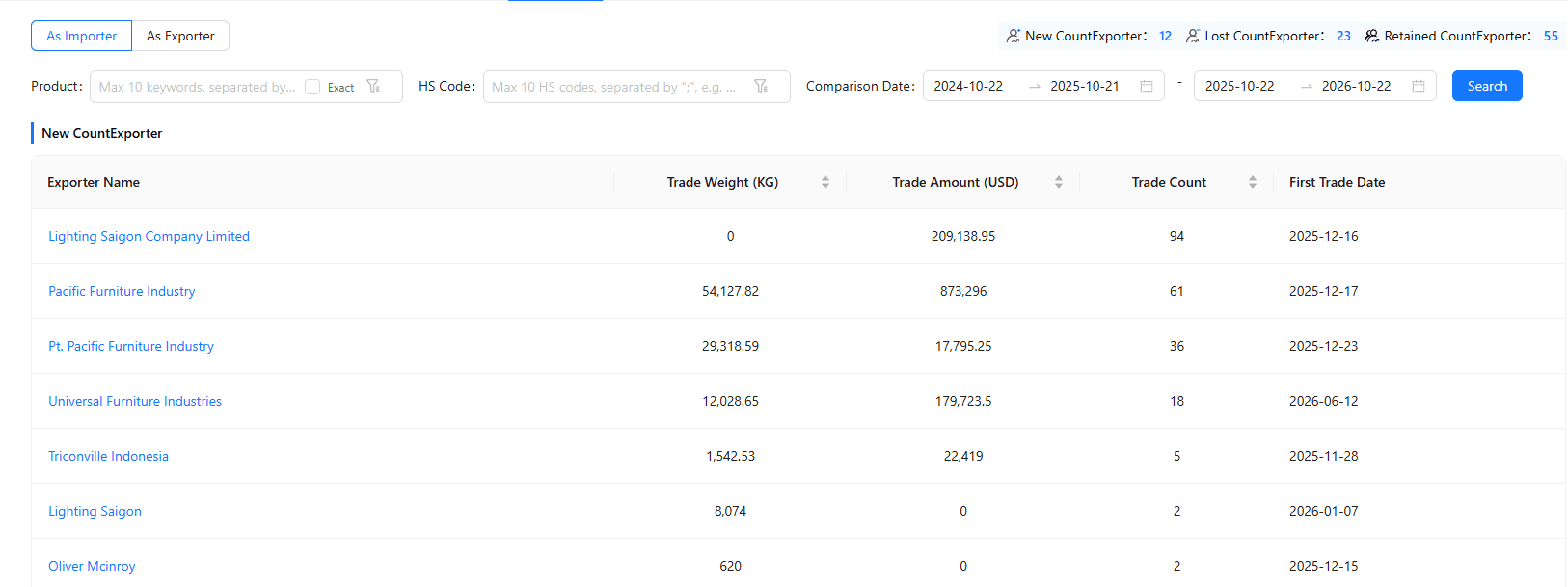
Changes in supplier relationships can help export sales professionals decide how much more time to spend on the buyer.
A New Supplier Continues Shipping: Study the Buyer’s Choice
Suppose the buyer started purchasing from a supplier that had not appeared in earlier records. More shipments of related products then appeared over the following months.
This shows that the buyer’s supply sources changed during the period covered by the customs data. The buyer has not worked only with its long-term suppliers; a new supplier was also able to enter its supply chain.
You can then study the products supplied by the new company. You can also check its website and other public information to compare it with your business in areas such as:
- Products and specifications
- Customization options
- Minimum order quantities
- Packaging
- Order support
- Production and delivery capacity
Next, review the advantages you previously presented to the buyer. Were they specific enough, and were they connected to the products the buyer actually purchases?
For example, you may have focused on the size of your factory, while the buyer may care more about small-batch customization for a certain product. Your next follow-up should focus on a product and cooperation plan that the buyer can easily review.
Existing Suppliers Remain Stable: Adjust Your Follow-Up Effort
Customs data may show that the buyer is still purchasing related products but has continued working with the same suppliers for a long time.
If you cannot currently offer a clear product or service advantage, you may want to follow up less often.
Keep the buyer’s information and supplier records, and contact the company again when:
- You launch a new product that matches its purchasing direction.
- You can offer a more suitable minimum order quantity or customization plan.
- Your delivery or packaging options improve.
- New purchase records in TradeSaya show a change in the buyer’s products or suppliers.
Repeatedly sending similar messages gives a buyer little reason to reply. Following up less often does not mean giving up completely. It allows you to spend more time on export opportunities that have a better chance of moving forward.
Make Every Buyer Follow-Up Useful
When a buyer has not replied for a long time, repeatedly sending similar emails can take up a lot of time without moving the opportunity forward.
By using TradeSaya to search customs data, export sales professionals can check whether a buyer is still purchasing related products, what products it actually buys, and whether its supplier relationships have changed. These buyer purchase records can help you decide whether to change your product offer, adjust your message, follow up less often, or pause your outreach.
If the information supports continued follow-up, your next email should include something new: a product that better matches the buyer’s needs, a more suitable minimum order quantity, or a simple cooperation plan that the buyer can review.
Customs data is useful for more than finding buyers. It can also help export sales professionals decide which buyers are worth following up with and what to say in the next message.