Does an Import Record Mean a Company Is the Right Buyer for You? | TradeSaya

You find hundreds of companies that have imported products related to yours. You export the list, search for email addresses, and start sending outreach messages. After days of work, however, you receive almost no replies.
The problem may not be your email. It may be the list itself.
An import record only proves that a company has purchased this type of product before. It does not mean that its price expectations, order sizes, and supplier preferences are a good match for your business.
The real value of customs data is not to give you the longest possible list of importers. It is to help you identify the buyers that are more likely to work with you.
With TradeSaya, you can go beyond company names and analyze a buyer’s sourcing countries, product descriptions, shipment quantities, price information, and supplier changes. This helps you decide which buyers are a better fit and deserve your attention first.
Here are four important factors to consider.
1. Which Countries Does the Buyer Source From?
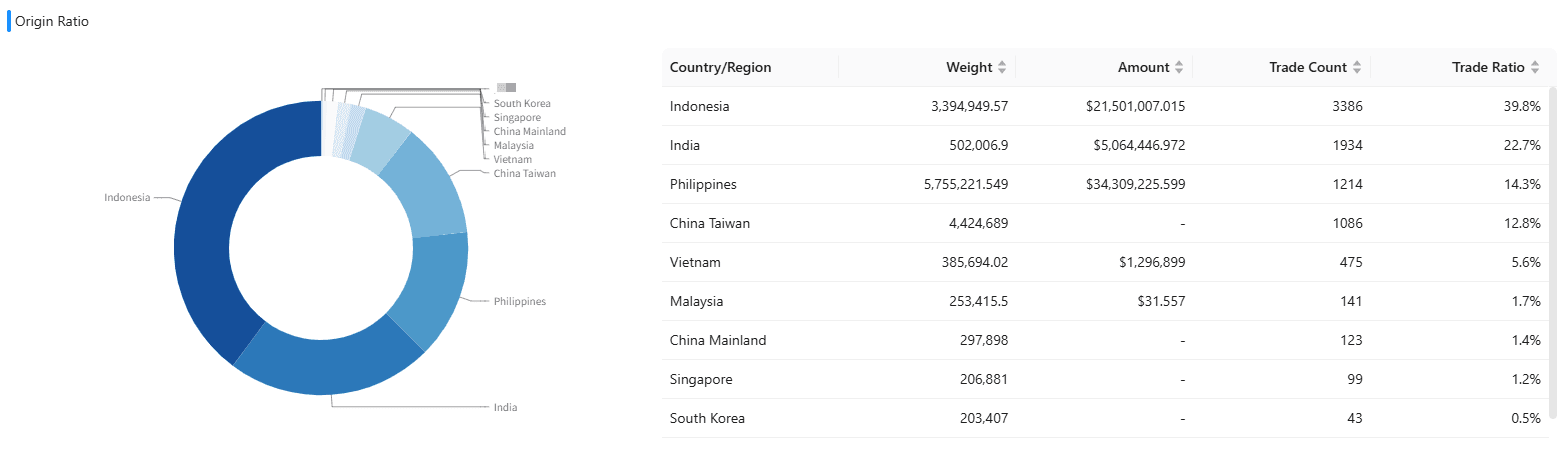
After finding a potential buyer, look at the countries it usually sources from.
The countries of origin and the locations of its suppliers can reveal important clues about its sourcing preferences.
For example, a buyer that regularly sources from cost-competitive regions in Southeast Asia, places large orders, and purchases at relatively low declared unit prices may be more focused on price and high-volume supply.
Another buyer may mainly source from countries such as Germany, Italy, or Japan. If its shipment descriptions frequently include specific materials, technical requirements, or brand information, it may place greater importance on quality, design, certification, and product consistency.
These two buyers have very different priorities.
If your strengths are competitive pricing and large-scale production, the first buyer may be a better fit. If you offer higher-end products, certifications, research and development, or customization, the second buyer may be more relevant.
In TradeSaya, you can review a buyer’s historical transactions to see its main sourcing countries, suppliers in each country, and changes in sourcing locations over time.
2. Does the Buyer’s Price Range Match Yours?
Products with the same general name can have very different prices.
Furniture, mechanical parts, lighting products, and textiles, for example, may include both low-cost standard products and premium customized products. These products are often purchased by completely different types of buyers.
If a buyer consistently purchases lower-priced products while your quotation is far above its usual range, the chance of closing a deal may be limited—even when the product name appears to match.
On the other hand, if a buyer normally purchases mid-range or premium products, simply telling them that your products are cheaper may not be persuasive. The buyer may care more about materials, certifications, design, delivery time, and consistent quality.
Where the relevant transaction data is available, TradeSaya can help you review declared values, quantities, weights, product descriptions, and supplier origins to estimate the buyer’s general price range. You can also compare transactions from different suppliers to see whether the buyer purchases products at several quality and price levels.
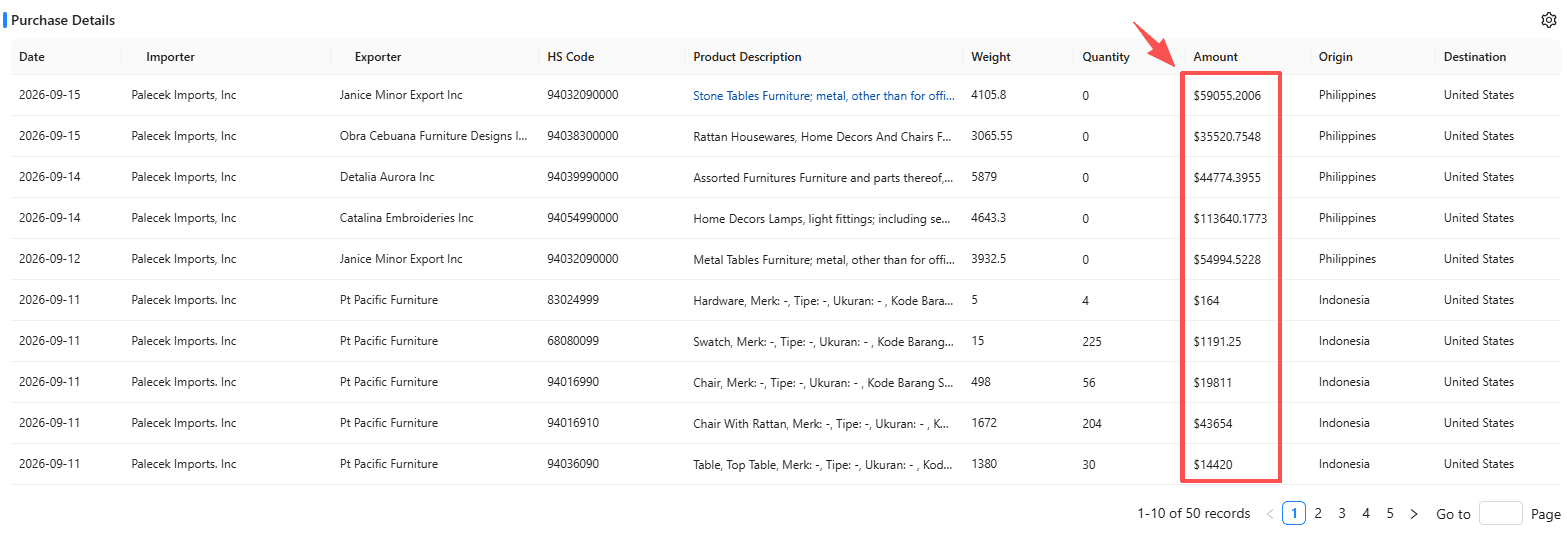
When analyzing price preferences, consider:
- The approximate unit price of similar products
- Price differences between suppliers
- Whether purchasing prices remain relatively stable
- Whether the buyer purchases products at different price levels
- Whether its purchases of higher-priced products are increasing
Keep in mind that customs values may be affected by freight costs, declaration methods, packaging units, and trade terms. They should not be treated as the buyer’s exact purchase price.
Instead, use this information to understand the buyer’s general market position and price range—not to calculate your final quotation.
3. Are the Buyer’s Order Sizes a Good Fit for You?
A larger buyer is not always a better buyer for your business.
If a company purchases dozens of containers at a time but your factory cannot provide stable production and delivery at that scale, it may be difficult to build a successful partnership—even if you receive an inquiry.
The opposite can also happen. A buyer may place very small orders, while your production line requires a much higher minimum order quantity.
By reviewing a buyer’s transaction history in TradeSaya, you can understand its typical order size, purchasing frequency, and changes in quantity over time.

Comparing this information with your minimum order quantity, production capacity, and delivery capabilities helps you decide whether the buyer is worth pursuing.
Consider the following questions:
- Does the typical order size meet your minimum order quantity?
- Does the purchasing frequency suit your production schedule?
- Can you handle concentrated deliveries during peak seasons?
- Does the buyer need standard products or small-batch customization?
- Is the order size large enough to justify your sales and service costs?
The best buyer is not necessarily the largest company on your list. It is the buyer whose order requirements are a good match for your capabilities.
4. Is the Buyer Open to New Suppliers?
Some buyers work with only one or two suppliers for a long time and have very stable supplier relationships.
These companies may look attractive, but entering their supplier network can be difficult.
By comparing supplier changes across different periods in TradeSaya, you can see whether a buyer has recently added or stopped working with suppliers.

If a buyer has started working with new suppliers, it may still be adjusting its supply chain. This can create an opportunity for you to approach the company with a clear advantage in quality, price, delivery time, or customization.
If the buyer has maintained stable relationships with the same suppliers for years, you may need to prepare for a longer sales process and focus on building the relationship over time.
Final Thoughts
A company with import records is not necessarily your target customer.
It may purchase products that do not match your market position, accept only a certain price range, or already have very stable supplier relationships.
To decide whether a company is worth pursuing, do not look only at whether it has imported your type of product.
Look at:Where it buys from, what prices it pays, how much it orders, which suppliers it works with, and whether any of these patterns are changing.
TradeSaya not only helps you find companies with real import records. It also connects their sourcing countries, transaction activity, and supplier changes, helping you identify the buyers that are a better match for your business.
Want to know which buyers are right for you?