Where to Find Free Trade Data Online: 5 Useful Platforms-TradeSaya

For companies involved in international trade, market research, overseas sales, or procurement, trade data can help answer several important questions:
- Which countries are importing large volumes of products like yours?
- Which overseas markets are experiencing growing demand?
- Where does a particular country source its products?
- How large is the import market for a specific product?
- What tariffs may apply when entering a target market?
- Which buyers and suppliers are active in the market?
The challenge is that global trade data is spread across databases maintained by the United Nations, national governments, international organizations, and commercial data providers. Each database also differs in coverage, update frequency, and search functionality.
This article introduces five useful platforms for finding trade data online, including the information available through each platform and the research scenarios they are best suited for.
1.UN Comtrade
[UN Comtrade](https://comtradeplus.un.org/) is an international merchandise trade database maintained by the United Nations Statistics Division. It is one of the most widely used sources of global trade statistics.
The platform compiles official import and export data reported by countries and territories. Users can search by reporting country, trading partner, commodity code, trade flow, and year.
What can you find on UN Comtrade?
- Import and export values by country
- Bilateral trade between different countries
- Product-level trade data by HS code
- Annual and selected monthly trade trends
- Product quantities, weights, and trade values
- Leading import sources and export destinations
Best use case
UN Comtrade is particularly useful for macro-level market research.
For example, an automotive parts exporter can search for the annual import value of a specific HS code across multiple countries. This makes it possible to compare market size, identify faster-growing markets, and understand where each market currently sources its products.
When comparing countries, users should consider differences in reporting schedules, HS classification versions, trade valuation methods, and mirror data.
2.ITC Trade Map
ITC Trade Map was developed by the International Trade Centre. It presents international trade statistics through accessible tables, rankings, and trend charts.
Compared with downloading and processing raw datasets, Trade Map is generally easier to use for export sales professionals who may not have extensive data analysis experience.
During the beta period of the new Trade Map, registered users can access relevant features for free. Access conditions may change, so users should check the platform’s latest policies.
What can you find on Trade Map?
- Leading importers and exporters of a product
- Trade values, quantities, and growth rates by market
- A country’s major trading partners
- Product market shares and unit values
- Monthly, quarterly, and annual trade trends
- Direct and mirror trade data
Best use case
Trade Map is useful for screening target markets and comparing international market opportunities.
For example, you can enter a product’s HS code to identify its leading importing countries. You can then compare their import growth rates, supplier-country structures, and average import unit values over recent years.
This provides a more complete basis for market selection than looking at total import value alone.
For more complex searches, users should understand concepts such as HS codes, direct data, mirror data, and unit value to interpret the results accurately.
3.World Bank WITS
WITS, short for World Integrated Trade Solution, is provided by the World Bank.
The platform combines international merchandise trade data with tariff and non-tariff measure information. It is especially useful for users who need to evaluate both market demand and market access conditions.
What can you find on WITS?
- Import and export statistics by country or region
- Bilateral trade data for specific products
- Most-favored-nation and preferential tariff rates
- Selected non-tariff measures
- Market concentration and competitiveness indicators
- Conversions between different product classifications
Best use case
WITS is particularly useful for tariff and market access analysis.
For example, when comparing two potential export markets, a company should consider not only the import demand in each market but also the tariffs applied to its products.
WITS allows companies to evaluate trade demand and tariff conditions together, providing a more complete picture of market potential.
The platform is relatively technical, and customized analysis normally requires registration. New users may need some time to become familiar with its indicators and product classifications.
4.USA Trade Online
USA Trade Online is the official merchandise trade data platform provided by the U.S. Census Bureau. It is designed for researching the U.S. import and export market.
The redesigned platform launched in 2026 simplifies report creation and management. Users can generate reports without creating a traditional account.
What can you find on USA Trade Online?
- Monthly U.S. import and export data
- Trade values by commodity code
- Trade between the United States and its partners
- Selected data by customs district and port
- State-level import and export statistics
- Downloadable reports in CSV and Excel formats
Best use case
If the United States is one of your main target markets, USA Trade Online can provide more focused analysis than a general global trade database.
Companies can use it to evaluate the total U.S. import market for a product, seasonal changes in demand, leading supplier countries, and trade activity across different regions.
The platform focuses primarily on the U.S. market. Companies that need to compare several countries should use it together with a global trade database.
5.Eurostat Comext
Eurostat Comext is Eurostat’s international trade in goods database.
It provides detailed import and export data for the European Union, the euro area, and individual EU member states. Its coverage includes both intra-EU trade and trade between EU and non-EU countries.
What can you find on Eurostat Comext?
- Monthly and annual trade data for the EU and its member states
- Intra-EU and extra-EU trade
- Imports and exports by product and trading partner
- Trade values, net mass, and supplementary quantities
- Product classifications such as CN, SITC, and BEC
- Recent and historical trade data
Best use case
Comext is particularly useful for detailed research on European markets.
For example, a company planning to enter Germany, France, and Italy can compare the import value, leading supplier countries, purchasing seasonality, and price changes for a particular product in each market instead of relying only on aggregated EU data.
Comext contains many data dimensions, so new users may need some time to become familiar with its datasets and product classifications.
The limitations of free trade data
These free platforms are valuable for analyzing market size, trade trends, leading supplier countries, and tariff conditions. They can help companies determine which countries deserve further attention.
However, most of the information is aggregated by country, product, and trading partner. When a company needs to identify the actual businesses purchasing a product, understand their buying frequency and supplier relationships, or find the right decision-maker, free platforms usually provide limited information.
Data coverage, update schedules, and statistical methods may also differ between platforms. Researching several markets can therefore require considerable time to search, organize, and compare information from multiple sources.
How TradeSaya Helps You Find High-Quality Global Buyers
If a company only needs a general understanding of a market, free trade databases can often meet its basic research needs.
For export sales teams, however, identifying countries with demand is only the first step. The next challenge is determining which companies are buying relevant products, which buyers remain active, and which prospects should receive priority.
TradeSaya helps exporters turn macro-level trade trends into specific buyer opportunities.
Users can search trade activity by product name, HS code, buyer, supplier, country of origin, destination, and time period. They can then analyze:
- Which companies are importing relevant products
- A buyer’s purchasing volume, frequency, and recent activity
- The buyer’s current suppliers and sourcing countries
- Whether the buyer has added or changed suppliers
- Which customers are trading with competitors
- Relevant company decision-makers and contact information
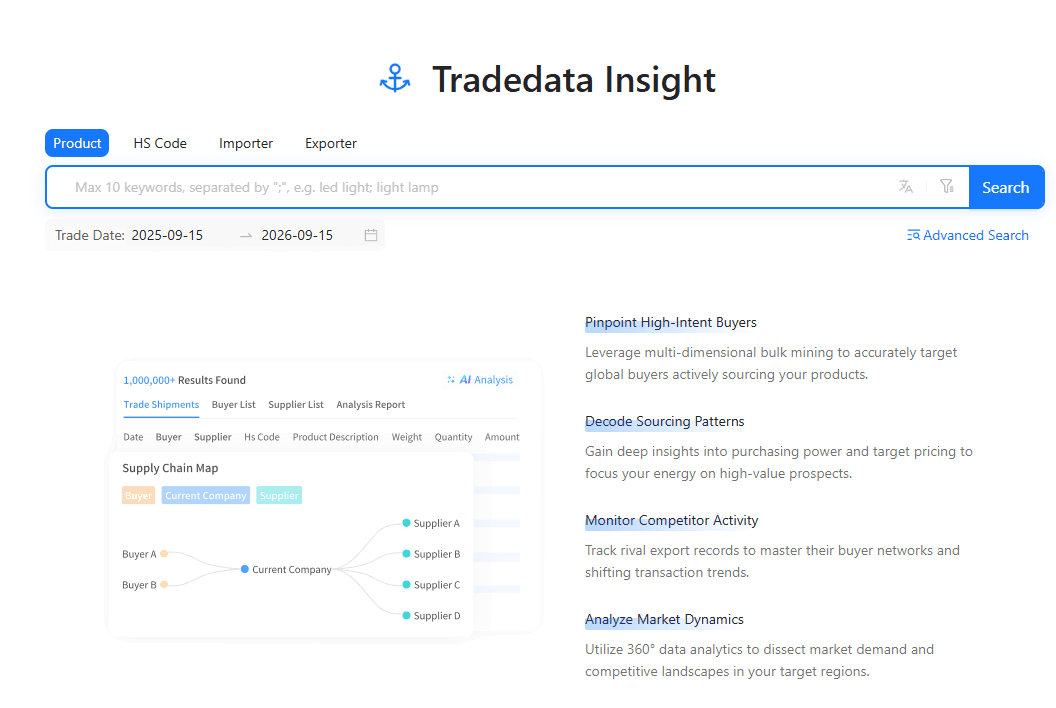
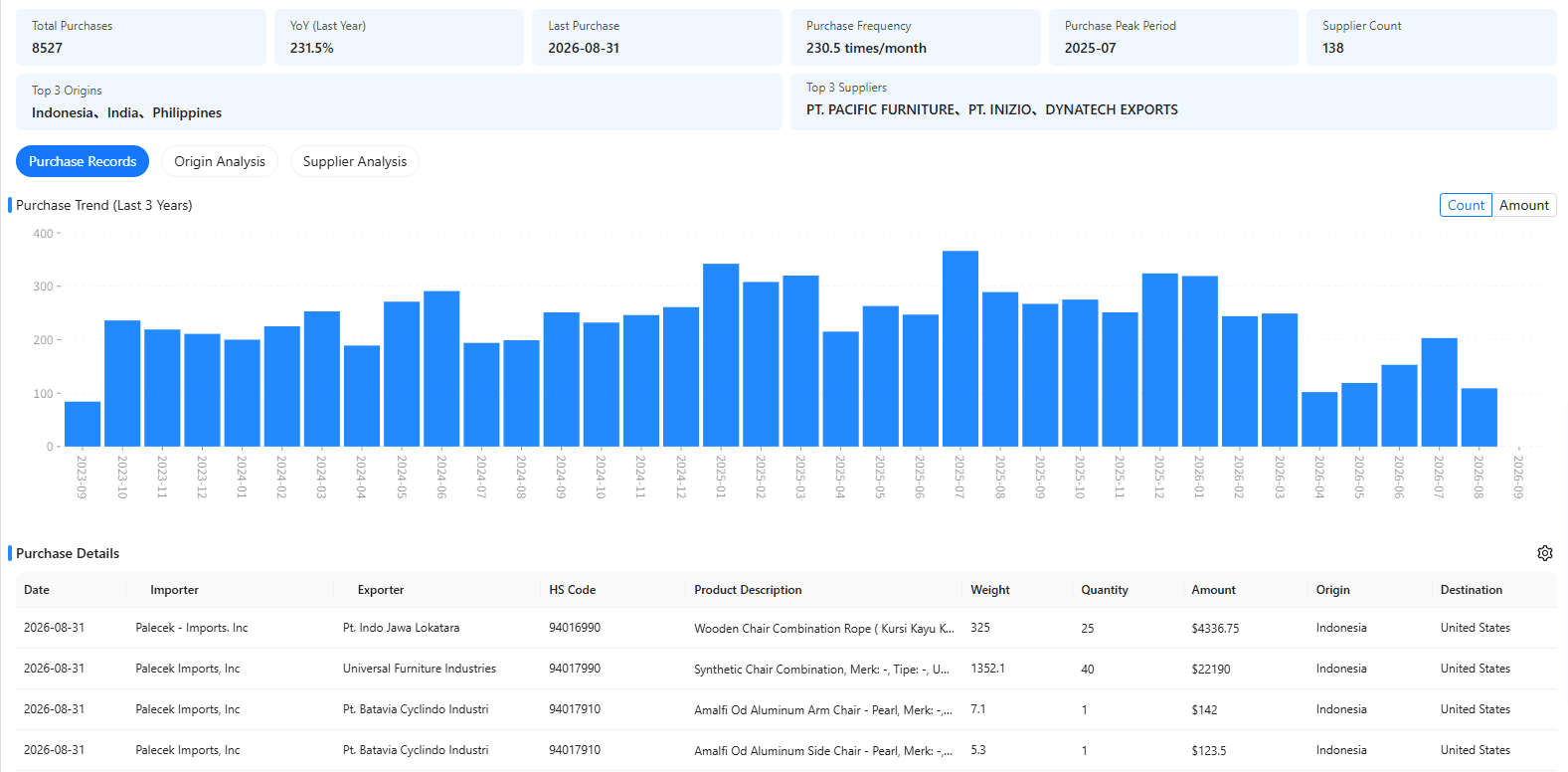
Instead of working with a broad and unqualified company list, sales teams can use actual purchasing activity to evaluate prospects and prioritize potential buyers.
Conclusion
UN Comtrade, Trade Map, WITS, USA Trade Online, and Eurostat Comext are all valuable sources of trade data online. They can help companies understand market demand, trade trends, supplier countries, and tariff conditions.
However, companies that want to identify actual buyers, evaluate purchasing demand, and reach relevant decision-makers will need more detailed company-level trade intelligence.
Want to discover where real demand exists for your products and which companies are already buying them?