Customs Data vs. B2B Prospecting Tools: What’s the Difference?-TradeSaya
When developing international customers, B2B sales teams commonly use Google, LinkedIn, business directories, and contact databases to find potential companies and key contacts.
These tools can help sales professionals research companies, build target lists, and identify procurement or supply chain contacts.
However, finding a company that operates in a relevant industry does not necessarily mean it is a qualified prospect.
Company profiles alone may not reveal what a business actually imports, which suppliers it works with, or whether its purchasing activity is still ongoing.
Customs data helps fill this information gap.
It allows exporters to identify potential importers through searchable trade records and better understand their products, purchasing activity, and supplier relationships.
1. What Are B2B Prospecting Tools?
B2B prospecting tools are primarily used to find potential companies, research business backgrounds, and identify relevant contacts. Common examples include:
- Google: Used to find company websites, product information, and publicly available business details.
- LinkedIn Sales Navigator: Helps sales teams filter companies and contacts by industry, location, company size, job title, and other criteria.
- Sales intelligence platforms :Such as Apollo and ZoomInfo.Provide company information, contact details, and other sales leads.
- Business directories and industry association websites: Help users discover companies operating in specific industries.
These tools are useful for building prospect lists, understanding what a company does, and identifying people who may be involved in purchasing decisions.
2. How Are Customs Data Platforms Different?
Customs data platforms use searchable import and export records to provide purchasing and trade information that is not usually available in standard company profiles.
Using TradeSaya as an example, customs data can support prospecting in several ways.
- Find Buyers with Relevant Import Records
Most B2B prospecting tools identify companies based on factors such as industry, location, and business description. Customs data allows exporters to take another approach by researching companies with relevant import activity.
With TradeSaya, sales professionals can search trade records using product keywords, HS codes, or competitor names to identify companies with recorded imports of relevant products.
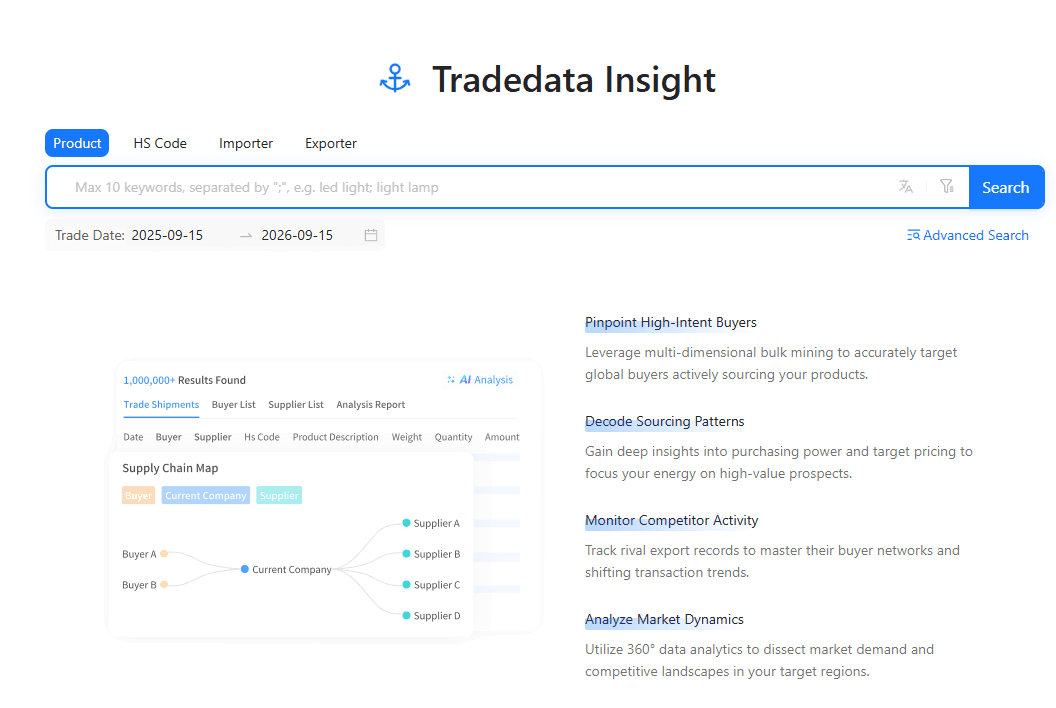
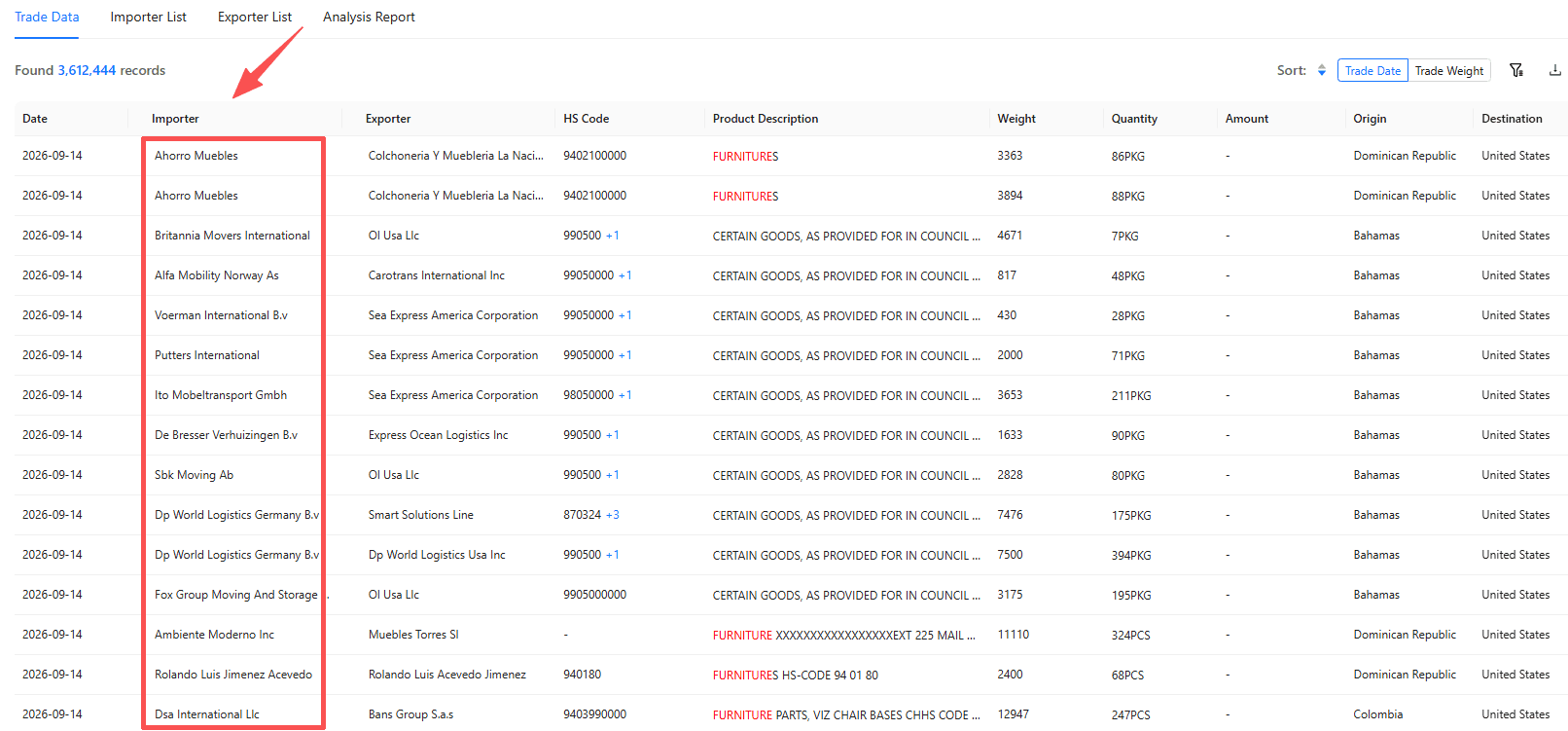
This enables sales teams to build prospect lists based not only on what companies say they do, but also on their visible trade activity.
- Understand What Buyers Actually Purchase
A company website may show broad product categories without providing a complete picture of its purchasing activity.
Depending on data availability in each market, customs records may include product descriptions, HS codes, transaction dates, quantities, and weights.
TradeSaya allows exporters to research a buyer’s recorded products, transaction activity, and product categories. Sales teams can then assess whether the buyer’s purchasing direction matches their products and supply capabilities.
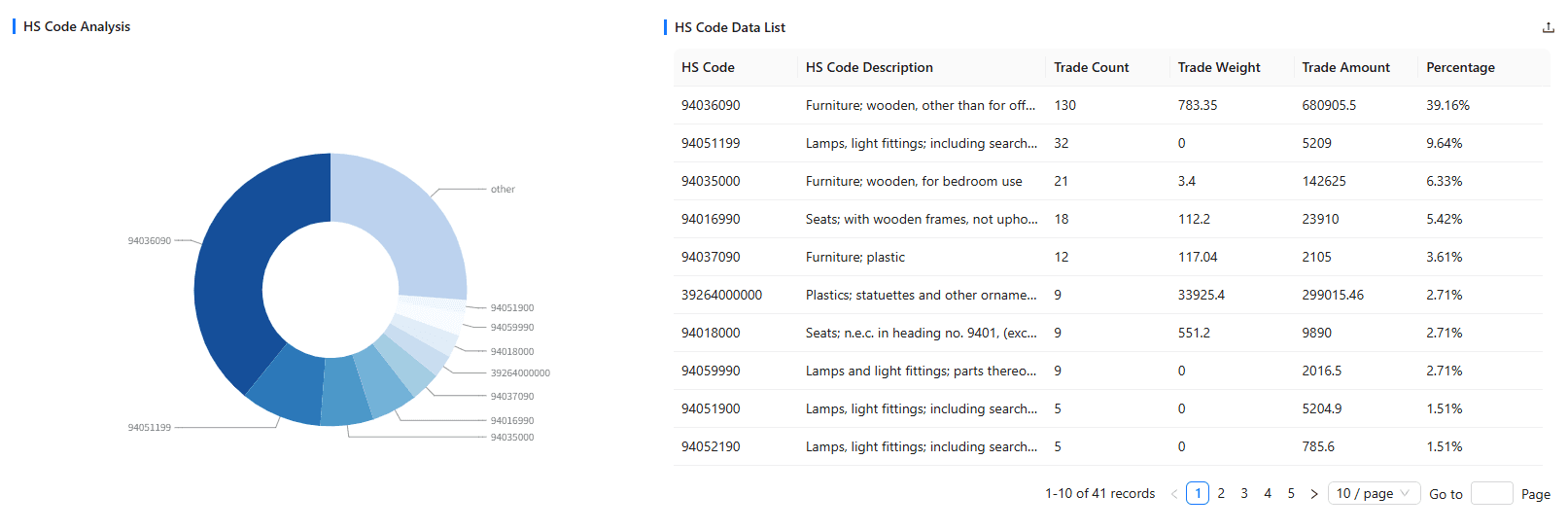
This provides a more specific basis for evaluating potential buyers than relying only on industry classifications or website descriptions.
- Analyze Purchasing Trends and Supplier Relationships
Standard company databases do not usually show a buyer’s trading partners or changes in its historical transactions.
Where relevant data is available, TradeSaya can help sales teams analyze a buyer’s transaction frequency, visible sourcing markets, existing suppliers, and changes in trading relationships.
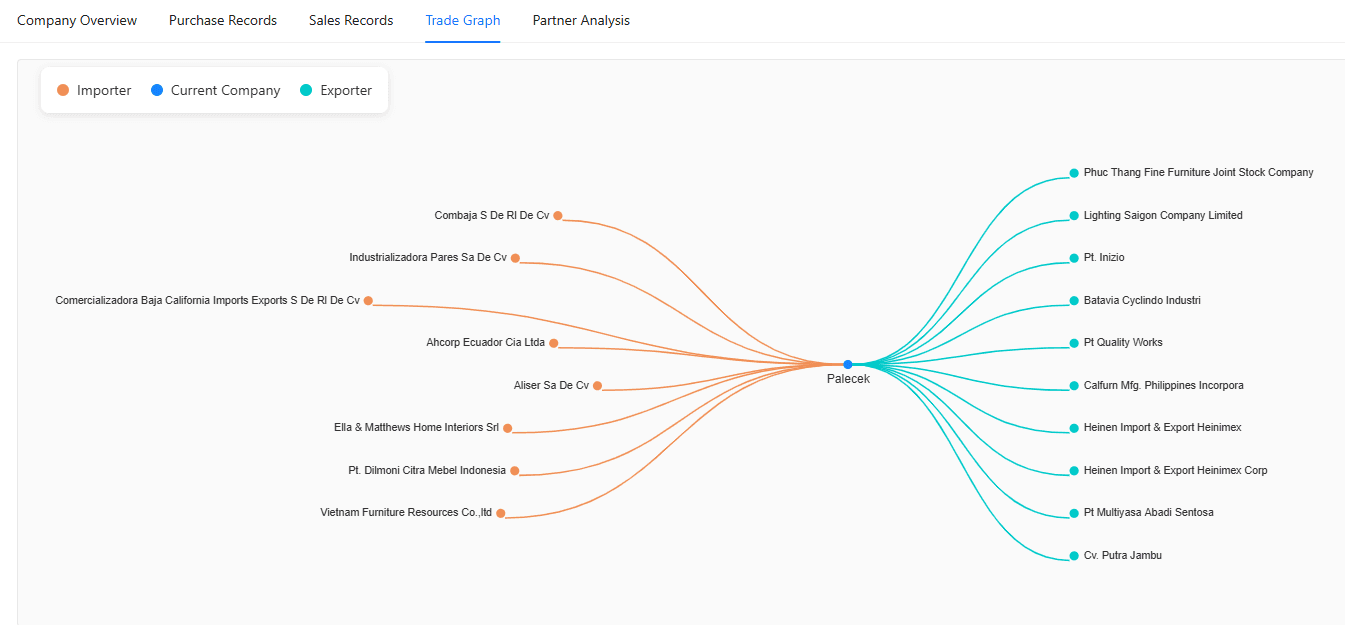
These insights can help exporters understand the buyer’s supply chain structure, observe changes in purchasing activity, and identify accounts that may deserve further research.
A change in transaction activity or supplier relationships does not necessarily mean that a buyer is currently looking for a new supplier. However, it can provide useful context when evaluating potential sales opportunities.
- Make It Easier to Reach Key Decision-Makers
After identifying a potential buyer, sales teams still need to find the people responsible for purchasing and supplier selection.
On LinkedIn, Google, or a company website, sales professionals may find only a general phone number or shared email address. They may also need to search employee profiles individually to identify procurement managers, supply chain leaders, or other relevant contacts.
Even after identifying the right person, a direct email address, phone number, or WhatsApp contact may not be readily available. Repeating this process across a large number of target accounts can require significant time.
With TradeSaya, sales professionals can identify key decision-makers at target companies, including procurement contacts, business owners, and executives, and access available information such as:
- Name and job title
- Email address
- Phone number
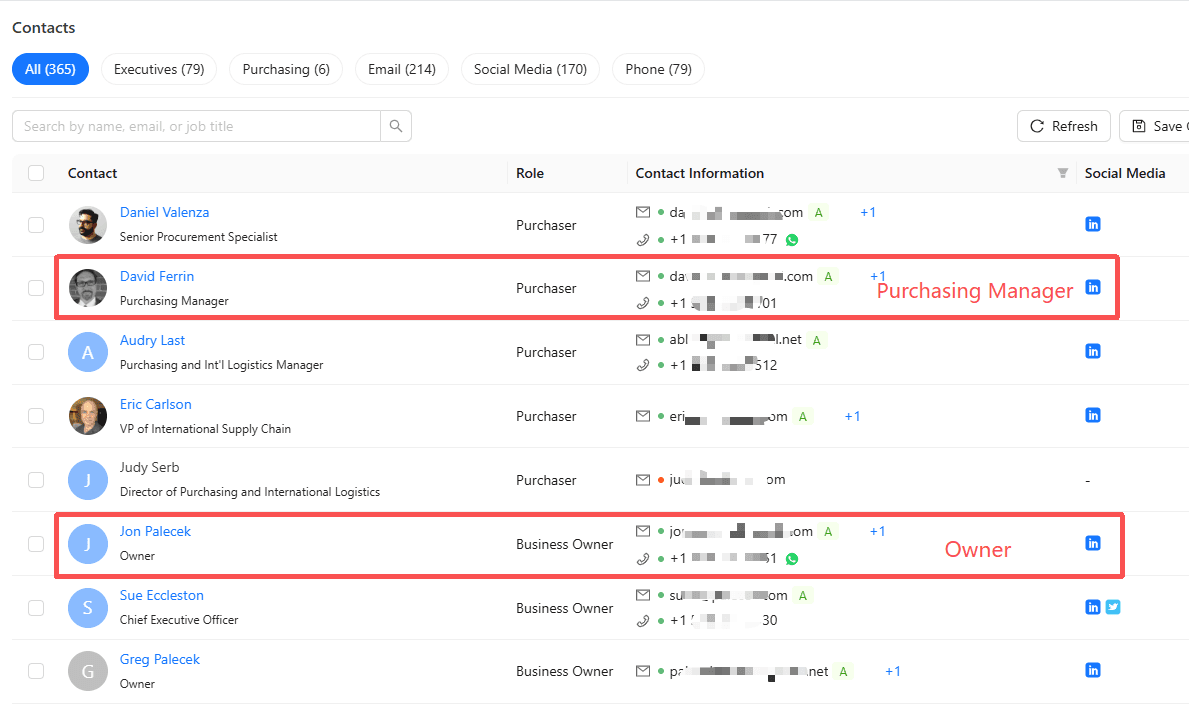
This reduces the need to search across multiple websites and helps sales teams reach the right people more efficiently.
Conclusion
B2B prospecting tools help exporters discover companies, research their backgrounds, and identify relevant contacts. Customs data adds another layer by providing insight into recorded trade activity, purchased products, and supplier relationships.
For exporters, this makes it possible to identify relevant importers through trade records, evaluate their purchasing activity, and connect with the appropriate decision-makers.
TradeSaya brings together customs data search, trade record analysis, and available decision-maker contact information, helping international sales teams move from company discovery to buyer research and targeted outreach through a more informed prospecting process.