Vietnam’s Coffee Exports Expected to Grow 8–10% in 2026: How Can Vietnamese Exporters Find Overseas Buyers More Precisely?

Vietnam’s coffee export market is entering a new phase of growth, creating new opportunities for exporters.
According to data from the Vietnam Coffee and Cocoa Association (Vicofa), Vietnam exported nearly 1.7 million tons of coffee in the first eight months of 2026, generating more than US$6 billion in export revenue. Export volume increased by more than 10% year over year, while export value declined by 11.2% due to lower average export prices.
In terms of product structure, Robusta coffee remains the dominant product in Vietnam’s coffee exports. In the first seven months of 2026, Vietnam exported nearly 1.01 million tons of Robusta coffee, with an export value of approximately US$4 billion. Export volume increased by 11.4% year over year, while export value declined by 15.4% due to lower prices.
At the same time, processed coffee exports are also worth watching. Processed coffee currently accounts for approximately 19.5% of Vietnam’s total coffee export value, reaching around US$1.06 billion, up 4.3% year over year. This indicates growing demand in overseas markets for higher-value processed coffee products. Arabica coffee exports totaled approximately 58,500 tons, worth around US$387.7 million and accounting for 7.1% of total coffee exports. Although Excelsa coffee represents a relatively small share, its export value increased by more than 44%.
With the new coffee crop expected to enter the market in November, Vicofa forecasts that Vietnam’s coffee export volume could grow by 8–10% for the full year of 2026.
For Vietnamese coffee exporters, continued export growth also means more opportunities in overseas markets. So, how can exporters capture this growth, find more relevant overseas buyers, and win more orders?
In the past, many foreign trade salespeople started customer development with Google. They would search keywords such as “coffee importer” or “coffee buyer,” open websites one by one, check company information, and then look for email addresses and contact details.
This approach is not only time-consuming but also has limited accuracy. A company website alone makes it difficult to determine whether a company is currently purchasing your products, what its recent purchasing activity looks like, and who is actually responsible for purchasing and decision-making.
So, is there a simpler and more efficient way to find overseas buyers directly from real trade activity?
One option is to use TradeSaya trade data to identify target customers based on actual purchasing records.
1. Search by Product Keywords to Find Overseas Buyers Purchasing Coffee
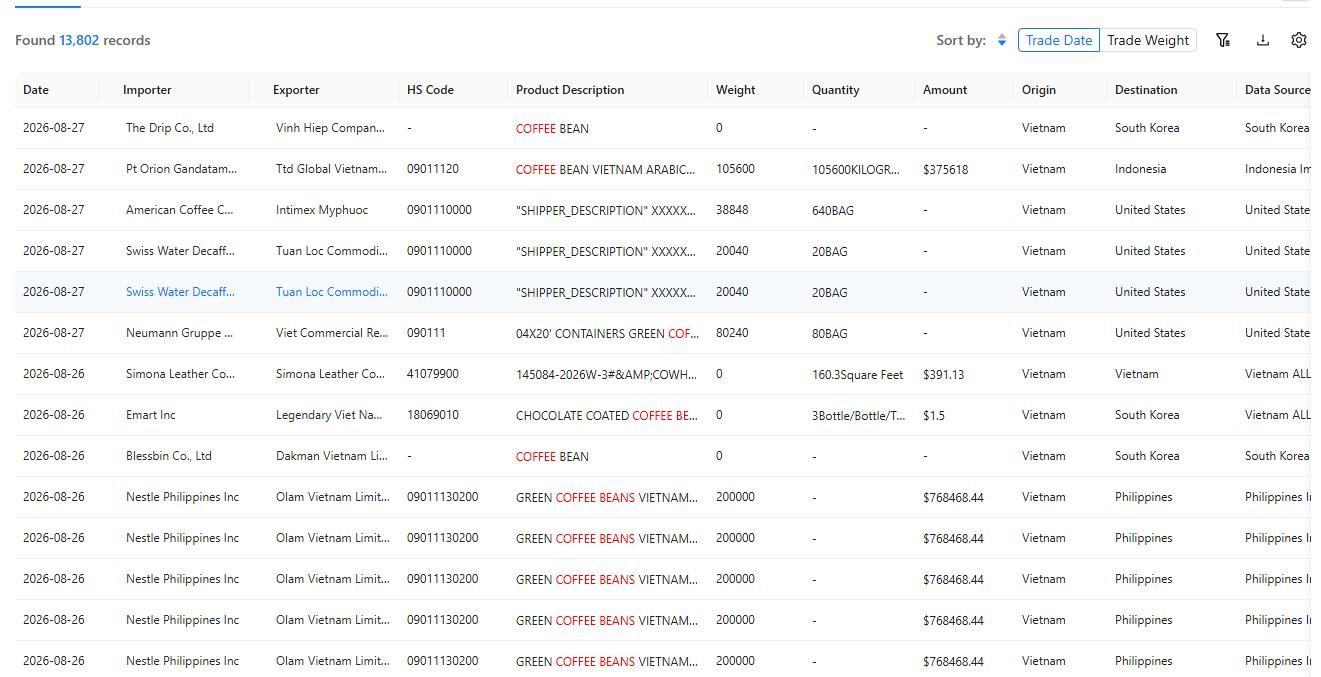
Open TradeSaya trade data and enter a product keyword such as “Coffee Beans” to quickly search relevant import and export records. Based on your products and target markets, you can further filter the results by HS Code, country of origin, destination country, and other criteria to identify relevant overseas importers and purchasing companies.
2. Search Your Competitors to See Who They Are Working With
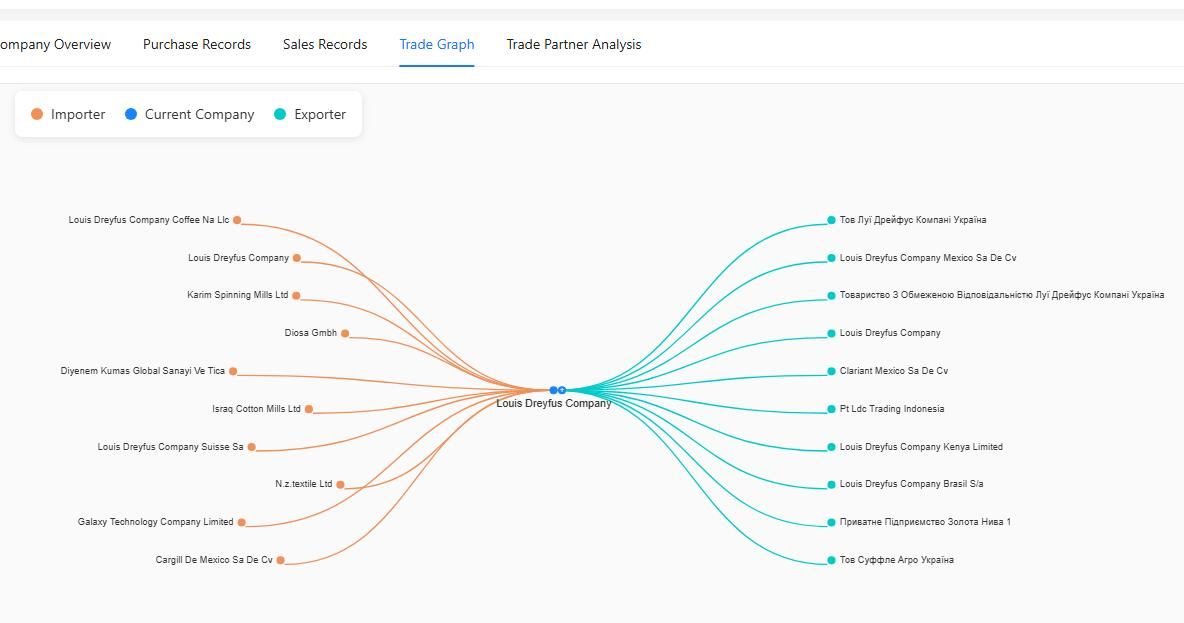
Besides searching for buyers by product keywords, there is another practical way to develop new customers: search for your competitors and see who they are doing business with.
If you already know several Vietnamese coffee exporters that are similar to your company in terms of products, company size, or target markets, you can search for these competitors on TradeSaya and review their export trade records.
By analyzing your competitors’ trade data, you can see which countries and regions they mainly export to and which overseas importers they are currently trading with. These companies already have actual trading records and can therefore become potential buyers for further research.
By combining product searches with competitor searches, exporters can quickly expand their target customer pool while discovering potential buyers that may be difficult to identify through traditional search methods.
3. Analyze Purchasing Behavior with Buyer Intelligence for More Targeted Outreach
Once you have identified a potential buyer, don’t rush to send a sales email. First, conduct a deeper analysis of the company.
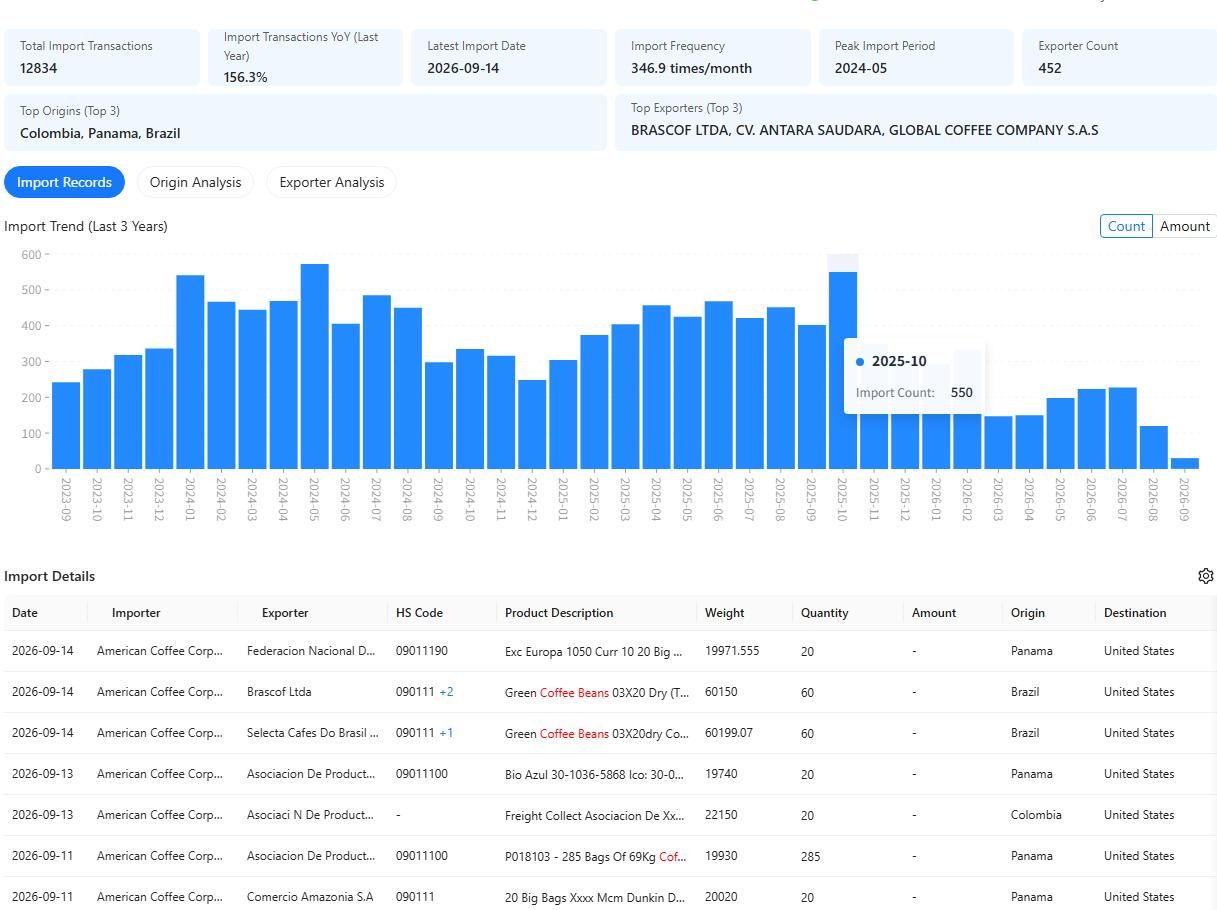
TradeSaya’s Buyer Intelligence feature helps exporters research target companies and analyze their purchasing behavior based on trade data.
For example, if you find a coffee importer in the United States, Buyer Intelligence can help you understand its previous purchasing activity, including the products it purchases, purchasing frequency, major suppliers, and related trade activities.
This information gives salespeople a clearer picture of the buyer before making contact.
If you know that the buyer is currently purchasing Robusta Coffee, you can focus your communication specifically on Robusta. If you find that the buyer has been sourcing from Asia for a long time, you can highlight Vietnam’s supply advantages. If the buyer has been purchasing frequently in recent months, you can focus on your supply capacity and ability to provide stable deliveries.
Compared with sending a generic sales email such as “We are a Vietnamese coffee supplier and hope to cooperate with you,” outreach based on the buyer’s actual purchasing information is more targeted and more relevant to the buyer’s business.
4. Find the Right Purchasing Decision-Makers and Reach Them Directly
For export businesses, reaching the right decision-makers is an important part of customer development.
TradeSaya Buyer Intelligence can help exporters identify relevant contacts within target companies, including Purchasing Managers, Procurement Managers, Sourcing Managers, Coffee Buyers, Import Managers, Managing Directors, and CEOs. It can also provide information such as names, job titles, email addresses, social media profiles, and phone numbers, helping exporters connect with key contacts more efficiently.
If you are a Vietnamese coffee exporter looking to enter new markets or struggling to generate inquiries, TradeSaya can help you move beyond blind searching and generic customer development. Use real trade data to identify buyers, understand purchasing behavior, reach the right decision-makers, and create more opportunities for orders and business growth.