Top 10 U.S. Imports in 2026: How Exporters Can Use Trade Data to Find Qualified U.S. Buyers?
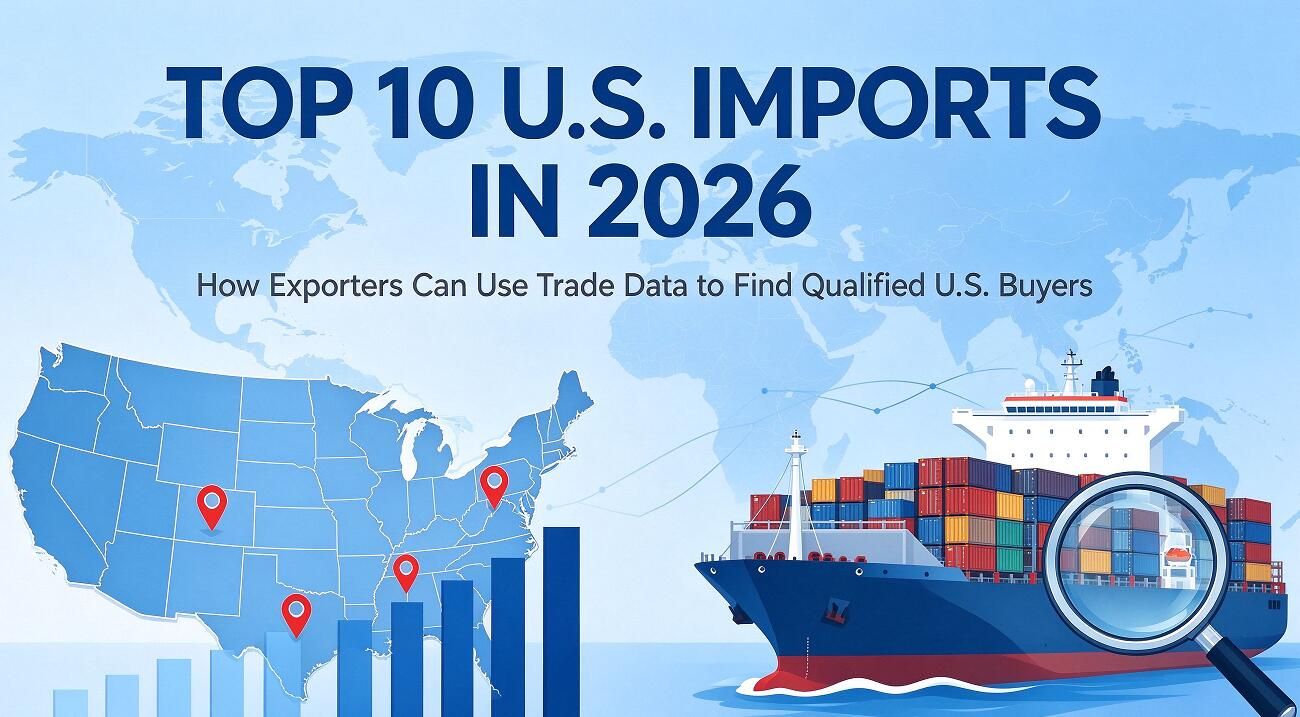
The United States has always been one of the world’s largest import markets and remains a key target market for global exporters. For companies looking to expand into the U.S. market, understanding import demand trends is essential for identifying business opportunities and developing effective customer acquisition strategies.
Which Industries Have the Largest Import Demand in the U.S. Market?
According to the U.S. Census Bureau’s End-Use Commodity Trade Data, major U.S. imports from January to July 2026 were mainly concentrated in technology products, automotive supply chains, industrial equipment, and healthcare-related products.
Computers ranked first among U.S. imports, with an import value of USD 220.79 billion. Pharmaceutical preparations followed with USD 100.28 billion, passenger cars with USD 99.79 billion, and telecommunications equipment with USD 95.59 billion.
Other major imported products included crude oil (USD 90.01 billion), automotive parts and accessories (USD 80.32 billion), semiconductors (USD 75.04 billion), mobile phones and household goods (USD 65.08 billion), electrical equipment (USD 62.91 billion), and industrial machinery (USD 51.22 billion).
These figures show that the U.S. market relies heavily on global supply chains. From high-tech products such as computers, semiconductors, and telecommunications equipment to automotive components, electrical products, and industrial machinery, U.S. companies continue to source products globally to support manufacturing and market demand.
Where Do U.S. Imports Come From?
Besides understanding what products the U.S. imports, exporters also need to understand where these products come from. Different countries play different roles in the U.S. supply chain, and analyzing import sources can help companies identify market opportunities and competitive landscapes.
According to U.S. trade data, major sources of the U.S. trade deficit in July 2026 included Mexico, Vietnam, Taiwan, China, South Korea, the European Union, Germany, India, Malaysia, Japan, and Canada.
In July 2026, the U.S. goods trade deficit was approximately USD 27.5 billion with Mexico, USD 23.3 billion with Vietnam, USD 18.1 billion with Taiwan, USD 15.2 billion with China, and USD 10.4 billion with South Korea.
These figures reflect the manufacturing strengths of different regions. Mexico plays an important role in automotive manufacturing, industrial components, and electronics supply chains due to its geographic advantages. Vietnam has become a major supplier of furniture, textiles, and electronics products. China, Taiwan, South Korea, and Japan remain important suppliers in electronics, machinery components, and industrial products.
Why Do Many Companies Struggle to Develop U.S. Buyers?
Many exporters still rely on Google searches, LinkedIn, industry websites, and B2B platforms to find U.S. customers. While these channels can generate company lists, the biggest challenge is determining whether those companies actually have purchasing needs.
A U.S. company may have a website related to a specific product category, but that does not necessarily mean it imports those products. Even large companies may already have established suppliers and no immediate demand for new suppliers.
For B2B exporters, valuable buyers are not simply companies that match an industry category. The most valuable prospects are companies that have actual import records, ongoing supply chain needs, and potential opportunities for cooperation.
This is why more exporters are using trade data to identify qualified buyers.
How Can TradeSaya Help Exporters Find U.S. Buyers?
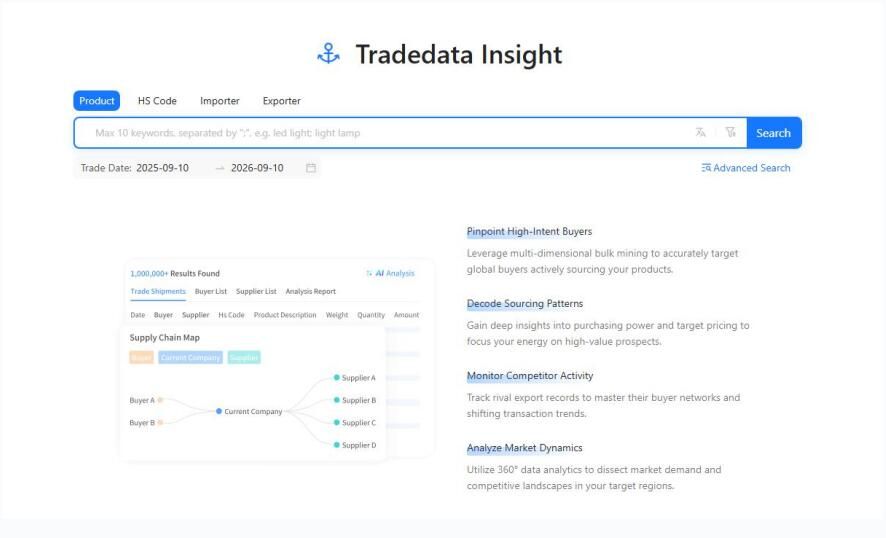
TradeSaya uses global trade data and company intelligence to help exporters analyze the U.S. market more efficiently and identify buyers with real purchasing backgrounds.
Exporters can search U.S. importers based on product keywords, HS codes, and other criteria. For example, an industrial machinery manufacturer can identify U.S. companies that have imported similar equipment; an automotive parts supplier can find buyers that regularly purchase similar components; consumer product manufacturers can discover U.S. importers with continuous purchasing activity.
Compared with traditional company searching methods, trade data allows exporters to focus directly on companies with verified import activities, reducing wasted time and improving sales efficiency.
Beyond identifying importers, understanding buyer purchasing behavior is equally important. TradeSaya helps exporters analyze buyer information such as purchased products, import volume, purchasing frequency, supplier countries, and historical trade records.
For example, if a U.S. importer has consistently purchased similar products from Asian suppliers, that company may have a clearer supply chain demand. Exporters can use this information to evaluate customer potential and create more targeted outreach strategies.
Find Decision Makers and Improve U.S. Customer Development Efficiency
For B2B exporters, finding a company is only the first step. The key to successful customer development is reaching the right decision makers.
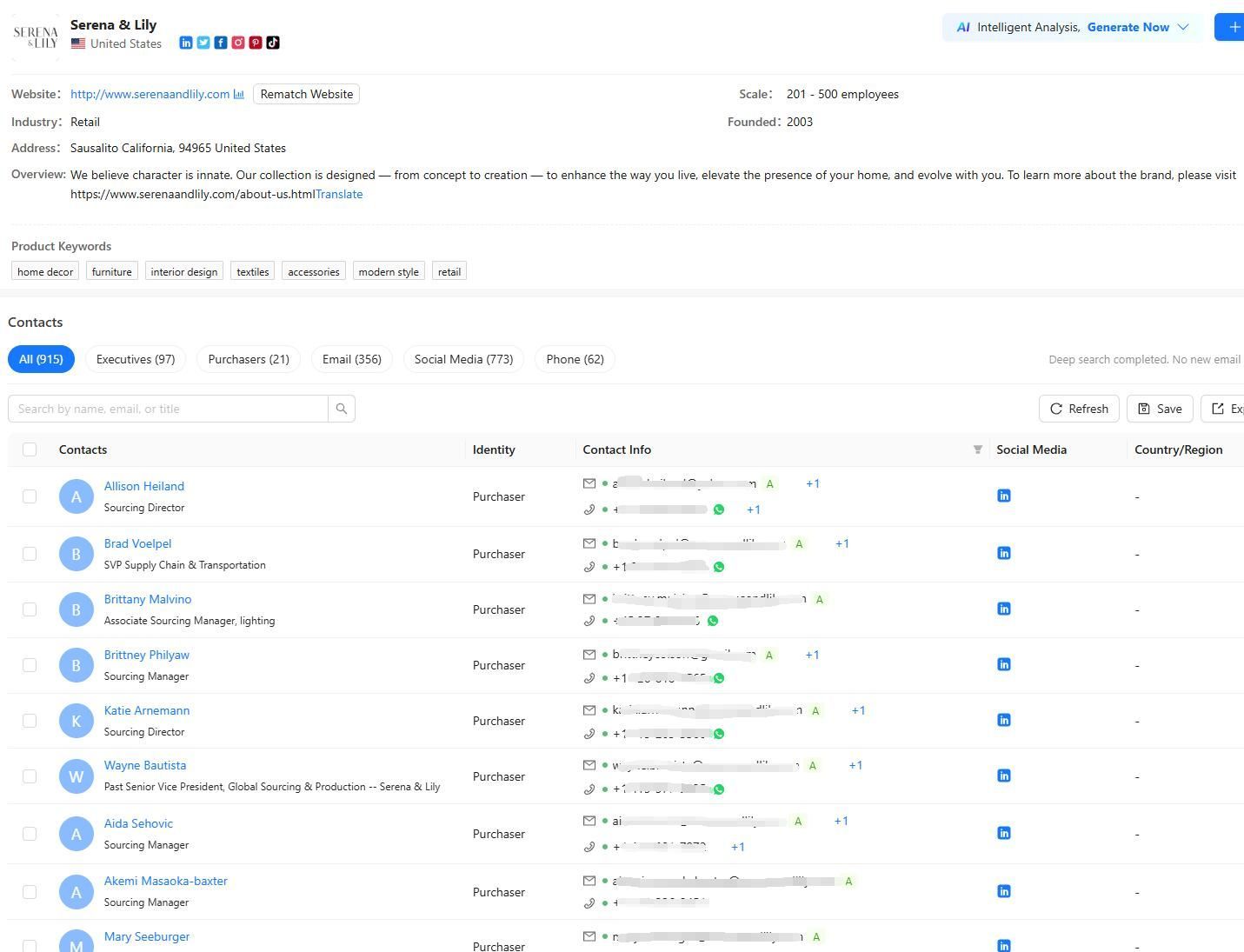
By combining company databases with contact intelligence, TradeSaya helps exporters identify key contacts within U.S. companies, including Purchasing Managers, Import Managers, Supply Chain Managers, and CEOs/Owners.
Direct communication with relevant decision makers helps exporters reduce communication barriers, improve outreach efficiency, and create more meaningful business conversations.
The U.S. market offers enormous import opportunities, but competition is also intense. For exporters, successful international sales development is no longer about collecting more company lists. It is about identifying the right buyers with real demand and strong cooperation potential.
The value of trade data goes beyond providing company information. It helps exporters understand market demand, discover purchasing opportunities, analyze competition, and connect with the right decision makers.
With TradeSaya global trade data, exporters can better analyze U.S. market opportunities, identify qualified buyers, and build a more efficient global customer development strategy.